
ORI: Public Participation in Monitoring Public Services Realises Transparency
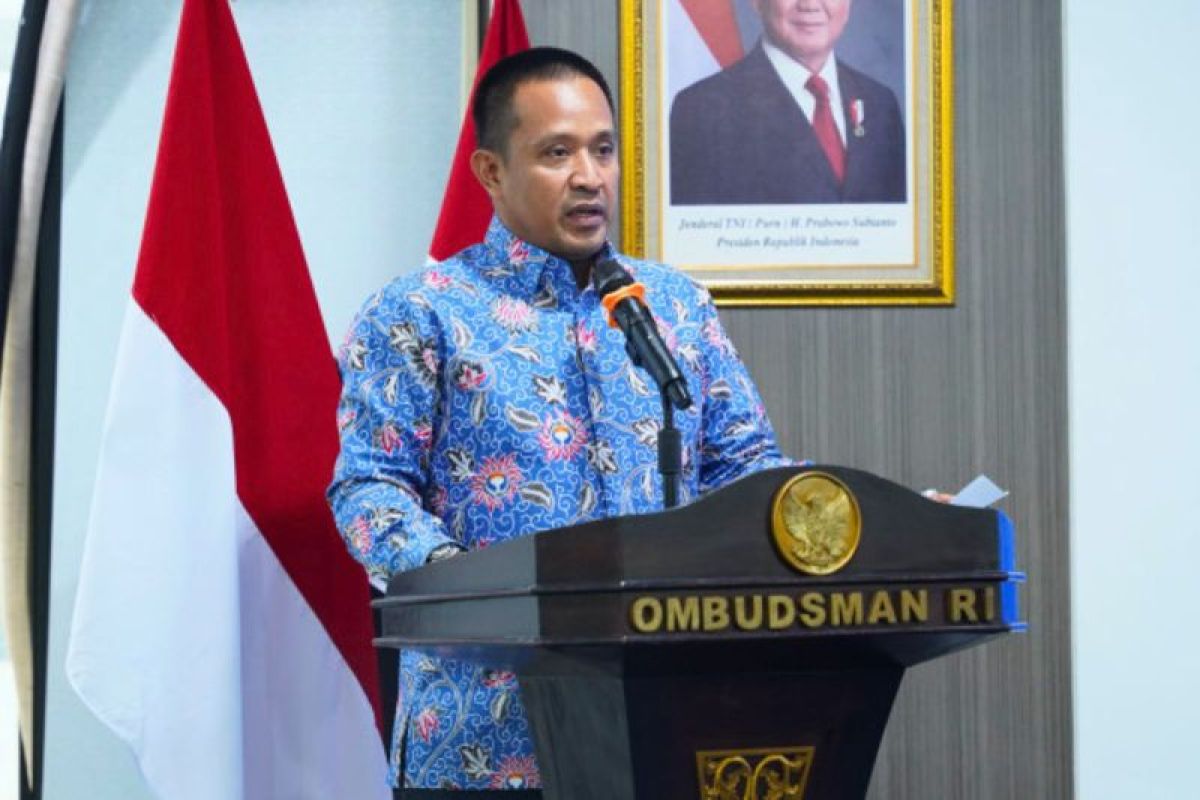
Jakarta (ANTARA) - The Ombudsman of Indonesia (ORI) assesses that public participation in monitoring public services is no longer merely supplementary but has become a key element in realising transparency and accountability.
Deputy Chairman of the Ombudsman of Indonesia, Rahmadi Indra Tektona, at an international seminar in Jakarta on Tuesday (5/5), stressed that the indicators of successful public services cannot be measured solely by the availability of services, but by how much the benefits are truly felt by the public.
“From birth to death, the public is highly dependent on public services. Therefore, professional and responsive services are needed,” said Rahmadi, as confirmed in Jakarta on Wednesday.
He explained that although the Ombudsman has the authority to receive reports and encourage the prevention of maladministration, there are still frequent gaps found between incoming complaints and follow-up improvements in the field.
For this reason, the Ombudsman introduces two main approaches, namely community empowerment and complaint management.
Meanwhile, Public Diplomacy Officer at the US Embassy, John Solver, welcomed the cross-sector collaboration. He emphasised that good governance heavily relies on government responsiveness.
“A responsive government can resolve issues before they escalate into crises. The key is to build a good feedback system,” he said.
He added that the government needs to listen to the public just as the public listens to the government.
“If complaints are proven, the Ombudsman will provide improvement recommendations to the relevant agencies,” he said.
Jennifer also stressed the importance of building public trust by identifying unrepresented community groups and forging partnerships with credible parties to bridge communication.
Head of the Ombudsman Representative for West Kalimantan Province, Tariyah, added that strengthening public service accountability is also carried out through increased public participation, one of which is by forming Community Groups Concerned with Maladministration.
These groups are involved in various collaborative activities such as campus visits, focused group discussions, and direct monitoring at public service locations.
Through the seminar titled “Strengthening Public Service Accountability through Increased Public Participation”, it is hoped that concrete solutions and shared learning will emerge to improve the quality of public services in the future.