
ORI: Accessibility and Inclusivity as Standards for Modern Public Services
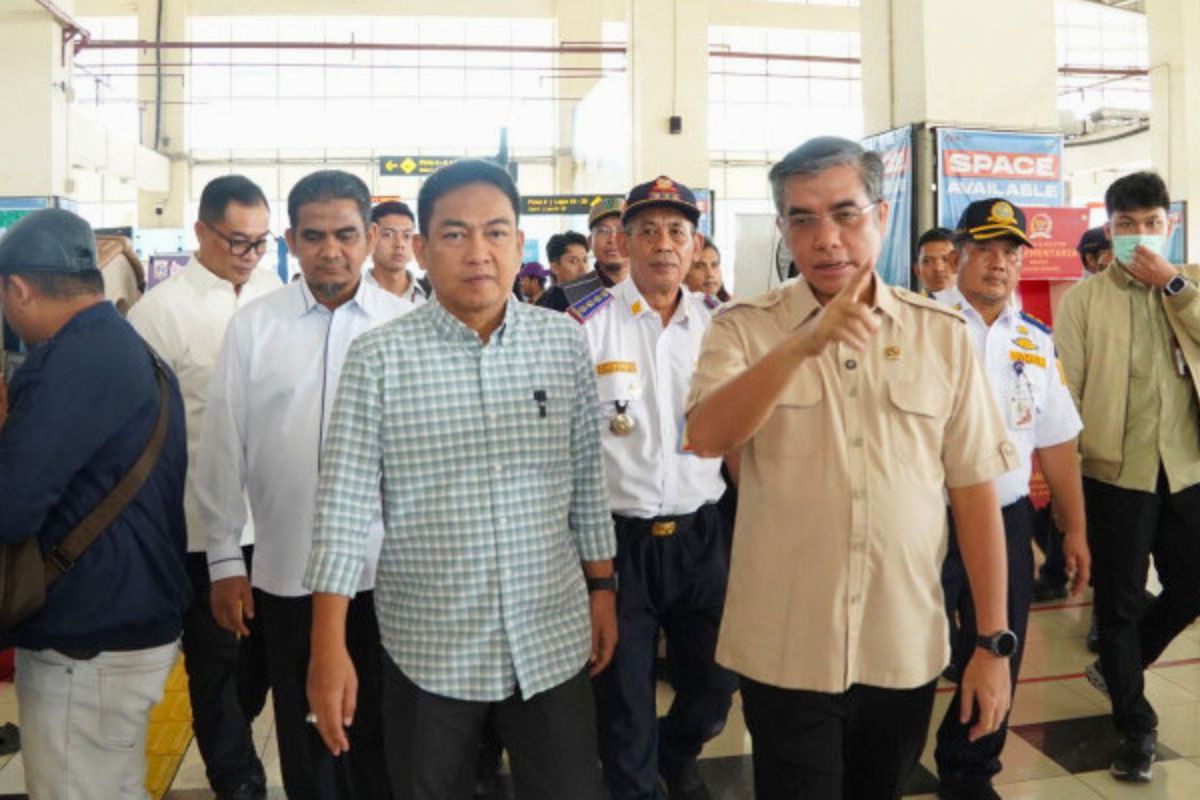
Jakarta (ANTARA) - The Ombudsman of the Republic of Indonesia (ORI) has emphasised that accessibility and inclusivity must be standards in modern public services, during an inspection at the Integrated Pulo Gebang Terminal in Jakarta on Monday (16/3). ORI member Hery Susanto stated that improving services for people with disabilities is one of the important aspects highlighted in public services. “The presence of officers who understand sign language is one of the needs that must be fulfilled,” said Hery, as confirmed in Jakarta on Friday. In this regard, he said, services for people with disabilities require officers who understand sign language as well as facilities and infrastructure that facilitate passengers. The condition of public services at the Integrated Pulo Gebang Terminal in Jakarta was a focus of attention during the inspection activity. He conveyed that activities at Southeast Asia’s largest terminal appeared to be running quite orderly with various supporting facilities for passengers. Several public service facilities appeared to have been improved compared to previous conditions. Nevertheless, according to him, there are still several aspects of service that need to be continuously refined to provide optimal comfort for the community. Hery revealed that the inspection was conducted to ensure that the quality of public services in the land transportation sector continues to improve and truly provides comfort for passengers. During the inspection, ORI explored various service points in the terminal area, from waiting room facilities and departure areas to accessibility for vulnerable groups, which also received attention. He stated that a number of recommendations previously given by the Ombudsman have begun to be followed up by the terminal management. “We see from one corner to another, there have indeed been improvements and enhancements in services compared to before,” he said. Nevertheless, ORI emphasised that improving the quality of public services cannot be done by one institution alone, thus requiring strong synergy between the central government, local government, and service managers. The spirit of collaboration, according to Hery, is starting to be seen in the current terminal management. With the spirit of collaboration, public service providers, especially in the transportation sector, demonstrate readiness to continuously improve services. For this reason, he emphasised that Indonesia, as a large country, requires strong cooperation between institutions to deliver prime public services. According to him, coordination and collaboration are key to delivering more effective and responsive services. He also appreciated the commitment of the transportation sector apparatus, which shows a spirit of continuous improvement. “Managing Indonesia is too big if done individually, therefore cooperation, coordination, and collaboration are needed,” said Hery. Moving forward, ORI assures that it will continue to conduct active oversight of public service provision in the transportation sector. Such oversight will be carried out through direct field monitoring as well as coordination with relevant agencies. He emphasised that every public service issue must be responded to immediately with concrete and measurable solutions because the Ombudsman’s duty is to ensure that public services continue to improve for the community. The event was also attended by the Minister of Manpower (Menaker) Yassierli and the Head of the Integrated Pulo Gebang Terminal Unit. Yassierli expressed appreciation for the public service oversight efforts carried out by ORI. According to him, improving the quality of transportation services plays an important role in supporting community mobility, especially during the homecoming period and national economic activities. He also opined that coordination between institutions is an important factor in delivering increasingly better public services. “We strongly support the Ombudsman’s steps in actively conducting field monitoring, because such collaboration is important to ensure that the public receives safe and comfortable services,” said Yassierli.