
Organising Voices in a City of Three Million
In a city that continues to grow, democracy is not only tested on polling day. It is also tested long before, when the state determines how citizens’ voices are divided and represented.
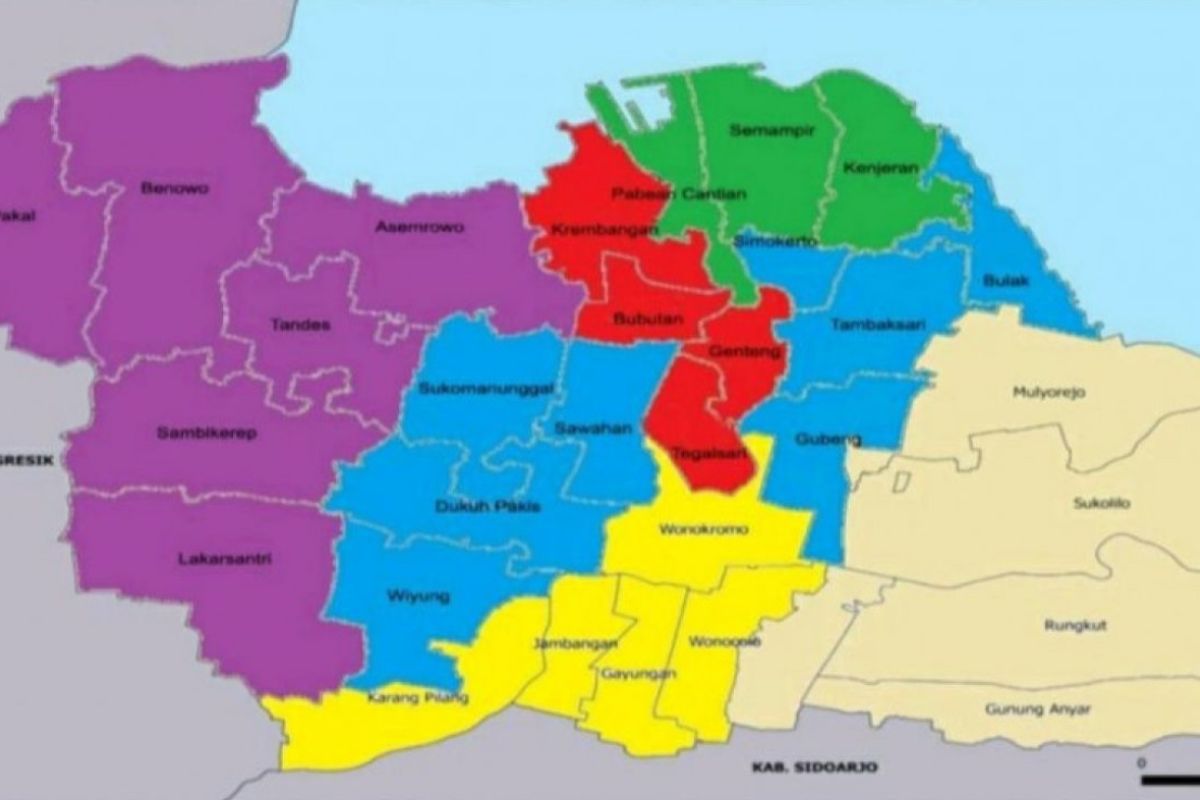
Surabaya is now at that crossroads. With 31 sub-districts and a population that has surpassed three million, the City of Heroes faces an important question ahead of the 2029 General Election: Are the five electoral districts used so far still capable of accommodating the increasingly large and complex population dynamics?
This question is not merely a technical electoral matter. Behind it lie issues concerning the closeness of people’s representatives to their constituents, equitable development, and the quality of democratic representation.
Clean Consolidated Data from the Surabaya City Population and Civil Registration Agency states that in the first semester of 2025, Surabaya’s population reached 3,008,760 people, and in the second semester of 2025, it reached 3,003,860 people. This figure is relatively stable compared to 2024, which was 3,017,382 people in the first semester and 3,018,022 in the second semester. The data confirms that Surabaya consistently remains above the three-million threshold, which serves as one basis for increasing the allocation of Regional People’s Representative Council seats from 50 to a maximum of 55, in accordance with Law Number 7 of 2017 on Elections.
Consequently, the discourse on expanding electoral districts has resurfaced. The Surabaya KPU has begun conducting studies, while political parties, academics, and election organisers have put forward various proposals. Interestingly, the debate this time is no longer solely about additional seats. The focus has shifted to the quality of public representation.
Looking back, the discussion regarding electoral district expansion ahead of the 2024 General Election had a different character. From 2021 to 2022, the main issue was the possibility of increasing DPRD seats to 55 due to the population growth trend. Several studies at the time proposed expanding from five to seven electoral districts to make seat distribution more proportional. Some observers even considered electoral districts with an allocation of seven to nine seats as a moderate option capable of maintaining a balance of representation. The aspirations that emerged then also emphasised the importance of equitable development and the proximity of political services to the community.