
Organising Strategic Trade to Enter the Technology Value Chain
The government needs to identify the end-user of a good, its intended purpose, and the risk of diversion to unauthorised parties.
Jakarta (ANTARA) - Indonesia is striving to expand its role in the semiconductor, artificial intelligence (AI), data centre, aerospace, and energy technology industries. Involvement in these supply chains demands the capability to monitor the trade of goods and technologies that can be used for both civilian and military purposes.
Without a clear system, companies risk facing licensing uncertainty, while trading partners require assurances that sensitive technology is not diverted to inappropriate users. This need is driving the development of Strategic Trade Management (STM), a regulatory framework for overseeing the trade of dual-use goods and technologies. The government is developing this system to ensure legitimate trade continues to flow while controlling the risks of diversion and the misuse of strategic technologies.
The relevance of STM is growing alongside the increase in Indonesia’s electronic product trade. Exports of semiconductor devices and electronic integrated circuits reached approximately US$4.1 billion in 2025, up from US$1.5 billion in 2024. This figure demonstrates Indonesia’s involvement in technology trade, although it does not yet reflect the full scale of goods specifically subject to controlled lists.
Trust and Access
Strategic technology trade involves requirements broader than mere compliance with tariffs, standards, and customs procedures. The government must know the end-user of a good, its intended purpose, and the risk of diversion to unauthorised parties.
Consequently, STM requires a system of goods classification, risk assessment, end-user verification, licensing, and consistent enforcement. Procedural clarity is also vital for companies that use components or technology from various countries within a single production process.
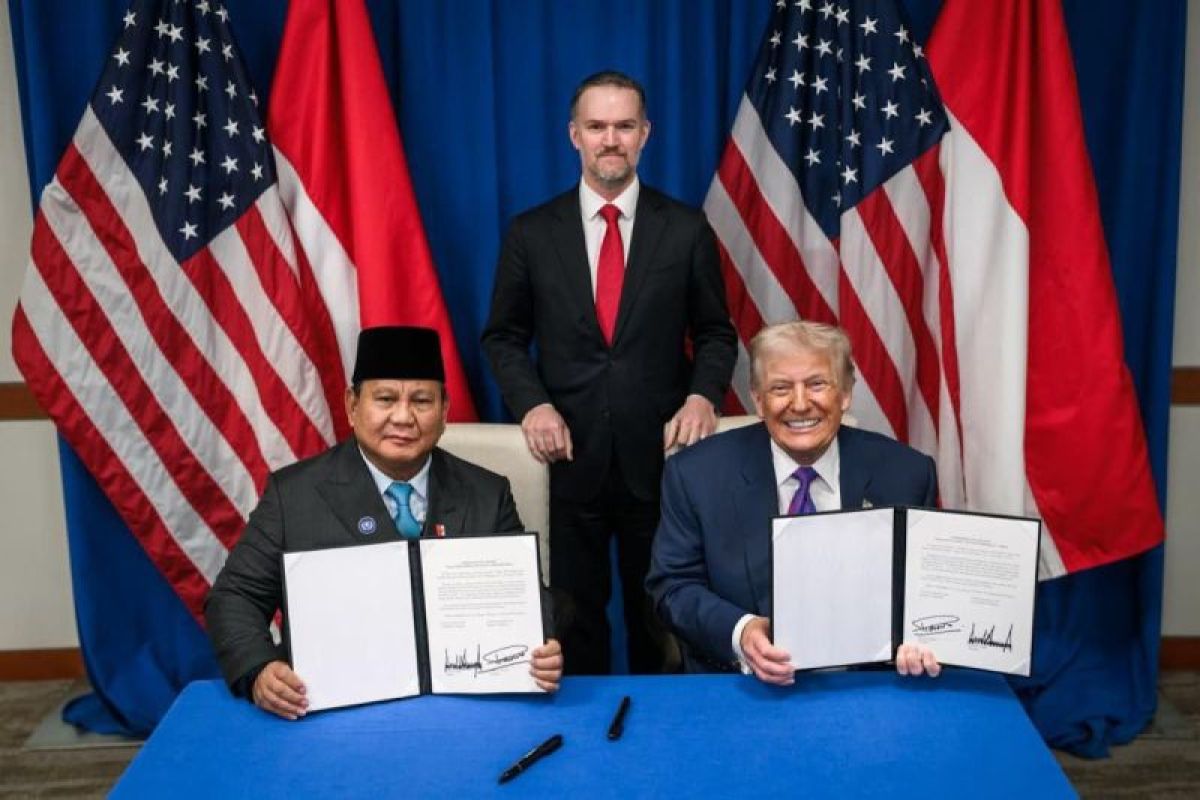
This requirement is linked to Indonesia’s trade relations with the United States. In the Agreement on Reciprocal Trade (ART) signed on 22 February 2026, Indonesia’s commitment to implementing STM became a component of the agreement between the two nations.
The implementation of STM also aligns with Indonesia’s commitment to UN Security Council Resolution 1540, which aims to prevent non-state actors from acquiring weapons of mass destruction. This commitment places strategic trade oversight as a key part of bilateral economic relations. Its execution will determine Indonesia’s ability to meet control requirements for certain goods related to strategic technologies.
Regional dimensions are also evolving. The United States is encouraging Indonesia to serve as a model for STM development for other ASEAN nations. The Philippines, as the 2026 ASEAN Chair, has also made the ASEAN leaders’ declaration on STM one of its economic priorities. These developments show that strategic trade oversight is entering regional cooperation discussions. For companies involved in cross-border production, harmonised procedures can reduce uncertainty when goods and components move through multiple jurisdictions. However, these benefits depend on the alignment of regulations, oversight capacity, and procedural clarity in each country.
Efficient Oversight
Indonesia’s current challenge lies in the implementation of STM. Oversight that is too lax could increase the risk of misuse and diminish partner trust. Conversely, overly complex and unclear procedures could add compliance costs, extend transaction times, and disrupt industries that rely on foreign component supplies.
Minister of Trade Budi Santoso stated that the implementation of STM will be carried out gradually so that businesses and relevant institutions have time to adapt. The government is also directing a risk-based approach so that strategic trade controls can function without hindering legitimate trade. This approach must translate into clear distinctions between high-risk and low-risk transactions. In-depth inspections are required for transactions with risk indicators, while transactions that meet requirements and are low-risk should benefit from a simplified process.
From an industrialisation perspective, the Deputy for Coordination of Trade and Digital Economy at the Coordinating Ministry for Economic Affairs, Ali Murtopo Simbolon, also shared his views. During the Indonesia Strategic Trade Management Summit in Jakarta in September, Ali stated that the development of STM is increasingly relevant alongside technological advancements and is necessary to support Indonesia’s entry into high-tech industries.
Input from business players is also required to identify field conditions, industrial needs, and potential implementation obstacles. Companies need easily accessible information regarding goods classification, required documentation, authorised licensing bodies, and the stages and timelines for completion. Without such clarity, the implementation of STM could potentially increase uncertainty amidst the government’s efforts to improve the investment climate and trade efficiency.
Indonesia possesses infrastructure that can support this integration through the Indonesia National Single Window (INSW). This system electronically connects government services related to exports, imports, and logistics. The development of STM and Indonesia Single Risk Management should also be integrated into the strengthening of the national trade system. Such integration could serve as a pathway to link licensing, customs, and risk assessment data. However, the existence of digital platforms alone is not enough. The government must ensure that data can be used across agencies, that authorities’ roles do not overlap, and that inspection processes are streamlined.
Source: jawawa.id (https://jawawa.id/newsitem/organising-strategic-trade-to-enter-the-technology-value-chain-1791003297)
Originally published by Antara (Indonesian) (https://www.antaranews.com/berita/5769618/menata-perdagangan-strategis-untuk-masuk-rantai-nilai-teknologi), translated from Indonesian