
Organising Stalls, Nurturing Livelihoods
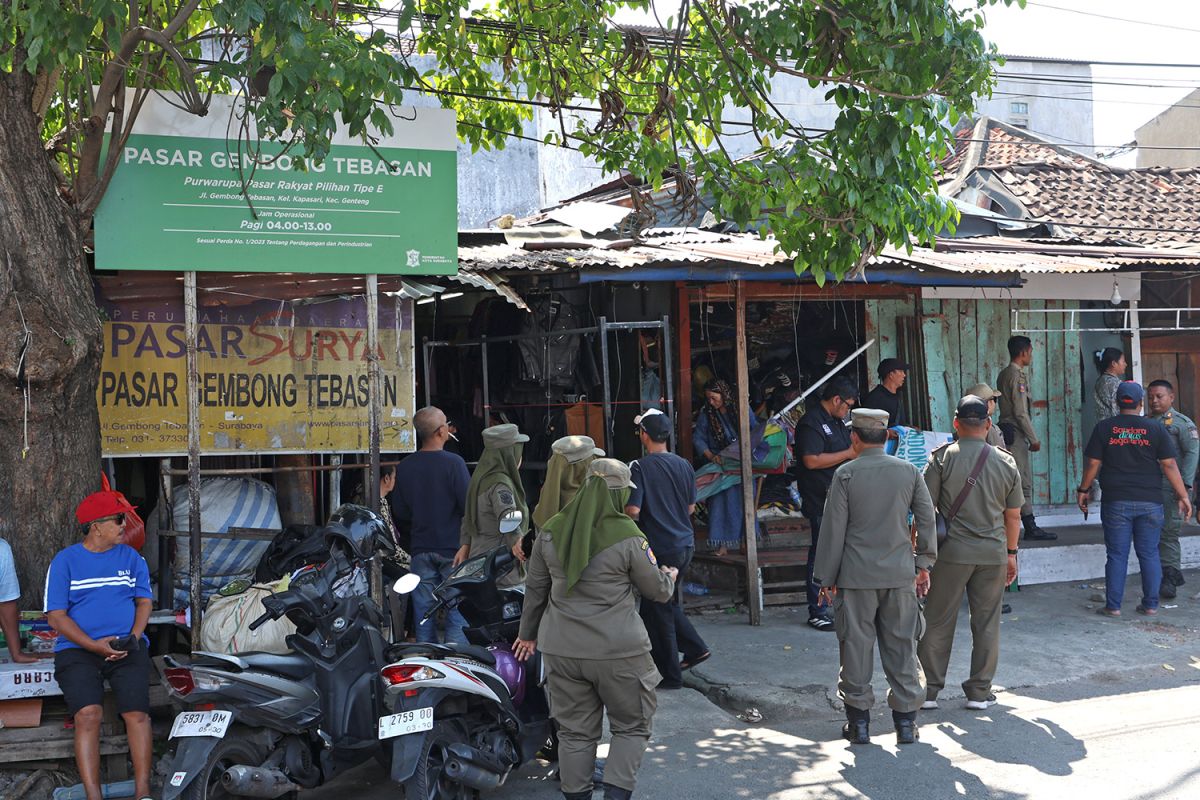
An orderly market is indeed important. However, a living market is far more important. When spatial order can go hand in hand with the sustainability of people’s livelihoods, a city does not merely become tidier, but also more just.
Surabaya (ANTARA) - Markets always grow in step with the pulse of urban life. Among the ordered permanent buildings, there is always space that is then filled by simple stalls, carts and trading mats.
In the city of Surabaya, East Java, this space is known as the spill-over market (pasar tumpah), born not merely from the absence of rules, but from the meeting of residents’ economic needs with a constantly moving flow of buyers.
This phenomenon has long been the dual face of urban areas.
On one side, spill-over markets provide access to affordable food, open up business opportunities and drive the family economy. On the other, their presence often encroaches on roads, disrupts traffic, creates cleanliness problems and generates unbalanced competition with traders who sell officially inside the markets.
For that reason, organising spill-over markets has never been as simple as moving traders from one spot to another. Behind every stall lies a family’s income, customers built up over years, and an economic ecosystem that has grown naturally.
The Surabaya City Government’s move to prepare around 2,700 vacant stalls in markets owned by PT Pasar Surya Perseroda is an interesting approach. The arrangement does not stop at enforcement, but is accompanied by the provision of business space free of rent charges for relocated traders.
This policy shows that rule enforcement can go hand in hand with the protection of micro-enterprises.
Information about the provision of free stalls, some 570 stalls at the Sentra Wisata Kuliner culinary tourism centre, and supervision against misuse of stalls are part of a strategy that is more comprehensive than a mere crackdown operation.
Spill-over markets are in truth a mirror of the dynamics of Indonesia’s informal economy. Statistics Indonesia (BPS) shows that the informal sector remains the main pillar of national employment. Millions of small businesspeople choose to trade with limited capital because it is relatively easy to enter without complicated requirements.
Surabaya is no different. The city is the largest trading centre in East Java with very high population mobility. When flows of buyers gather around traditional markets, terminals or residential areas, traders follow the movement of consumers.
Here lies the fundamental problem. Spill-over markets develop according to the logic of market demand, while urban planning works according to the logic of spatial order. These two interests often meet in situations that collide with one another.