
Organising homes, caring for residents
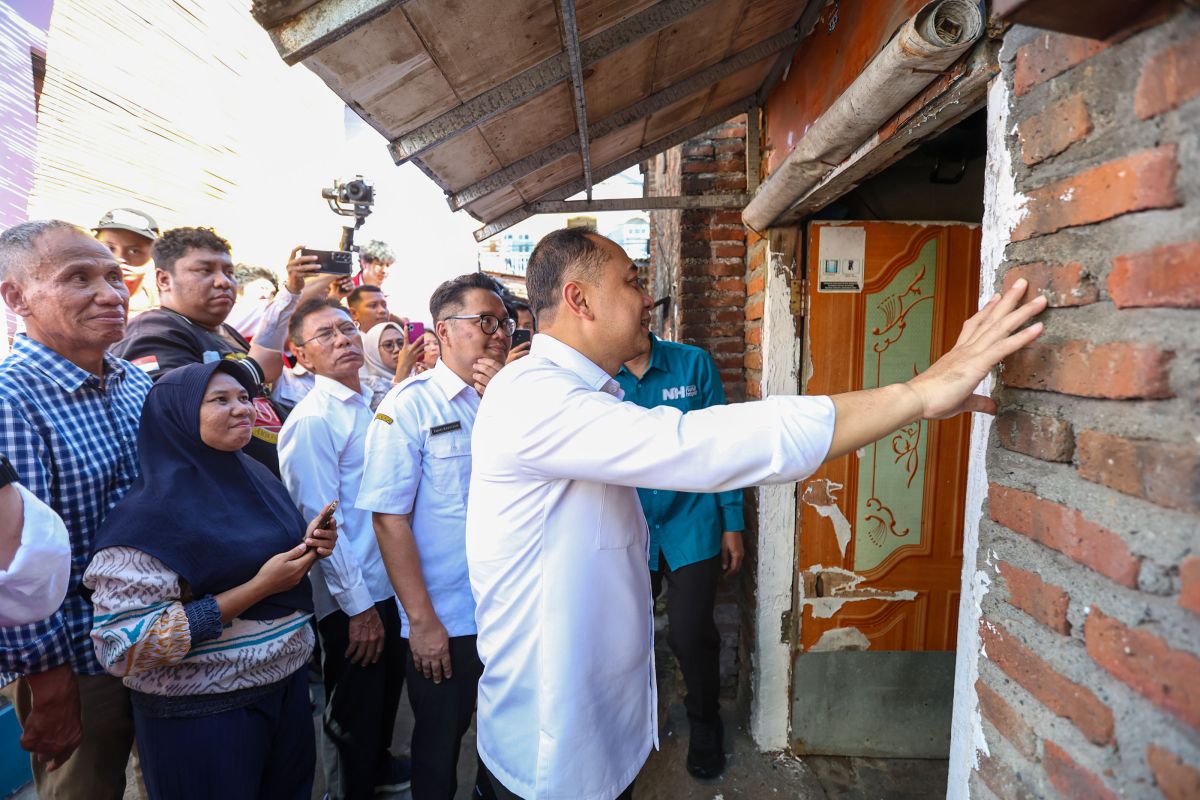
Surabaya is moving towards becoming an increasingly dense and vertical city. The challenge is to ensure that this change does not make housing a right that can only be enjoyed by those who can afford to pay.
A house is often discussed as the simplest building in a city; merely a roof, walls, floor, door and window.
Yet for families living in deprivation, a home is far more decisive. A leaking roof, limited sanitation, an inadequate floor or a fragile structure can trigger problems of health, safety, education and even family productivity.
For this reason, expanding access to decent housing is not merely about repairing buildings, but about improving quality of life from the most basic place.
In Surabaya, East Java, this issue is beginning to be placed within a broader policy framework.
The Surabaya City Government is not only repairing uninhabitable houses, or Rutilahu, but also preparing simple owned flats, known as Rusunami, as a pathway towards home ownership. The central government is also expanding support through the Self-Help Housing Stimulant Assistance programme, or BSPS.
This direction is important because Surabaya’s housing problem is not only about the number of houses that need to be repaired. A city that continues to grow faces land constraints, property prices, changing family structures, and the need of the younger generation to remain living close to their workplaces.
Surabaya has long experience in dealing with uninhabitable housing. In 2026, the Surabaya City Government still records thousands of houses requiring attention. The repair target is pursued through a combination of the regional budget, non-regional budget support, central government assistance, the business sector, social institutions and the community.
This pattern shows that the housing problem cannot be solved with a single source of financing. The regional budget remains the foundation, but the scale of need demands cross-sector cooperation.
This support is visible through the Rutilahu and BSPS programmes. On 4 August 2026, the Ministry of Housing and Settlement Areas raised Surabaya’s BSPS quota to 2,000 units from the initial allocation of 1,096 units. On the other hand, the Surabaya City Government is expanding Rutilahu handling through collaboration with the private sector and social institutions.
However, it is here that housing policy needs to be read more critically. A repaired house does resolve physical problems, but it does not necessarily resolve all of a family’s problems.
A home can become healthier, but the family within it still faces economic pressures. A building can be repaired, but issues of neighbourhood density, transport access, employment, schools, health services and open space still require attention.