
Organisational Transformation Must Be Matched by Stronger Human Capabilities
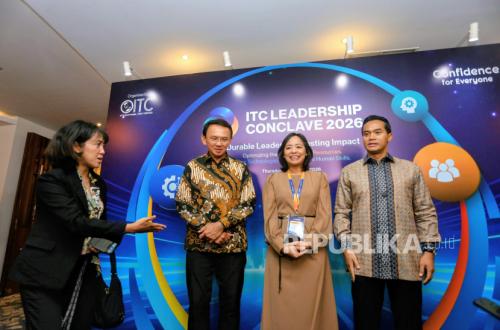
JAKARTA — Digital transformation cannot rely solely on advanced technology. Human resource readiness, adaptability and leadership integrity are essential if change is to have a tangible impact on organisations.
This was a key theme at the ITC Leadership Conclave 2026, which featured two panel discussions on the challenges of organisational transformation and human capability development amid rapid technological advances.
The first panel, titled “Beyond Adoption: Transforming Work, Search for Talent, and Customer & Employee Engagement Through Intelligent Technologies”, discussed the use of artificial intelligence (AI) and intelligent technologies to change how organisations work.
The discussion covered the use of technology in recruitment and talent development, improving employee and customer engagement, and boosting operational productivity. The responsible application of technology in ways suited to business needs was also a focus.
The second panel, titled “Promoting Adaptive Human Skills: Encouraging Judgment & Discernment, Developing an Internal Compass, and Requiring Relevant Professional Development”, highlighted the importance of strengthening human skills in the technology era.
Critical thinking, ethical judgement, adaptability, resilience and continuous learning are increasingly needed. Developing these skills is also important to prepare the next generation of professionals for changes in the world of work.
International Test Center (ITC) chief executive Jenny Lee said recalibration was key to navigating global change and uncertainty. Leaders, she said, needed to keep reassessing themselves so they could adjust their organisations’ strategies to changing times.
“As leaders, we have to be durable. This is not about how long or how quickly someone becomes a leader. The principle is that everyone can be a teacher, and everyone must also be willing to be a student,” Jenny said, according to a press release on Saturday (17 October 2026).
Former Jakarta governor Basuki Tjahaja Purnama, known as Ahok, who also attended the forum, said Indonesia needed to find a way to make the most of AI while preserving the role of people in the workplace.
AI’s development could change workforce requirements and even lead to the risk of layoffs, he said. But the technology would also create new opportunities, which people should prepare for by developing their skills and networks.
“The principle is that everyone becomes a student and everyone becomes a teacher. We learn from that. The aim is to find a formula that enables Indonesia to endure,” Ahok said.
He also stressed the importance of integrity and ethics in leadership. Pressure from the surrounding environment and continually changing circumstances can cause people to lose their direction, including forgetting the original vision underpinning their leadership.
Ahok therefore urged leaders to recalibrate themselves so they remained committed to fundamental values, including empathy and ethics.
He likened the process to calibrating a measuring instrument so that it returns to the correct standard. For people, he said, this could include meditation and reflection to reconnect with the values they believe in.
“AI cannot have empathy and ethics like humans. So we have to become human again. That way, we do not merely point out other people’s mistakes or criticise them, but also offer solutions and solve problems together,” he said.
Ahok said he hoped discussions on leadership and organisational transformation would go beyond ideas and produce concrete solutions to the various challenges facing Indonesia.
Through the ITC Leadership Conclave 2026, ITC aims to provide a space for dialogue and knowledge-sharing across sectors to strengthen leadership, organisational development and the capabilities of Indonesia’s human resources. The forum underscored that the future of work requires a balance between technological competence and human capabilities. Digital transformation should not only deliver efficiency, but also develop adaptable, competitive and principled talent capable of meeting future challenges.