
Organic Waste Transformed into Local Microorganisms and Sustainable Compost
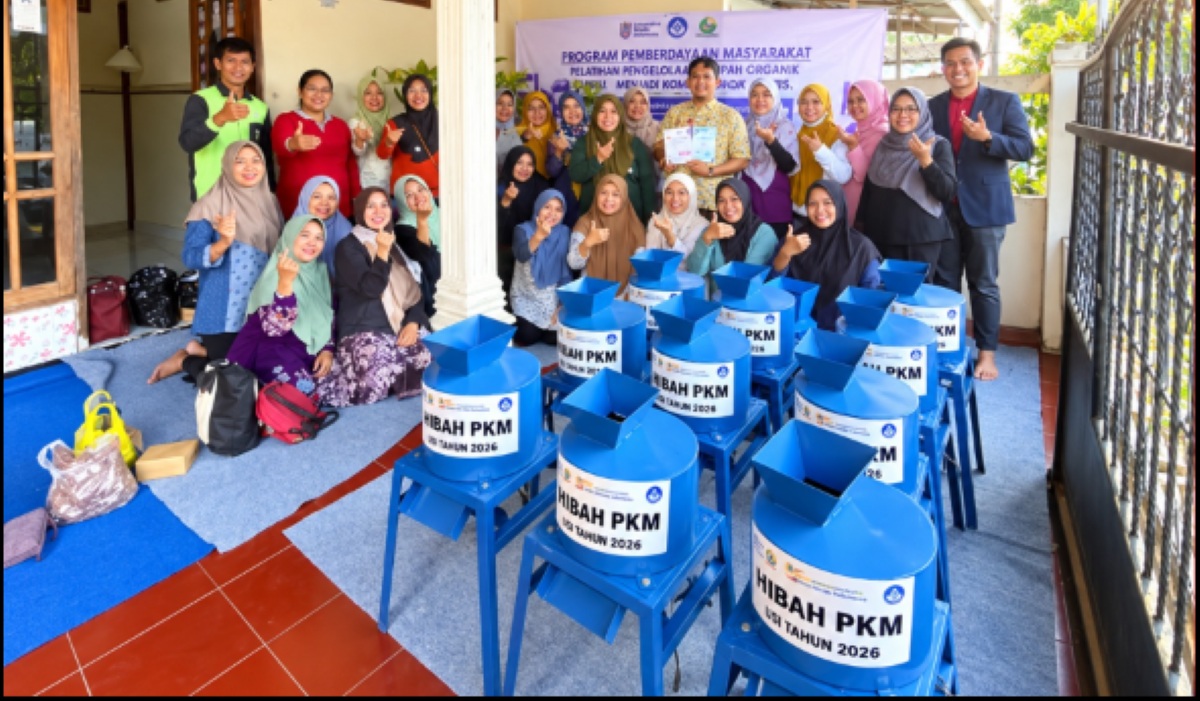
Household organic waste, such as fruit scraps, vegetables, and stale rice, can be processed into local microorganisms (MOL), which are then used as bioactivators in compost production. This simple innovation was introduced through a Community Service (Pengmas) initiative by Strada Indonesia University in collaboration with Waste Bank groups in Rejomulyo Village, Kediri City.
The programme implements a Community-Based Waste Management (CBWM) approach, positioning the community as the primary actors in the reduction, processing, and reuse of waste. This approach is designed so that waste management does not end at disposal, but evolves into a process that generates benefits for both the environment and the community.
The head of the community service team, Prof. Dr. Indasah, Ir., M.Kes., noted that waste management can begin at the household level through simple sorting and processing. According to her, organic waste, which has long been considered worthless, can still be utilised to create useful products if managed correctly.
During the implementation, residents did not only receive materials but were also directly involved in the practical production of MOL. The ingredients used include fruit waste, stale rice, brown sugar or molasses, water, rice bran, and fermentation media. The practice was designed to ensure participants gain the skills to process waste independently.
The MOL, once fermented and matured, is subsequently used as a bioactivator in composting. Participants also practised processing organic waste using fermented bran, rice husk charcoal, compost sacks, sieves, and aerobic composters.
This series of activities also introduced the concept of a circular economy at the community level. To support sustainability, the technology used is tailored to community needs, ranging from fermentation drums, jerry cans, and compost sieves to aerobic composters and community-scale organic shredding machines. Technology is positioned as a means to strengthen community capability, rather than being the ultimate goal of the programme.
The programme continues through the establishment of MOL Production and Composting Centres, accompanied by participatory mentoring and monitoring. Strengthening of organisation, management, and the diversification of Waste Bank services is also provided to ensure activities can run sustainably and possess stronger institutional frameworks.
The activities in Rejomulyo demonstrate that the success of waste management is determined not only by technology but also by knowledge, skills, participation, institutions, and mentoring. Through CBWM, the community is encouraged to sort, process, and reuse waste according to local conditions, ensuring that organic waste is no longer merely refuse, but a resource with inherent value.