
Organic Farmland Rises 24% in Push for Sustainable Food
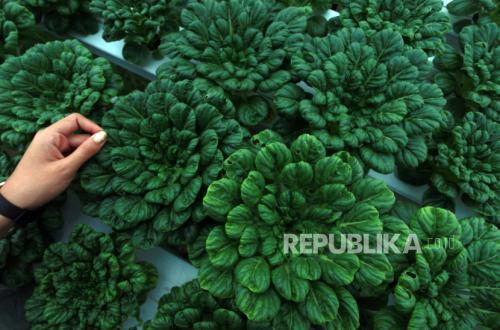
JAKARTA — The Ministry of National Development Planning (Bappenas), the United Nations Food and Agriculture Organization (FAO) and the Indonesian Organic Alliance (AOI) recently launched the 2025 Indonesian Organic Agriculture Statistics (SPOI) report. The launch aims to promote data-based development of sustainable agriculture in Indonesia.
The report will serve as a basis for determining how to develop organic agriculture in Indonesia. This effort is key to creating an inclusive, resilient and sustainable food and agriculture system. Indonesia has set a target of increasing the share of organic agricultural commodities to 1.55% of total production by 2029, from 1.47% in 2025, as set out in the 2025–2029 National Medium-Term Development Plan (RPJMN).
The latest SPOI report, the only reference source for data and information on organic agriculture in Indonesia, documents positive progress. Since 2020, the area of organic farmland nationwide has grown by about 24% to 65,100 hectares in 2024, with half of the area on Sumatra. The number of organic producers also tripled over the same period, reaching 108,469.
“Through the 2025 Indonesian Organic Agriculture Statistics report, we can continue to strengthen governance through three key parameters: consistent time-series data; standardised methodologies and commodity coverage; and the integration of data into planning and development cycles at both national and regional levels,” said Leonardo A A Teguh Sambodo, Deputy for Food, Natural Resources and the Environment at Bappenas, in a press statement on Friday (6 November 2026).
Amid the triple planetary crises of climate change, biodiversity loss and pollution, organic agriculture offers an important solution. It can ensure sustainable food production while protecting the interconnected health of soil, the environment, animals and people.
Family farmers are among the key actors in organic agriculture. On the same occasion, Bappenas, FAO, the International Fund for Agricultural Development (IFAD) and the National Committee for Family Farming (KNPK) launched a Joint Coordination Committee (JCC) for Family Farmers as a platform for cross-sector policy coordination. The committee aims to increase family farmers’ productivity and living standards while restoring land ecosystems.
“Uncertified organic practices and traditional agroecological farming by small-scale farmers have expanded rapidly around the world. The data show much greater progress when these farmers are included; that is why they must be integrated into strategies for developing the organic agriculture ecosystem,” said Rajendra Aryal, FAO Representative in Indonesia and Timor-Leste.
Source: jawawa.id (https://jawawa.id/newsitem/organic-farmland-rises-24-in-push-for-sustainable-food-1793940657)
Originally published by Republika (https://esgnow.republika.co.id/berita/to2aaw423/dorong-pangan-berkelanjutan-lahan-pertanian-organik-naik-24-persen), translated from Indonesian