
Optimising Potential: BRIN Maps Indonesia's Seaweed Industry from Upstream to Downstream
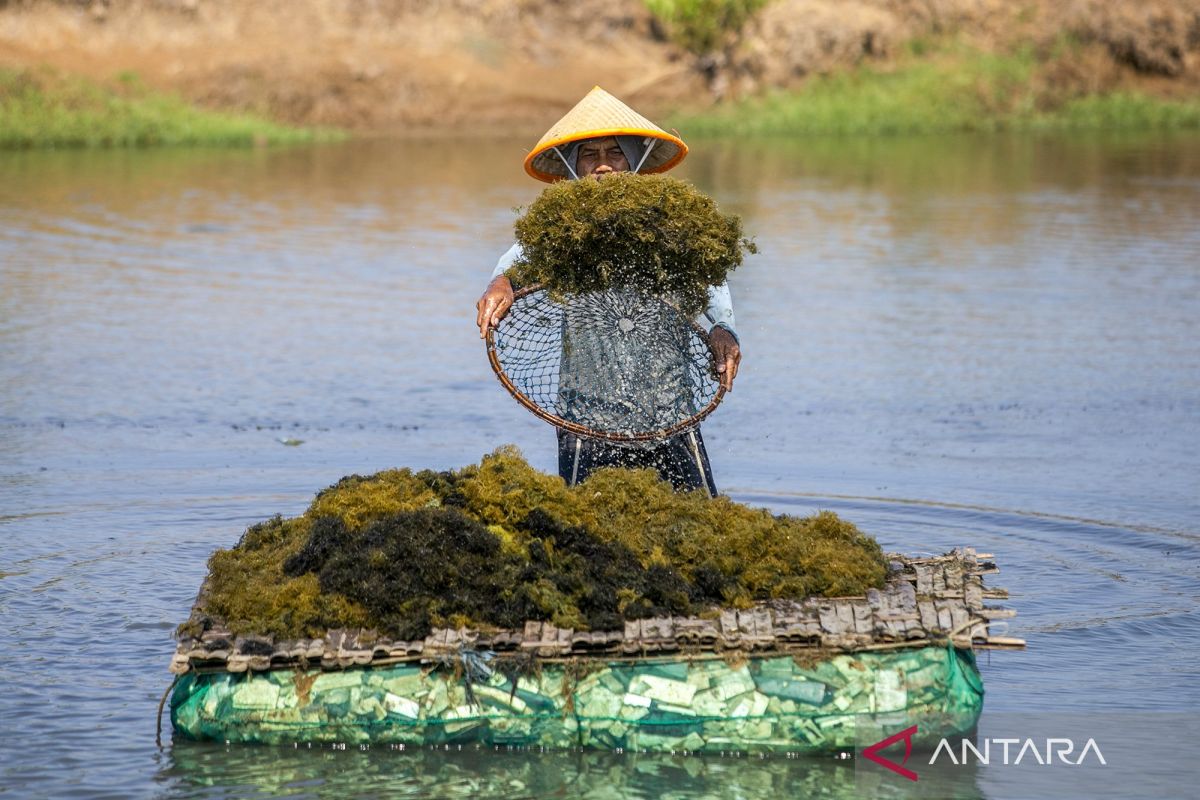
The Centre for Sustainable Industrial and Manufacturing Systems Research (PRSIMB) of the National Research and Innovation Agency (BRIN) is mapping the seaweed industry’s value chain in Indonesia from upstream to downstream to optimise its potential.
BRIN PRSIMB researcher Ari Kabul Paminto stated in Jakarta on Thursday that value chain mapping is essential to understand the position of each industrial stage and to identify areas for economic value enhancement. “We must transform from a resource-based economy that merely exploits raw materials towards a capability-based economy that relies on technological mastery and high-value innovation. We must position our natural resources as initial inputs, not final products,” said Ari.
In this mapping, BRIN is tracing the industrial process from raw materials and processing to intermediate products, various derivatives, and their applications. This approach is used to observe which parts of the value chain have developed and to identify stages that still hold opportunities for value addition.
Furthermore, the Head of PRSIMB BRIN, Nugroho Adi Sasongko, stated that mapping is necessary to determine the extent to which economic value has been formed at each processing stage. “We want to see how far marine product derivatives, particularly seaweed, have progressed. Whether they remain in the form of dry biomass or have reached derivative product forms, and how much added value they provide,” Nugroho remarked.
In addition to tracing product flows and value addition, the study examines the possibility of more comprehensive raw material utilisation through a cascading biorefinery approach. This method allows a single raw material to be utilised progressively to produce multiple types of products.
Responding to this, the Vice Chairman of the Indonesian Seaweed Industry Association (Astruli), Pontas Tambunan, explained that such an approach could ensure more thorough seaweed utilisation. “The seaweed extraction process should no longer leave behind worthless waste. Through the cascading approach, seaweed is extracted in stages so that its economic value can be utilised more completely,” said Pontas.
Currently, Indonesia possesses 57 seaweed processing industries with a total installed capacity of 197,650 tonnes of dry raw material per year. However, approximately 80 per cent of the carrageenan produced remains in semi-refined (ATC) form. This data illustrates the potential for product development in more downstream stages. Derivatives that can be developed from seaweed include carrageenan, agar, alginate, functional foods, pharmaceuticals, cosmetics, bioplastics, and biostimulants.
Additionally, seaweed utilisation through this approach could encompass products such as biostimulants, nutrients, agar, and carrageenan, while residual materials could be directed towards producing energy products such as biogas and Refuse Derived Fuel (RDF).
Source: jawawa.id (https://jawawa.id/newsitem/optimising-potential-brin-maps-indonesias-seaweed-industry-from-upstream-to-downstream-1790849333)
Originally published by Antara (Indonesian) (https://www.antaranews.com/berita/5766655/optimalkan-potensi-brin-petakan-hulu-ke-hilir-industri-rumput-laut-ri), translated from Indonesian