
Optimal Internet in Miangas Strengthens Digital Access for Border Residents
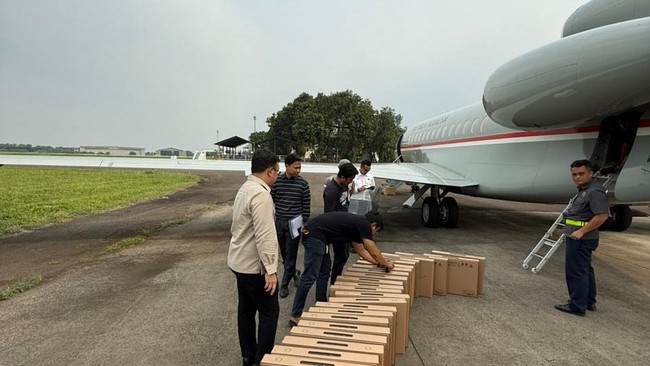
The government is strengthening digital access for the community on Miangas Island, Talaud Islands Regency, North Sulawesi Province, through enhanced internet access and communication services supported by Starlink devices, mobile phones, and strengthened telecommunications signals. This support was prepared during President Prabowo Subianto’s working visit, accompanied by the Minister of Communication and Digital, Meutya Hafid, to Miangas Island on Saturday (9/5/2026). For Miangas residents, this assistance is an important step to bolster communication access in the border region. A total of 203 family heads will receive digital connectivity support in the form of Starlink devices and mobile phones, along with signal enhancement from BAKTI of the Ministry of Communication and Digital in collaboration with Telkomsel. Each family is targeted to receive one Starlink device unit and one mobile phone unit. Overall, the government has prepared 180 Starlink modem units and 210 mobile phone units to support the communication needs of the community on this outermost island. A total of 180 Starlink modem units have been shipped from Jakarta to Manado City, North Sulawesi, using several aircraft fleets. The details are: Boeing 7308 carrying 47 units, Falcon 0707 carrying 47 units, Falcon 0801 carrying 66 units, and PK CAA aircraft carrying 20 units by hand. Meanwhile, 210 mobile phone units are already in Manado City for subsequent shipment to Miangas Island. The onward shipment from Manado to Miangas will be coordinated with the Cabinet Secretariat, with plans to use CN aircraft. In addition to device assistance, residents will also receive support for improving signal quality. BAKTI of the Ministry of Communication and Digital, together with Telkomsel, is preparing the addition of Base Transceiver Station (BTS) network devices. These devices are being shipped from Manado to Miangas using chartered aircraft. With this connectivity enhancement, Miangas residents are expected to communicate more easily, access public services, participate in educational activities, conduct economic activities, and obtain information more quickly. The programme is also part of efforts to equalise digital access for communities in Indonesia’s outermost regions, particularly in border areas that have long needed more adequate telecommunications infrastructure support.