
Opportunities and Challenges in the EV Sector Amid Global Economic Uncertainty
Amid global geopolitical volatility, automotive industry players are facing several major challenges, ranging from disrupted supplies of components and raw materials to the weakening Rupiah, which increases production costs.
In light of this, it is essential for various parties to encourage collaboration between both the government and the private sector so that Indonesia’s automotive sector can remain strong in driving the economy. This is particularly important as the automotive sector is currently in a strengthening phase, alongside the massive development of the electric vehicle (EV) ecosystem.
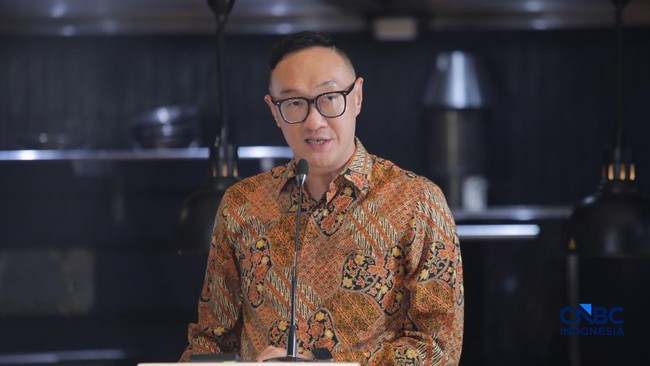
Antonius Sehonamin, Director of the Institutional Banking Group at Bank DBS Indonesia, stated that the automotive industry needs to be viewed as a single integrated ecosystem, rather than separate segments. In this context, he noted that banking, including Bank DBS Indonesia, plays a vital role in supporting the entire industrial value chain.
“For Bank DBS Indonesia, we are committed to being a banking partner for players in the automotive sector,” he said during a Coffee Morning titled “Building a Resilient Automotive Ecosystem Beyond EV Amid Global Supply Chain Shift,” organised by CNBC Indonesia and Bank DBS Indonesia on Thursday.
He added that Bank DBS Indonesia observes the entire automotive business chain, from the upstream sector and Original Equipment Manufacturers (OEM) to distributors and dealers. In addition to offering comprehensive banking solutions, Antonius mentioned that Bank DBS Indonesia possesses regional connectivity advantages that can support cross-border transactions for automotive industry players in Indonesia.
DPR Support for the Automotive Sector
From the regulatory perspective, the Chairman of Commission VII of the Indonesian House of Representatives (DPR), Saleh Partaonon Daulay, stated that the Electric Vehicle (EV) industry ecosystem must currently be built on the principle of ‘No One Left Behind’. This principle implies that no one should be excluded, as everyone must receive support.
He explained that the EV industry must foster an SME ecosystem. As the EV industry grows, it should be accompanied by the progress of Small and Medium Enterprises (SMEs).
“We want large industries to partner with SMEs so that they can thrive. They need support from SMEs, which will create jobs—a very important task for the government, we hope,” he said.
Saleh emphasised that the EV industry supply chain must reach all levels of society. EVs produced domestically will benefit the Indonesian people and contribute to national development.
“No one left behind, in the context of empowerment and the ongoing EV business,” Saleh asserted.
He explained that the DPR plays a role in the development of the EV industry through regulatory harmonisation. In this regard, the DPR guarantees investment security for investors.
He also mentioned that the DPR needs to involve the Ministry of Manpower to draft specific labour laws for the EV industry. Additionally, the DPR is studying matters regarding Local Content Requirements (TKDN) for the EV industry.
He expressed hope that through these steps, the existing challenges in the EV industry can be minimised.
“If anything is deemed inappropriate, the DPR will discuss it, so that regulatory bias can be reduced and the EV sector can grow even larger,” he concluded.
EV Ecosystem Development
Meanwhile, the Director of Maritime, Transport Equipment, and Defence Industry (IMATAP) at the Ministry of Industry, Mahardi Tunggul Wicaksono, emphasised that the EV ecosystem must be developed from both upstream and downstream perspectives, including battery recycling.
He detailed that many companies are currently available to produce battery cells, packaging, and more. However, he hopes that moving forward, battery recycling must also be addressed, as battery waste is still categorised as hazardous and toxic waste (B3).
“As the EV population in Indonesia grows, the ecosystem, including battery recycling, must be prepared,” Mahardi asserted.
Therefore, moving forward, the Ministry of Industry will coordinate and synchronise policies from upstream to downstream, involving various related agencies, including the Ministry of Environment, the Ministry of Transportation, and the Ministry of Finance.
From the entrepreneur’s perspective, the Deputy Secretary General of the Electric Mobility Ecosystem Association (AEML), Dhery Rachman, revealed that the electric vehicle supply chain in Indonesia is improving. This is highly beneficial for consumers as it provides more competitive options.
Nevertheless, he emphasised the importance of developing the EV ecosystem in Indonesia to encourage consumers to transition to electric vehicles.
“The biggest challenge is ensuring consumers feel comfortable first. Furthermore, it cannot be denied that current geopolitical tensions affect the battery supply chain, minerals, conductors, and technology. However, we see this as an opportunity to diversify the supply chain in Indonesia,” he said.
According to him, ecosystem synchronisation is currently a weak point, involving batteries, charging, financing, and workshops. Dhery hopes all these elements will progress together, especially since declining purchasing power is also a global challenge.
“EV development must happen collectively; if one part is hindered, it will affect the whole. We believe that if we move together, we can move much faster,” concluded Dhery.
This sentiment was echoed by Ello Hanson, Executive Director, Head of Large Corporates & ESG Lead Institutional Banking Group at Bank DBS Indonesia. He noted that during this transition phase towards a new economy—where internal combustion engine (ICE) vehicles and electric vehicles will coexist for a significant period—the main challenge is how every line of the value chain can adapt. This value chain encompasses the entire process from upstream to downstream, including mining, smelters, production, manufacturing, and assembly.
“The business players here are not just manufacturers, but also…
Source: jawawa.id (https://jawawa.id/newsitem/opportunities-and-challenges-in-the-ev-sector-amid-global-economic-uncertainty-1790686468)
Originally published by CNBC Indonesia (https://www.cnbcindonesia.com/news/20260929184412-4-771931/peluang-tantangan-sektor-ev-di-tengah-ketidakpastian-ekonomi-global), translated from Indonesian