
OPPO Brings Indonesia into R&D Equation at Its 500-Lab Dongguan Campus
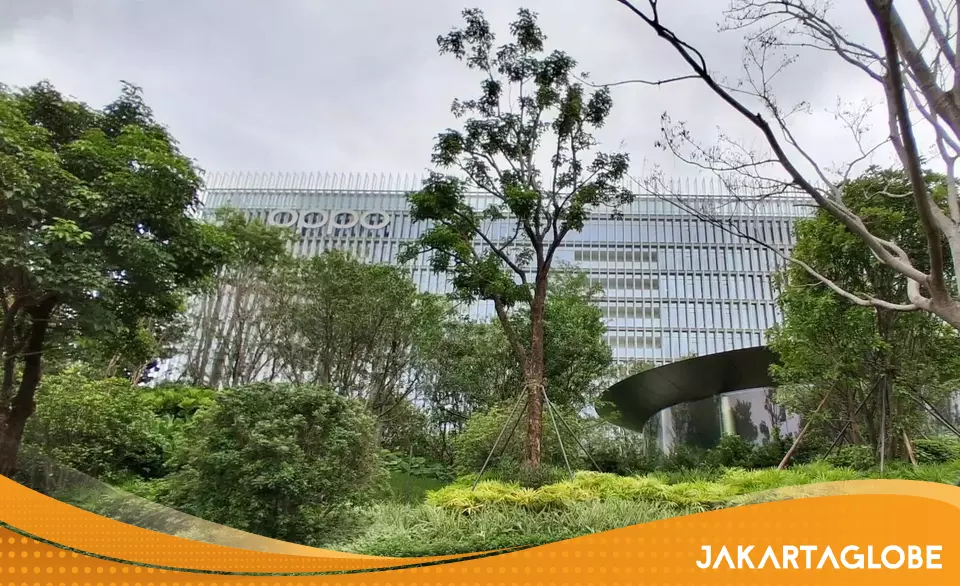
OPPO Brings Indonesia into R&D Equation at Its 500-Lab Dongguan Campus
Dongguan, China. Chinese technology company OPPO is seeking to bring markets such as Indonesia deeper into its innovation process, using local challenges and consumer needs to help define future products developed at its sprawling research campus in Dongguan.
At the heart of that strategy is OPPO’s headquarters at Binhaiwan Park, often referred to as the OPPO Campus, which Vice President Liu Chang describes as a “playground for engineers” – a place where researchers are encouraged to experiment with ideas and turn them into technologies that can eventually be manufactured at scale.
OPPO has invested heavily in the facility to attract engineering talent from China and overseas as the company seeks to move beyond the traditional manufacturing model toward research, product development and original innovation.
“Across the campus, we have built around 500 advanced laboratories. Investment in a single major laboratory building can exceed RMB 3 billion ($447 million),” Liu told journalists on the sidelines of the Asia-Pacific Media Forum in Dongguan, Guangdong Province.
“Inside OPPO, we often call Binhaiwan a ‘playground for engineers.’ What makes it a playground is not simply the landscape or the recreational spaces around us,” he said.
“More importantly, we want this to be a place where engineers are encouraged to think boldly, go deep into difficult problems, and turn ideas into real technologies.”
Liu said OPPO’s approach reflects a broader transformation in China’s advanced manufacturing sector, which for decades was primarily associated with engineering capabilities and mass production.
“That picture is changing,” he said. “Today, China’s technology industry is increasingly moving upstream: from engineering excellence to original innovation, from implementing technologies to helping define them.”
According to company data, OPPO operates nine manufacturing centers, including facilities in China, Indonesia, Bangladesh, Turkey, Pakistan, Brazil and Egypt. The company employs around 40,000 people worldwide and has monthly production capacity exceeding 14 million devices.
It has also filed more than 122,000 patent applications globally.
OPPO’s investment in research is backed by a sizable global business. The company said it had around 760 million users across more than 90 countries and regions last year, with about 60% of its products shipped to overseas markets.
OPPO ranked third in the global smartphone market in 2025, according to company data, although it ranked fifth in its home market of China. The company also said it led the global premium smartphone segment within the $500-$550 price range that year.
Indonesia Becomes Part of the R&D Equation
Managing a global manufacturing network brings challenges that differ considerably from one country to another. For OPPO, those differences should influence product development from the beginning rather than be addressed only after a device has been designed.
Liu cited Indonesia as one example.
“In Indonesia, complex transportation and building environments continue to push us to improve connectivity. In the Philippines, coastal areas and weak-network environments present a different set of connectivity challenges,” he said.
“These should not be treated as problems to ‘adapt to’ only after a product has already been developed. They should become part of R&D and product definition from the very beginning.”
That approach represents a significant change in how technology companies can view markets across the Asia-Pacific.
Rather than treating Indonesia and neighboring countries simply as destinations for finished products, Liu said OPPO wants local users, engineers, technologies and industrial capabilities to play a role much earlier in the innovation process.
“We don’t see ourselves simply as a product provider,” Liu said. “We want to be a co-builder of the Asia-Pacific innovation ecosystem.”
“We are bringing our approach to innovation into the broader Asia-Pacific industrial network. At the same time, we want the needs, talent, technologies, and industrial capabilities of different markets to become part of the innovation process much earlier.”
Read More:
Inside BYD’s Electric Vehicle EmpireLiu said technology companies have traditionally viewed much of the Asia-Pacific primarily as a market where finished products could be sold. He believes the region can play a much larger role.
“In the future, Asia-Pacific can become something much more: an innovation ecosystem that actively participates in defining the next generation of products and technologies,” he said.
“The region has extraordinarily diverse user needs, different strengths in talent, technology, and industry, as well as a highly developed manufacturing and supply-chain base.”
Turning Engineering Ideas into Products
Back at the Dongguan campus, OPPO is trying to demonstrate what that innovation model looks like in practice.
Liu cited the company’s work on smartphone telephoto photography as an example, including the development of what OPPO describes as the world’s first integrated smartphone teleconverter with true 10x optical zoom.
Putting such a system inside a smartphone presented engineers with several problems simultaneously. They needed to accommodate a long optical path, a large sensor and effective image stabilization within the extremely limited space available inside a handset.
“There was no mature industry solution we could simply adopt. We had to rethink the architecture from the ground up,” Liu said.
Turning the concept into a mass-produced device created another layer of difficulty.
Lens surfaces had to be polished at the nanometer level, while critical air gaps required micrometer-level precision, according to Liu.
OPPO’s researchers and engineers worked with supply-chain partners through repeated design and manufacturing iterations until the technology could be produced reliably at scale.
For Liu, th
Source: jawawa.id (https://jawawa.id/newsitem/oppo-brings-indonesia-into-r-d-equation-at-its-500-lab-dongguan-campus-1788879067)
Originally published by jakartaglobe.id (https://jakartaglobe.id/tech/oppo-brings-indonesia-into-rd-equation-at-its-500lab-dongguan-campus)