
OPGMN: High School Academic Ability Test Results Signal Learning Must Move Beyond Rote Memorisation
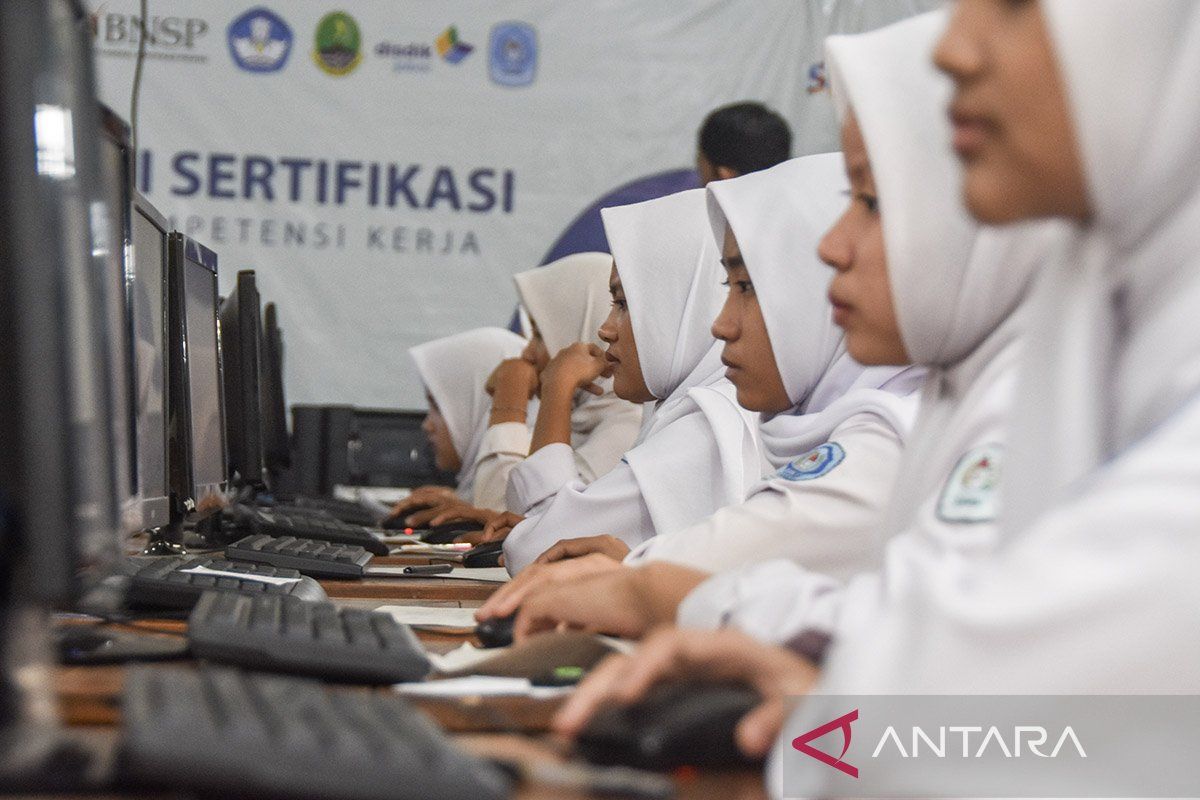
Jakarta (ANTARA) - The Nusantara Mathematics Teacher Organisation (OPustaka Pendidikan Guru Matematika Nusantara - OPGMN) has stated that the results of the High School Academic Ability Test (TKA) provide a clearer picture of the need for improvements in classroom learning methods to move beyond mere rote memorisation of material.
The General Chair of OPGMN, Moch. Fatkoer Rohman, in a written statement in Jakarta on Monday, emphasised that the TKA results should be understood as a reflection of current educational standards. “The low achievement levels, particularly in mathematics, indicate that learning methods need urgent improvement,” he said.
According to him, the TKA data now provides schools with a mirror to view student abilities more objectively. “From this, schools can identify which subjects are strong and which are lagging, while simultaneously evaluating whether current learning methods truly help students understand concepts or merely chase memorisation,” he added.
Fatkoer assessed that low mathematics achievement suggests that learning patterns in many schools have yet to engage students’ higher-order thinking skills. “Much of the teaching still consists only of formulas and repetitive practice problems. Consequently, children become accustomed to memorising shortcuts without truly grasping the underlying concepts,” he noted.
He further stated that the TKA results allow for a more serious identification of subjects requiring attention, assisting teachers in conducting objective, data-driven evaluations.
At SMAN 1 Surabaya, he continued, TKA results are not treated merely as numerical reports but serve as the basis for developing improvement measures. These include establishing learning clinics for students requiring additional support, evaluating teaching methods, and providing teacher training to strengthen interactive learning approaches.
He also noted that collaboration among teachers is being strengthened to ensure that evaluations are not conducted in isolation within each classroom, but rather become a collective movement for improvement at the school level. Additionally, he added that TKA results are shared with parents to provide a clearer view of their children’s academic progress, which in turn increases parental involvement in supporting the student learning process.