
Operation Ketupat 2026: Road Death Toll Falls Sharply in West Java
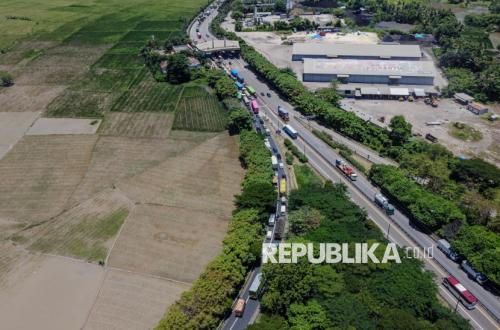
The head of the National Police’s Traffic Corps, Inspector General Agus Suryonugroho, reported that the fatality toll from traffic accidents during Operation Ketupat 2026 in West Java has fallen sharply. By the third day of operations, fatalities had decreased by approximately 91 per cent compared with the same period the previous year.
Suryonugroho made the statement whilst inspecting the Integrated Command Post for Operation Ketupat Lodaya 2026 at the KM 57 Rest Area on the Jakarta–Cikampek Toll Road on Sunday, 15 March 2026. He received briefings from West Java Police officials regarding security management and traffic management during the exodus period.
“The fatality indicator shows a decline from last year of up to 91 per cent. Last year 26 people died; now only one person,” said the Traffic Corps head.
According to Suryonugroho, the reduction in fatalities represents an important indicator of successful traffic security efforts in the early phase of this year’s Operation Ketupat. Accident monitoring in West Java is also conducted using an integrated road safety database system.
Suryonugroho explained that accident data is collected through the Integrated Road Safety Management System, which is used to monitor traffic safety developments in the region.
“Specifically in West Java, because there is an Integrated Road Safety Management System at the provincial level that records accidents. The fatality toll has decreased by 91 per cent,” he said.
Beyond accident monitoring, the Traffic Corps is also utilising digital systems to track vehicle movements in real time. This data forms the basis for determining traffic engineering measures when there are surges in vehicles heading towards the Trans-Java route.
Suryonugroho predicted that the peak exodus flow would occur mid-week. Traffic engineering measures such as contraflow and one-way systems are being prepared according to the parameters of vehicle volume passing through the toll route.
“We are already using digital technology to monitor, make decisions, and gather real data. The peak flow is estimated to be from 17 to 18 March,” he said.