
Operasi Pesta Copet: A Portrait of Youth Social Reality, Not Just a Crime Film
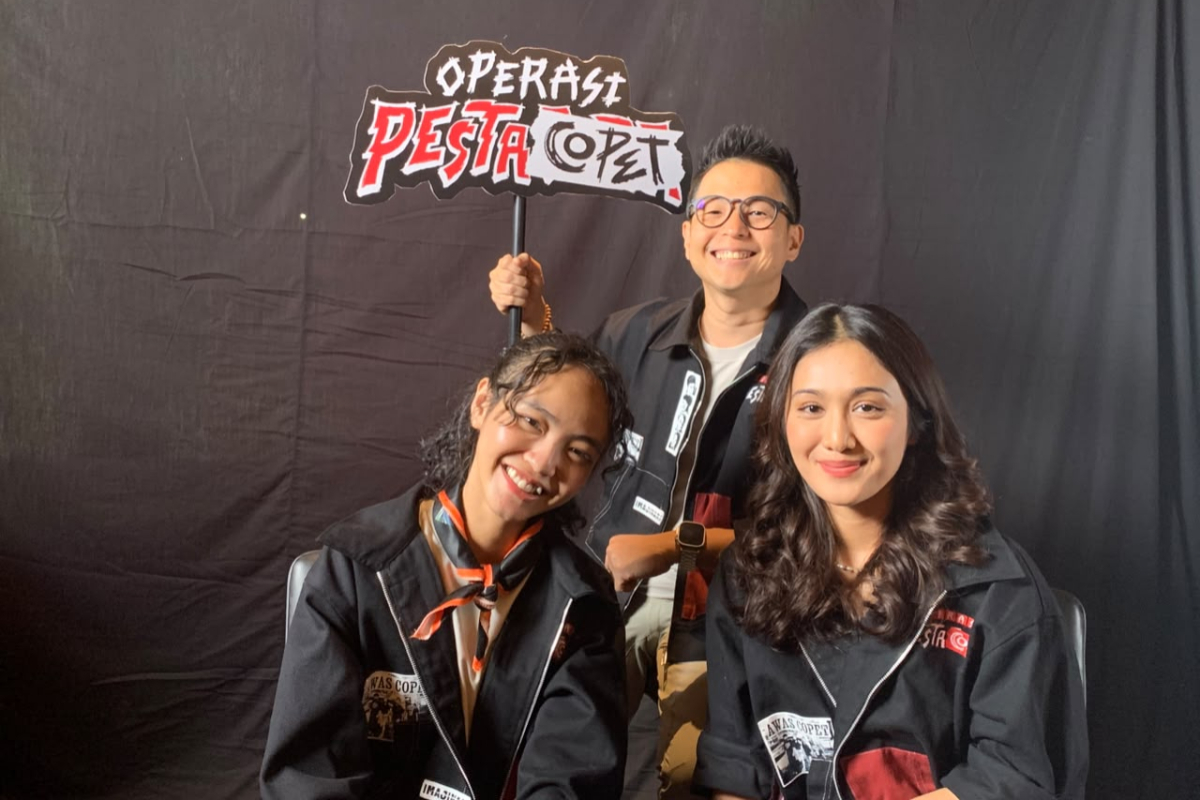
Understanding the reasons why someone becomes a pickpocket is the starting point for the development of the story in ‘Operasi Pesta Copet’. Through research covering criminality, criminology, and direct observation of life in railway-side settlements, the film’s story evolved into a portrait of the social pressures faced by young people.
Director Edy Khemod said the creative team initially conducted research from various angles, from criminality and criminology to sociology. However, during the scriptwriting process, he felt that the discussion of legal aspects was no longer the film’s main focus. “We are more interested in the sociology. What makes people pickpocket? Why is this a social phenomenon that is so prevalent among young people today? I find that more interesting,” he said.
This shift became more pronounced when Edy surveyed the settlement area along the railway tracks that serves as the story’s backdrop. The experience of seeing the community’s life firsthand made him change the film’s approach, which was originally built as a light comedy. “I made the story set with them living by the railway. I went to the houses by the tracks, I saw them and thought, ‘oh, their lives are so pitiful.’ I saw that this is indeed a real social issue. From there, I changed things. Initially, I felt this pickpocket story was a bit comedic, almost caricatural. But oh, it turns out there is a social issue here,” Edy stated.
According to Edy, empathy is the key to building a comedic nuance amidst a story laden with social pressure. He admitted to having experienced difficult times and befriended people who lived in harsh environments, making it easier to understand the characters’ perspectives. “Empathy is the key. I have been in that situation, I have been friends with people who were extortionists. So I can understand that they actually have abilities, but they are in the wrong environment and the wrong social circle.”
To present a more authentic portrayal, the production team also collaborated with a magician community to learn pickpocketing techniques so that the scenes could be performed directly by the actors. According to Edy, this step was taken because producer Ernest Prakasa wanted the pickpocketing process to look real without relying on editing. “Ernest emphasised from the start that he did not want the pickpocketing to be done by an editor. So the actual pickpocketing had to be done live. In the end, we worked with friends from the magician community,” he said.
Meanwhile, producer Ernest Prakasa said the film attempts to see another side of the pickpockets, including the reasons that pushed them into that world. “How they were forced to pickpocket or whether they just followed their senior gang members to carry out the act,” Ernest said. According to him, the research was conducted so the film could depict the phenomenon based on realities found in the field, not just showcase criminal acts. Ernest also added that since the script development stage, the team had repeatedly discussed the issues of criminality and social inequality so that the message conveyed remained consistent and was not misinterpreted.
This message is also reflected in the characters. Actress Kawai Labiba admitted that her experience in theatre since childhood helped her build the character of Melodi, especially through the exploration of body gestures and dialogue to make the character feel alive. According to Kawai, Melodi is not just the youngest member of an amateur pickpocketing group, but also represents young people who are searching for direction in life amidst various pressures. “Melodi is the youngest, active, expressive, and I think she quite represents young people who have just graduated from school, are full of passion, and are still figuring things out. She also really loves music.” After delving into the character, Kawai admitted she increasingly understands the struggles many young people face today. “They are actually tired of the life they are living. Sometimes they ask, ‘what do I actually want to be?’ They can do anything to survive, even to explore themselves.”
A similar view was shared by Zulfa Maharani, who plays Tia. According to her, Tia is a woman with a strong survival instinct but without many options, so she tries to find a way out of her living conditions. To bring the character to life, Zulfa underwent a process of readings, workshops, discussions with the director and consultants, and direct observation of environments deemed close to Tia’s life. She also assessed that the long rehearsal period helped the cast build closeness so that the relationships between characters felt like family, not just a gang. “We were given a long time for readings and workshops. That automatically built chemistry among all of us,” she concluded.