
Open University Promotes Inclusive Education
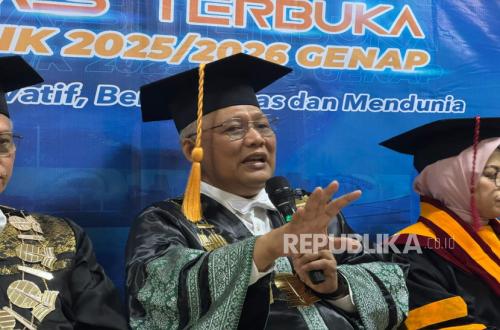
Universitas Terbuka (UT) has stated that its open learning system is one of its efforts to widen access to higher education for all levels of society without distinction of age, profession or social status. The university also affirmed that all students are subject to the same academic standards, including state officials and public figures.
This was stated at the UT Graduation Ceremony for the Even Semester of the 2025/2026 Academic Year, Region 2, held in South Tangerang on Tuesday (14/7/2026), attended by around 1,500 graduates from 13 UT regional offices. Among the graduates were individuals from diverse backgrounds, including Muhammad Albagir, goalkeeper of the Indonesian national futsal team; Muhammad Habibur Rochman, a member of Commission IV of the Indonesian House of Representatives; and I Wayan Wiasthana Ika Putra, Head of the Bali Provincial Development Planning Agency (Bappeda).
UT Rector Prof Ali Muktiyanto said the open learning system implemented by UT serves as an alternative for people who have not been able to access higher education through conventional universities.
“We want to state clearly that UT is truly committed to joining the effort to improve the quality of our nation. Only an educated nation can achieve its aspiration of becoming a developed country, and there is no historical precedent of a developed nation that was not pioneered by the educated,” said Ali on Tuesday (14/7/2026).
Ali noted that every year more than 1.2 million secondary school graduates are not accommodated by conventional state or private universities. According to him, UT provides the public with the opportunity to pursue education from bachelor’s through to doctoral level, while also improving competencies through reskilling and upskilling.
UT has also begun implementing an Outcome Based Education (OBE) approach so that the learning process better aligns with the needs of society and the world of work.
“This means it is genuinely expected to link with the needs of society, not merely with the business, industry and employment worlds, but also with the needs of the community,” said Ali.
UT Vice-Rector for Academic Affairs Prof Rahmat Budiman said all students receive the same services and undergo the same academic processes, with no special treatment.
“So the officials here also receive the same quality of education and services. If they do not pass, they do not pass — there is no dispensation because we do not look at status. Once again, our foundation is quality, we live by quality, and we exist for quality,” said Rahmat.