
Open House at Palembang's Sekolah Rakyat: Gus Ipul Stresses Honesty
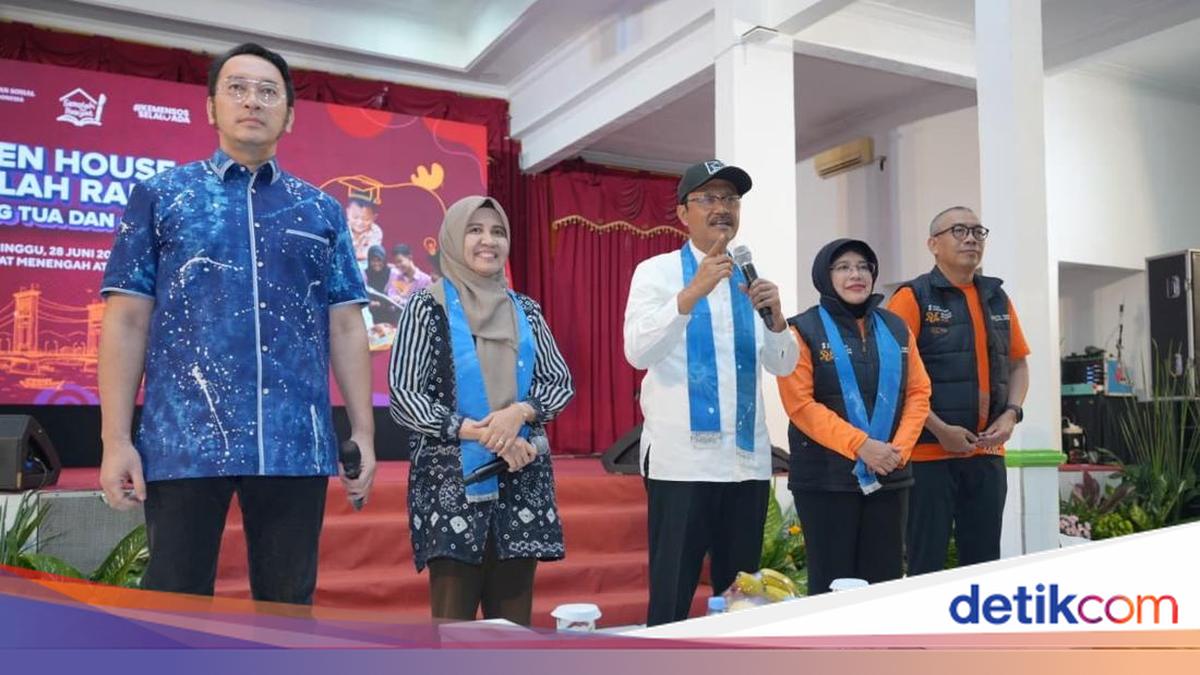
Social Affairs Minister Saifullah Yusuf, known as Gus Ipul, has stressed that honesty is the key to the outreach process for prospective students of Sekolah Rakyat (People’s Schools). He made the statement while attending an Open House for parents and prospective students at Sekolah Rakyat Menengah Atas (SRMA) 7 Palembang, located at the ‘Budi Perkasa’ Centre in Palembang on Sunday.
“This programme must begin with honesty and openness. There is no registration, only outreach. Families who meet the criteria in the DTSEN are approached by officers and then designated as Sekolah Rakyat students,” Gus Ipul said in a written statement. The Open House was held to provide an opportunity for prospective students, parents, local government, and the public to observe the learning progress of students who have been in the programme for nearly a year.
There are currently five pioneer Sekolah Rakyat operating in South Sumatra, including SRMA 7 Palembang, which accommodates 96 students, with 60 new prospective students identified through the outreach mechanism targeting the first and second deciles of the National Socio-Economic Data (DTSEN). Gus Ipul further emphasised that honesty is required from the officers conducting the outreach to the families providing information to the government. “After that, the management must also be honest. There must be no corruption, bribery, or disgraceful acts because this programme is intended for those who have been marginalised and left behind in the development process,” he asserted.
This message was reinforced by the Head of BPS, Amalia Adininggar Widyasanti. She stated that the success of Sekolah Rakyat demonstrates that statistics are not merely a collection of numbers but can provide profound meaning for the children. “Statistics can have an impact so that they have dreams for their future,” Amalia said. She also noted that the majority of students reached indeed come from families in the first and second DTSEN deciles, providing feedback for BPS to continuously improve data accuracy.
Gus Ipul’s arrival was welcomed by various student performances, including a marching display, Kuda Lumping dance, Gending Sriwijaya dance, karate, speeches in four languages (English, Arabic, Japanese, and Mandarin), a choir, and poetry reading. He then spontaneously asked 15 students who had performed the marching display to perform again on stage. “These children have been educated for more than eleven months. I am proud of all of you, proud of the headmaster, teachers, and education staff who have accompanied them,” he said.
Information and Communication Technology teacher Erin Ramantia presented an interactive learning simulation using a smartboard and the Scratch application, expressing gratitude for the facilities now available at the school. “Thank you, President Prabowo, thank you, Minister of Social Affairs Saifullah Yusuf, thank you to the Ministry of Social Affairs and all parties involved. The facilities provided greatly assist us in the teaching process,” Erin said.
Another touching moment occurred when Gus Ipul spoke with Nur Aziza, a 10th-grade student who was the master of ceremonies for the Open House. Nur is the child of a casual daily labourer who aspires to be a doctor. When asked what she would say to the President, Nur replied, “I want to say thank you to Mr Prabowo. Thanks to this Sekolah Rakyat programme, I can go to school again.” Her answer brought the headmaster, Diana Nursanti, to tears. Nur’s mother, Widya Wati, also shared the positive changes in her daughter, noting she is now more diligent in her studies and helps with household chores.
A dialogue was also held with a 10-year-old prospective student, M. Fariz Al Afiz, who admitted he had never attended school and could not read or write due to his family’s economic constraints. His father works as a casual construction labourer. Gus Ipul remarked that Fariz’s story is a real example of why Sekolah Rakyat was established. He added that graduates of the programme will be directed towards two paths: continuing their education at university or becoming skilled workers according to their potential.