
Only 70 Daycares Certified Amid High Childcare Demand in Indonesia
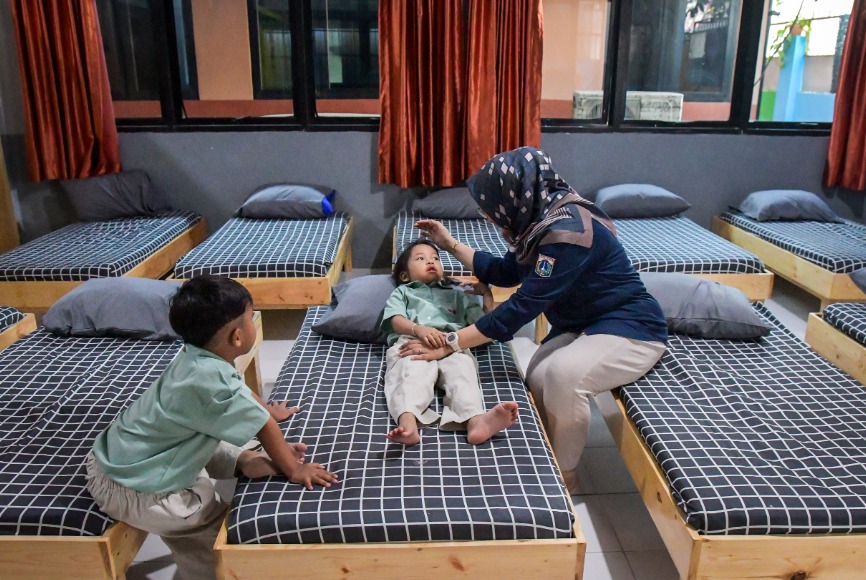
Minister of Women’s Empowerment and Child Protection (PPPA) Arifah Fauzi has highlighted the high demand for daycare or childcare services in Indonesia, which has not been fully matched by adequate service governance. This situation is considered a serious challenge in efforts to fulfil children’s rights and protection.
Arifah stated that around 75 per cent of families in Indonesia currently utilise external childcare services, including daycare centres, along with the increasing workforce participation of parents, particularly women. However, the reality is that many daycare services still lack operational permits, standard operating procedures (SOPs), child protection codes of ethics, and certified caregivers.
“Many daycare centres still lack permits, do not have standard operating procedures, have not implemented a child protection code of ethics, and are not supported by certified human resources. This condition certainly poses a risk to the fulfilment of children’s rights and safety,” said PPPA Minister Arifah Fauzi during a working meeting with Commission VIII of the Indonesian House of Representatives.
She explained that the organisation of daycare services in Indonesia is currently divided into four groups. First, education-based daycare under the Ministry of Primary and Secondary Education through Early Childhood Education (PAUD) and Childcare Centres (TPA) programmes with licensing via the One-Stop Integrated Service (PTSP). Second, daycare for vulnerable children groups under the Ministry of Social Affairs with the Prosperous Child Park (TAS) programme. Third, business-based daycare managed commercially with licensing through PTSP. Fourth, community-based daycare in the form of temporary alternative care operated with the support of extended family, neighbours, and the community.
According to Arifah, various cases of violence against children occurring in daycare centres serve as an important reminder that alternative care services still face major challenges in terms of child protection. “Cases of violence against children in daycare centres are a very serious reminder to all of us that child protection, especially in alternative care services, still faces significant challenges,” she said.
To ensure safe and violence-free childcare services, the government has developed the Child-Friendly Care Park (TARA) standard. This standard is intended for temporary care services for children aged 0-6 years so that the quality of care and child development aligns with children’s basic rights and developmental stages. TARA standardisation is regulated in PPPA Ministerial Regulation Number 4 of 2024, which affirms that every daycare service must guarantee the best interests of the child, have clear standards, be supported by competent human resources, and have a sustainable and transparent supervision system.
Arifah stated that since the implementation of TARA standardisation in 2021, there have been no reports of violence occurring in daycare centres that have obtained a TARA certificate from the PPPA Ministry. “Since the implementation of TARA standardisation in 2021, there have been no reports of violence occurring in daycare centres that have received a TARA certificate,” she revealed.
Nevertheless, to date only 70 daycare centres have been standardised under TARA, comprising 16 daycare centres at the ministry/institution level and 54 at the provincial or district/city level. The government has also issued a Joint Circular of six ministers to encourage the improvement of childcare centre service quality, support the fulfilment of care rights for working parents, and increase women’s workforce participation. This circular serves as a reference for ministries/institutions, regional governments, state-owned enterprises, regionally-owned enterprises, the private sector, and the community in providing and organising TPA services that meet standards, are sustainable, and are based on children’s rights.