
Only 38% of Islamic Boarding Schools Have Adequate Sanitation, Financing Access to Be Expanded
PASURUAN — Access to clean water and sanitation remains a problem at Islamic boarding schools. A 2024 survey by the Pesantren Economic Association of 210 schools in West Java, the Special Region of Yogyakarta and East Java found that only 54% had access to safe water, while just 38% had adequate sanitation facilities.
The situation points to a need for financing schemes to help Islamic boarding schools build clean-water and sanitation facilities. Danone Indonesia, Water.org and the Sinergi Ekosistem Pesantren Foundation (SEP) are developing a partnership that will enable schools to access financing through the WaterCredit programme.
The scheme gives school administrators the opportunity to build clean-water and sanitation facilities with more affordable financing. Facility development will also be accompanied by education on clean and healthy living practices, so the facilities can be used sustainably.
Water.org’s Executive Director for Southeast Asia, Yuniar Restanto, said access to clean water and sanitation affected the health of students and communities around the schools. Access to financing, she said, was one of the key factors in accelerating the provision of such facilities.
“When an Islamic boarding school has adequate access to clean water and sanitation, the benefits are felt not only by its students, but also by their families and the surrounding community. Through WaterCredit, we want to open a pathway for schools to access financing that helps provide safe, adequate and sustainable water and sanitation facilities,” Yuniar said in a statement received on Saturday (10 October 2026).
National Statistics Agency (BPS) data cited in the press release showed that 83.60% of Indonesians had access to adequate sanitation in 2024. This means around 45.4 million people lacked adequate sanitation, while nearly 25 million people reportedly did not use a toilet; only about 7% of domestic wastewater was treated safely.
The challenge is significant because Indonesia has more than 34,000 Islamic boarding schools, with millions of students living in residential settings. Shared facilities and crowded accommodation make access to clean water and sanitation, as well as habits that promote cleanliness, essential.
Danone Indonesia’s Public Affairs and Sustainability Director, Karyanto Wibowo, said improvements to facilities needed to go hand in hand with the development of healthy habits. Students were also expected to practise and spread good hygiene to their families and communities.
“Islamic boarding schools play a strategic role as centres of learning and character-building, with a significant influence on society. Efforts to provide adequate access to clean water and sanitation are therefore not just about supplying facilities, but also about fostering clean and healthy living practices that students can model and pass on to their families and communities,” Karyanto said.
Danone Indonesia said its clean-water and sanitation programmes had reached more than 500,000 people across Indonesia. The programmes include infrastructure construction, hygiene education, environmental management and the strengthening of community-based governance.
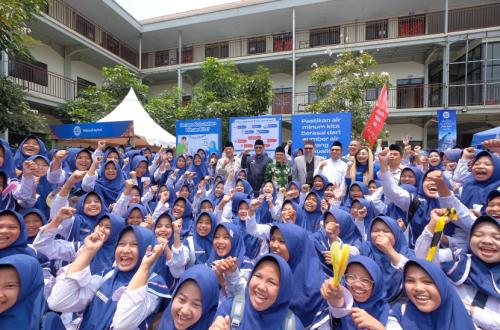
The partnership was introduced at the East Java Islamic Boarding School Clean Water and Sanitation Access Festival, held at Ngalah Islamic Boarding School in Pasuruan Regency on Thursday (8 October 2026). The event, held ahead of National Santri Day 2026, was attended by around 3,500 students, school administrators, local government representatives, financial institutions and members of the public.
The festival also marked the appointment of BESTARI Santri Ambassadors — BESTARI being an acronym for Clean, Healthy, Resilient and Independent. The selected students will encourage clean-living habits, promote hygiene and raise awareness of the importance of sanitation at their schools.
Pasuruan Deputy Regent Muhammad Shobih Asrori said the local government needed to work with various partners to improve facilities at Islamic boarding schools. Financing support was necessary, he said, to ensure clean-water infrastructure could meet students’ day-to-day needs.
Pasuruan Pesantren Council Chair Tantowie Abdullah Siradj also called for cooperation between Islamic boarding schools, government, businesses, academics and the public. Such collaboration is expected to expand access to essential facilities while improving health and the self-reliance of the schools.
Source: jawawa.id (https://jawawa.id/newsitem/only-38-of-islamic-boarding-schools-have-adequate-sanitation-financing-access-to-be-expanded-1791625857)
Originally published by Republika (https://halalhub.republika.co.id/berita/tmny7x416/baru-38-persen-pesantren-miliki-sanitasi-memadai-akses-pembiayaan-didorong), translated from Indonesian