
Only 32.4% of Businesses Plan to Invest in the Next Six Months
Business investment appetite continues to weaken despite easing pressures, with only 32.4% of respondents to the Kadin Business Pulse Q3 2026 survey saying they plan to invest in the next six months. The share has fallen for three consecutive quarters, showing that reduced pessimism has not been enough to prompt businesses to expand again.
In a report published by the Kadin Indonesia Institute (KII) on Thursday (22 October 2026), the proportion of businesses planning to invest declined from 47.1% in the fourth quarter of 2025 to 39.0% in the first quarter of 2026, then to 34.4% in the second quarter and 32.4% in the third quarter. This represents a fall of 14.7 percentage points from the end of 2025.
A total of 40.0% of respondents said they did not plan to invest, down from 43.5% in the previous quarter. However, the decline was accompanied by an increase in neutral responses, from 22.1% to 27.6%. KII said this pattern suggested that more businesses were shifting towards a wait-and-see stance rather than preparing to expand.
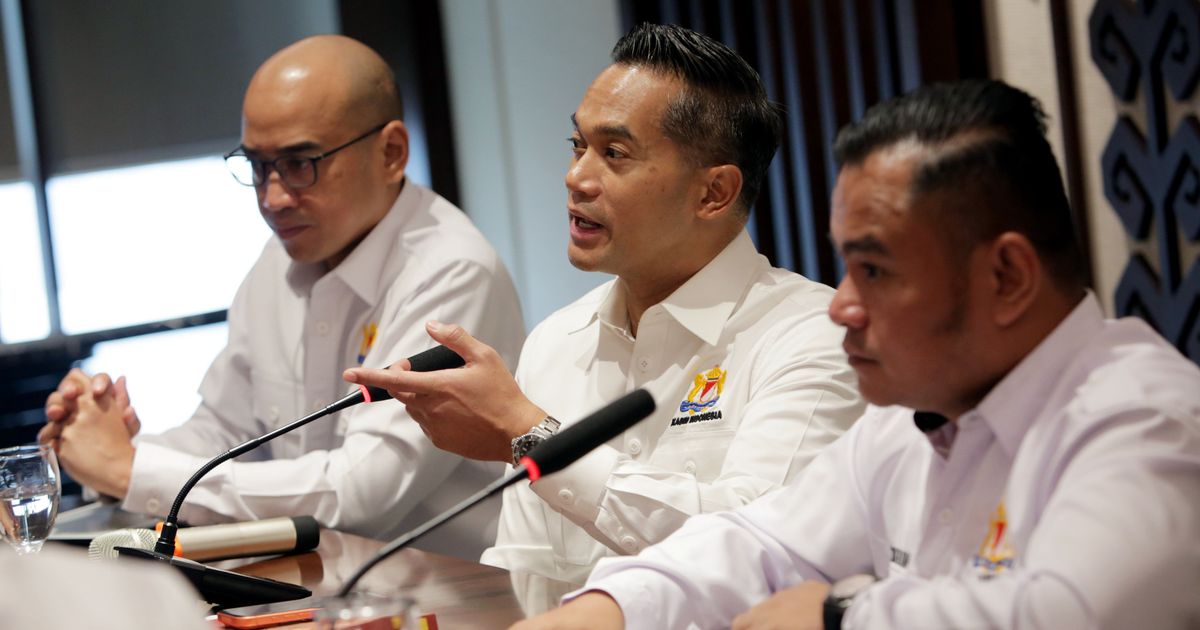
“Business pressures eased in Q3 2026, but businesses have shifted more towards a ‘wait and see’ stance than optimism,” Kadin Institute chief Dr Mulya Amri said at a press conference at Menara Kadin in Jakarta on Thursday (22 October 2026). Kadin chairman Anindya Novyan Bakrie also attended.
The survey was conducted from 14 to 30 September 2026 among 330 Kadin members across 28 provinces and a range of business sectors. According to the methodology, respondents were selected through random sampling, with responses collected online via WhatsApp and a survey form. KII reported a margin of error of ±5.9% at a 95% confidence level.
Businesses with turnover below Rp2 billion made up 55.2% of respondents, followed by those with turnover of Rp2 billion to Rp15 billion at 23.6%. In terms of employment, 30.3% of respondents had fewer than five workers and 34.2% had between five and 19. The survey reflects the views of the Kadin members who responded, a large proportion of whom run small-scale businesses.
KII linked the weakening investment appetite to higher capital costs and exchange-rate uncertainty. The report noted that Bank Indonesia’s benchmark interest rate rose by a total of 100 basis points to 5.75% at the end of Q2 2026 and remained at that level throughout Q3. Meanwhile, the rupiah’s 7.74% depreciation by the end of September raised the cost of imported capital goods.
This contrasts with overall investment trends. According to data cited by KII, realised investment in Q2 2026 reached Rp511.78 trillion, up 7.1% year on year, with downstream processing accounting for nearly 30%. Investment loans also grew by 25.11% year on year in August 2026.
KII said the divergence suggested that aggregate investment was being supported by large-scale projects, while investment intentions across the broader business community were weakening. Growth in national investment figures could therefore obscure the fragile capacity of smaller and mid-sized businesses to expand.
Investment intentions varied markedly by business size. A total of 42.4% of large businesses planned to invest in the next six months, compared with 36.5% of small and medium-sized businesses and 28.0% of microbusinesses. Large businesses were the only group in which the share planning to invest exceeded the share with no such plans: 42.4% against 39.4%.
Among microbusinesses, the share planning to invest fell from 36.1% to 28.0%, while the neutral group grew from 24.3% to 35.7%. By contrast, investment appetite among small and medium-sized businesses improved from 27.3% to 36.5%. Even so, 46.1% of these businesses said they did not plan to invest.
KII said these differences were consistent with unequal access to financing. Data cited in the report showed corporate credit growing by 22.18% year on year in August 2026, while loans to micro, small and medium-sized enterprises (MSMEs) rose by just 2.38%. This gap risks widening differences in businesses’ ability to expand.
The easing of business pressures has also yet to produce a strong recovery in optimism. The proportion of respondents who disagreed that their business conditions had improved from the previous quarter fell from 47.1% to 40.6%. However, the share who said their business had improved edged up only slightly, from 22.8% to 23.9%.
By contrast, the proportion describing conditions as ‘about the same’ rose from 30.1% to 35.5%, its highest level in four quarters. KII said this suggested that pressures were no longer worsening as sharply, but businesses had yet to see strong enough reasons to feel optimistic.
Among small and medium-sized businesses, the share saying conditions had improved rose from 14.3% to 26.1%. Optimism among large businesses, however, weakened, with the proportion reporting better conditions falling from 34.5% to 21.2%. The contrast indicates that sentiment recovery has been uneven.
Assessments of conditions in respondents’ industries showed a similar pattern. The share saying their sector had not improved fell from 51.8% to 41.8%, while the proportion saying it had improved rose from 22.5% to 25.2%. Neutral responses increased from 25.7% to 33.0%.
KII described the situation as a fragile stabilisation phase. The decline in pessimism was followed more often by a shift into the neutral group than by an increase in optimism. A more convincing recovery would require falling negative assessments to be accompanied by a clear rise in positive ones.
Government policies and programmes were the leading challenge for businesses, cited by 17.8% of respondents, up from 14.8% in the previous quarter. Other challenges included access to finance at 13.3%, demand at 11.8% and bureaucracy at 9.8%.
Complaints about bureaucracy fell considerably from 16.4%. KII cautioned, however, that this did not necessarily indicate improved services, as some complaints appeared to have shifted towards the substance of government policies and programmes. Institutional challenges—including policy, bureaucracy, legal uncertainty and corruption—still accounted for about 40.5% of responses.
Cash-flow pressures also intensified. The combined share of responses concerning access to finance and payments rose from 14.4% to 19.2%, indicating that liquidity needs are becoming a more significant issue for business continuity.
Despite being the main challenge, central government policy remained the biggest source of hope for business improvement in Q4 2026, cited by 30.0% of respondents. This was followed by global or international market trends at 23.6%, access to finance at 15.8% and legal certainty at 11.5%.
However, expectations of central government policy fell from 35.9% in the previous quarter. Hopes for fiscal incentives also declined, from 8.3% to 3.6%, while expectations for financing and legal certainty increased. According to KII, the shift points to businesses’ more fundamental needs: certainty and liquidity.
Among positive developments already being experienced, technology ranked first, at 18.2%, followed by market development for new products at 17.3% and government policies and programmes at 15.8%. Technology was seen as creating opportunities for efficiency and innovation, while expanding markets remained important for driving sales.
The survey also highlighted the risks that natural disasters and environmental disruption pose to business continuity. A total of 57.9% of respondents said they had been affected in the past 12 months, while 42.1% said they had not.
The most frequently reported disruption was forest and land fires or haze, at 13.0%, followed by other natural disasters or disruptions at 11.2%, extreme weather at 10.9% and drought at 9.7%. Climate-related disruptions—including fires, extreme weather, drought and flooding—affected 39.1% of respondents.
The most commonly cited impacts were higher operating costs, selected by 13.5% of respondents; lower sales or demand, 11.8%; and transport and logistics disruption, 10.8%. Other impacts included production disruption at 9.0%, interruptions to raw-material supplies at 8.0% and delayed investment or expansion at 6.2%.
KII said environmental disruption was more likely to intensify operational and commercial pressures than to cause direct physical damage. The five combined impacts of costs, sales, logistics, production and raw materials accounted for 53.1% of responses, far exceeding the combined 8.2% for asset damage and infrastructure disruption.
Despite this high level of exposure, preparedness remained limited. A total of 44.5% of respondents said they were insufficiently prepared or unprepared for business disruptions caused by natural disasters and extreme weather. This included 29.7% who were insufficiently prepared and 14.8% who were unprepared.
Meanwhile, 43.7% said they were prepared: 37.0% described themselves as fairly prepared and only 6.7% as very prepared. The remaining 11.8% said they did not know or that the question was not relevant. KII cautioned that these figures reflected respondents’ own assessments, not direct inspections of companies’ ability to cope with disasters.
The construction sector recorded the highest share of businesses that were not prepared, at 58.2%, while only 30.2% said they were prepared. KII said sector-level findings were indicative because the number of respondents in each sector was limited.
The government support most sought to address these risks was a system providing early warnings and rapid, accurate risk information, cited by 22.4% of respondents. This was followed by protection and recovery of infrastructure, transport and logistics routes at 18.6%, and financial or working-capital assistance and loan relief at 16.4%.
Based on its findings, KII recommended three policy priorities. First, the government should maintain a consistent policy direction and involve businesses before introducing new regulations. Such certainty is needed to turn a wait-and-see stance into investment decisions.
Second, access to finance should be broadened more evenly, particularly for MSMEs. Easier access to credit and working capital should reach businesses whose capacity to expand remains constrained, amid much slower MSME credit growth than corporate lending.
Third, the government should strengthen business resilience to disasters through early-warning systems and protection for infrastructure and logistics routes. The recommendation also takes into account a projection cited in the report that El Niño is expected to persist until early 2027.
For KII, easing business pressures is not enough to trigger expansion. Businesses still need policy certainty, access to finance and protection from operational disruptions for declining pessimism to translate into investment.
Source: jawawa.id (https://jawawa.id/newsitem/only-32-4-of-businesses-plan-to-invest-in-the-next-six-months-1792698672)
Originally published by investortrust.id (https://investortrust.id/business/120164/hanya-32-4-pelaku-usaha-yang-siap-investasi-dalam-enam-bulan-ke-depan), translated from Indonesian