
Only 24% of waste managed, BRIN calls for strict penalties on non-segregation
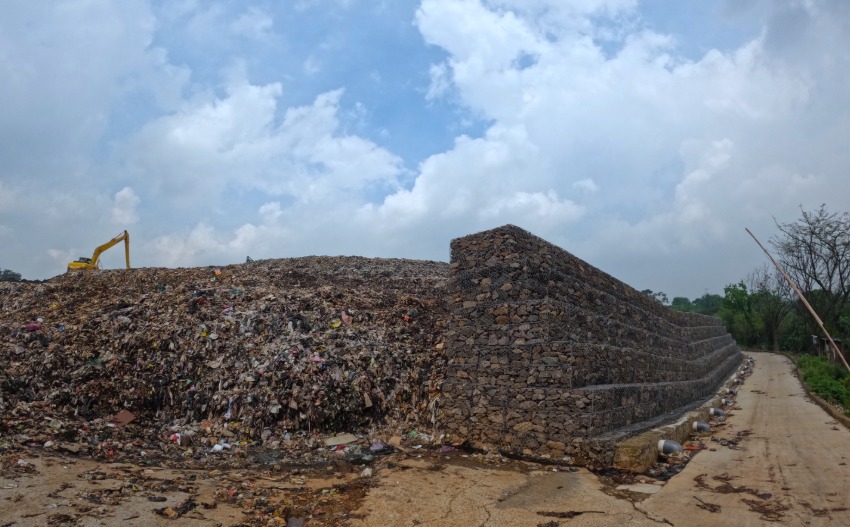
National Research and Innovation Agency (BRIN) has outlined an ambitious roadmap to resolve the national waste problem by 2029. One proposed radical measure involves cutting the performance allowances of civil servants (ASN) in villages that fail to achieve 100% waste segregation.
Agus Kismanto, a researcher at BRIN’s Centre for Energy Conversion and conservation, stated that the key to success lies in the issuance of a presidential regulation on waste segregation this year, followed by local governments enacting implementing regulations. Each village will need to be mapped to monitor compliance, using a red system for non-compliant and green for compliant.
’ mobilising all civil servants and the public to successfully implement waste segregation. Enforce penalties for non-compliance by 2027 for villagers and 2028 for civil servants,’ Agus said on Thursday (29 May).
He detailed that penalties in 2028 would include cutting civil servants’ performance allowances in villages failing to meet the 100% segregation target, as well as delays in BPJS (social health insurance) and other social assistance for residents in non-compliant villages.
Agus also introduced Lahsamor, BRIN’s innovative household organic waste processor. Unlike conventional composters, which are considered impractical, Lahsamor is designed to be odorless, has a long filling period, doesn’t hassle users when removing compost, prevents maggots, and is easy to use.
The urgency for acceleration was highlighted by data from BR Deputy for Regional Research and Innovation Yopi, who stated that only 24% of waste (around 37,000 tonnes per day) is currently managed, far below the 51.21% target set by the National Medium-Term development Plan (RPJMN) for 2025-2029.
’ This issue involves an ecosystem from upstream to downstream that requires orchestration, policy, and on-ground action,’ Yopi said.
He emphasised that the two main pillars for successful waste management are public behaviour change upstream and appropriate technology. However, technology alone is insufficient without policy instruments to drive it comprehensively.
’ Technology is already available, but even advanced technology will not have a significant impact without policy instruments to orchestrate it,’ Yopi concluded.
University of Indonesia urban planning expert Muh Azis Muslim said Jakarta’s waste segregation programme would only be effective with education, infrastructure, and a holistic management system from upstream to downstream.
He noted the main issue is the public’s habit of mixing organic and inorganic waste in one bin.
Jakarta Governor Pramono Anung officially launched a city-wide waste segregation movement starting 10 May 2026.
The Ministry of Home Affairs (Kemdagri) has designated Satpol PP as the pioneer of the ‘Clean Indonesia Movement’ with a more humane and persuasive approach, rather than solely focused on enforcement.
Jakarta Governor Pramono Anung has signed a governor regulation on household waste segregation to address the city’s waste problem en masse.
Source: jawawa.id (https://jawawa.id/newsitem/only-24-of-waste-managed-brin-calls-for-strict-penalties-on-non-segregation-1780048608)
Originally published by Media Indonesia (https://mediaindonesia.com/humaniora/895000/baru-24-sampah-terkelola-brin-dorong-sanksi-tegas-bagi-yang-tidak-pilah-sampah), translated from Indonesian