
Online Lending Contribution to MSMEs Rises to Rp35.12 Trillion
The Financial Services Authority (OJK) has recorded a positive trend in the distribution of financing by the online lending industry (fintech lending) to the micro, small, and medium enterprise (MSME) sector. Up to June 2026, financing to this productive sector grew significantly by 23.25 percent year-on-year to Rp35.12 trillion. This figure represents approximately 33.41 percent of total national online lending, which was recorded at Rp105.14 trillion in the same period. Meanwhile, the aggregate non-performing loan rate (TWP90) was maintained at 4.26 percent.
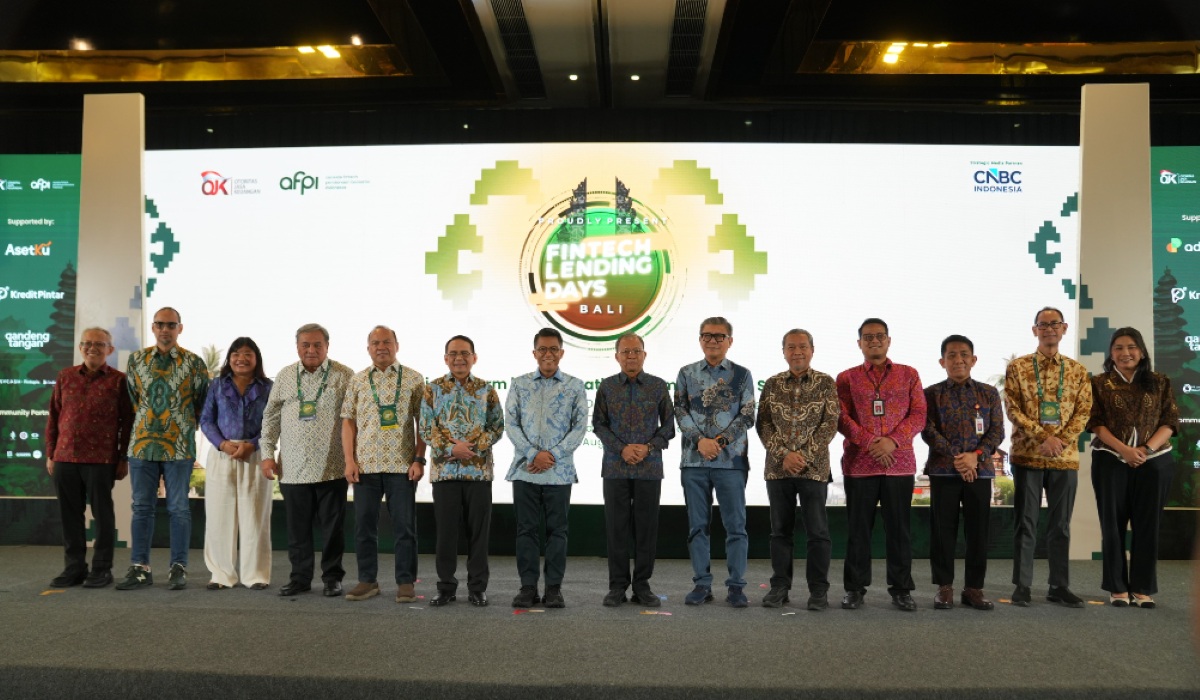
Agusman, Chief Executive of Supervision of Financing Institutions, Venture Capital Companies, Microfinance Institutions, and Other Financial Services Institutions at OJK, emphasised that the online lending industry now plays a crucial role as an alternative source of funding for small business operators. “The online lending industry has an increasingly important position in providing alternative financing for MSMEs,” Agusman said at the Fintech Lending Days event in Denpasar, Bali, on Friday (21/8/2026). He added that support for MSMEs is in line with OJK’s policy to encourage the fintech industry as a means of broad, quality financing access that provides real benefits to the wider community.
In line with OJK, the Chairman of Commission XI of the Indonesian House of Representatives, Mukhamad Misbakhun, who was also present at the event, appreciated the extraordinary contribution of the online lending industry to MSMEs. According to him, this is very much in line with the government’s programme to strengthen the people’s economy. “Online lending has an extraordinary contribution to MSME financing. For this reason, this industry must be given sufficient room to continue to grow in terms of regulation, legal foundation, and a supportive ecosystem,” Misbakhun stressed. He assessed that the current conditions represent a golden momentum for the online lending industry to further deepen financing penetration into the MSME sector to support national economic growth.
The Chairman of the Indonesian Joint Funding Fintech Association (AFPI), Entjik S. Djafar, emphasised that in addition to pursuing aggressive growth, the industry must also maintain business health and sustainability aspects. “The future of this industry requires closer collaboration from stakeholders such as the government, investors, banking, supporting ecosystems, and various other stakeholders,” Entjik said.
The Governor of Bali, I Wayan Koster, also provided an important note for the online lending industry to continue increasing the portion of productive financing. This is considered vital to encourage economic turnover at the grassroots level. As a concrete step, the series of events also included the signing of a Memorandum of Understanding between a number of online lending companies and MSME players, accompanied by an exhibition and business matching sessions to connect capital needs with service providers.
Agusman said that providers continue to be encouraged to strengthen credit scoring and risk management in the distribution of funding. OJK as the regulator has intervened by asking the association to reduce interest rates to reasonable levels that do not burden consumers. Digital financial services are increasingly becoming part of the daily activities of Indonesian society. The use of AI and digital technology is increasingly becoming a mainstay of the online lending industry in strengthening transparency, risk management, and consumer protection. The technology-based joint funding services industry, or peer-to-peer lending, is responsible for ensuring the eligibility of prospective borrowers.