
Online Gambling Platforms Chase Wall Street's Giant Funds
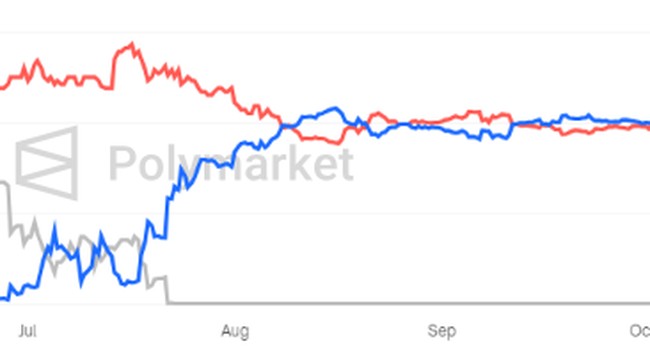
Prediction markets are growing rapidly and beginning to attract the attention of global financial industry players. Platforms such as Kalshi and Polymarket, initially known as places for the public to bet on election results, sports, and central bank decisions, now harbour ambitions of becoming part of the financial market infrastructure, much like conventional derivatives exchanges. The idea stems from the experience of 30-year-old Luana Lopes Lara, one of Kalshi’s founders, during her time working at major Wall Street hedge funds like Citadel Securities and Five Rings Capital. According to her, many investment managers build complex investment strategies simply to take a position on an event, such as a general election result or a Federal Reserve interest rate decision. Through prediction markets, investors can directly trade the probability of an event without having to construct a complex portfolio. Thus, anyone, from retail investors to large institutions like Goldman Sachs, has an equal opportunity to express their views on the future. “What we are building is a financial exchange where anyone, from a Robin Hood trader to Goldman Sachs, even someone in an MIT dormitory, can transact directly based on their views about the future,” said Lopes Lara, as quoted by The Economist. The popularity of prediction markets has surged sharply in recent years. The user base is no longer limited to professional investors but also includes students, freelancers, and the general public interested in testing their ability to read various events. Citing The Block, transaction activity on Kalshi in June reached approximately US$33 billion, while its competitor Polymarket recorded transactions of around US$10.7 billion on its international crypto-based platform and an additional US$3.3 billion through its regulated platform in the United States. Although still far smaller than the trading volume on the world’s major derivatives exchanges, this growth has caused the valuations of both companies to soar. Kalshi is reportedly raising funds at a valuation of around US$40 billion, while Polymarket is estimated to be worth around US$15 billion. However, to maintain this growth momentum, prediction markets must attract participation from institutional investors, who have far greater transaction capacity than retail investors. A number of hedge funds, asset managers, and high-frequency trading firms are beginning to monitor the development of this industry. Some trading firms have even acted as market makers to maintain market liquidity, while finance students are starting to use their track records of success in prediction markets as a portfolio when applying for jobs at major financial institutions. Kalshi itself has tried to provide various contracts that are more relevant to institutional investors. In addition to markets on Federal Reserve interest rate decisions, the company also offers contracts related to electricity prices, oil, and even computing capacity that can be used as hedging instruments. Kalshi has even partnered with ARK Invest to present markets that answer various investment questions, such as the likelihood of a biotechnology company obtaining regulatory approval for a specific product. However, interest in these contracts remains relatively limited. The largest transaction value still comes from the sports market, which accounts for more than 70% of trading activity, while contracts related to monetary policy only recorded a transaction value of around US$30 million. Beyond expanding product variety, the biggest challenge for prediction markets is building trust in market integrity. Institutional investors require assurance that all participants have equal access to information. Throughout this year, Kalshi discovered a case where an editor working for content creator MrBeast was suspected of using internal information in trading activities, as well as a candidate for California governor who was found to have bet on his own election result. Such cases raise concerns about insider trading practices that could damage the credibility of prediction markets. Kalshi stated it has implemented user screening processes and a real-time transaction surveillance system to detect suspicious activity. On the other hand, regulatory certainty is also a crucial factor before institutional investors increase their exposure. Under President Donald Trump’s administration, the Commodity Futures Trading Commission (CFTC) was considered more open to the development of prediction markets. However, the industry’s rapid growth has highlighted many regulatory aspects that still lack clarity. Earlier this year, the CFTC began drafting new rules expected to provide certainty regarding dispute resolution mechanisms, contract closing procedures, and investor protection. The company also launched Kalshi Pro, a desktop platform that allows investors to monitor around 2,000 markets simultaneously and analyse various investment positions more efficiently. This move is seen as an effort to transform the prediction market from a developing platform into a more mature trading infrastructure. Nevertheless, some industry players believe prediction markets still require more flexible leverage or margin trading features to attract institutional investors. Although Kalshi has obtained regulatory approval to provide margin trading facilities, most users are still required to deposit the full amount of funds before opening a position, a condition considered inefficient, especially for contracts.