
Online Gambling Fund Turnover Hits Rp40.3 Trillion in Q1 2026, PPATK Reports
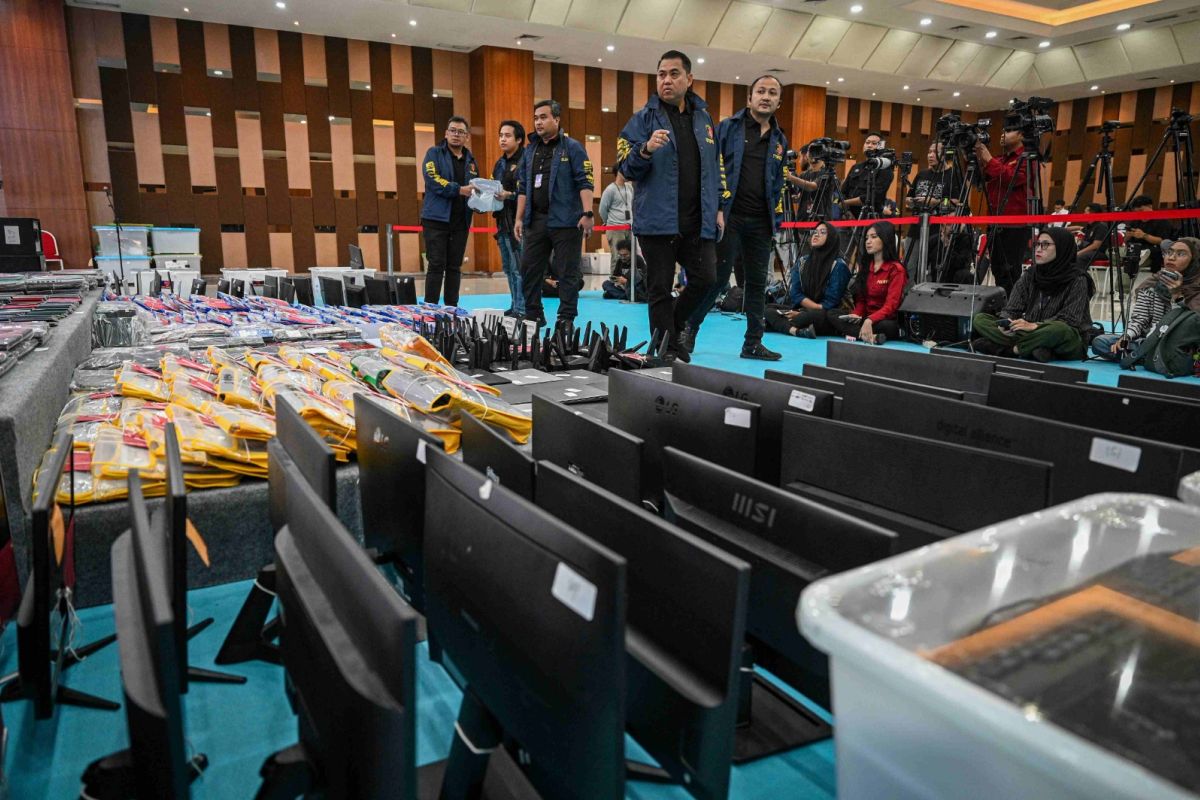
The Financial Transaction Reports and Analysis Centre (PPATK) reported that the turnover of online gambling funds reached Rp40.3 trillion, with total deposits amounting to Rp10.59 trillion during the first quarter of 2026.
“Our analysis shows that transaction patterns are becoming more frequent, more dispersed, and tend to use smaller nominal amounts,” said PPATK Head Ivan Yustiavandana in an official statement in Jakarta on Thursday.
PPATK found a significant shift in deposit methods. Throughout 2025, the use of QRIS accounted for approximately 78.5 percent of the total deposit frequency, or 305.35 million transactions with a nominal value of Rp19.35 trillion. Meanwhile, deposits via bank account transfers and e-wallets were recorded at 83.79 million transactions, or about 21.5 percent, with a nominal value of Rp16.67 trillion. This shift became even more pronounced in the first quarter of 2026, when the frequency composition of deposits via QRIS increased to 88.6 percent, compared to 11.4 percent for account transfers.
The agency stressed that QRIS and other rupiah-based digital payment instruments are legitimate means of transaction and play an important role in supporting the economy. “The problem lies in the misuse of these instruments by online gambling networks. This situation demonstrates the need to strengthen the process of merchant verification, acceptance, and continuous monitoring by payment service providers,” he stated.
Furthermore, the money laundering methods uncovered are becoming increasingly complex. Perpetrators use proxy accounts obtained through the buying and selling of accounts and identities, take over dormant accounts, and utilise inauthentic identities or genuine-but-fake e-KTPs, as well as digital manipulation technology such as deepfakes, to bypass verification processes. He explained that online gambling networks also use shell companies, fictitious micro, small, and medium enterprise (MSME) merchants or digital merchants, and merchant aggregators to manage sub-merchants and disguise gambling deposits as normal-looking trade transactions.
In addition, PPATK identified a tendency to misuse technology-based non-bank financial services, such as payment gateways, remittance services, foreign exchange activities, technology-based funding services, digital voucher sales, and other digital financial services. Patterns found include the use of affiliated entities, the use of nominees as service users or merchants, and many-to-one and one-to-many transactions to obscure the party actually controlling and benefiting from the funds.
“These findings are not intended to generalise all financial service industry players or technology-based providers. PPATK’s analysis is directed at specific transactions, accounts, merchants, and entities that show indicators of irregularity and links to suspected criminal activity,” he said.
As an illustration, PPATK data shows that the turnover value of online gambling funds has continued to increase since 2017, from Rp2.01 trillion to reach Rp359.81 trillion in 2024. For the first time since 2017, this turnover value fell significantly in 2025 to Rp286.84 trillion, a decline of approximately 20 percent compared to the previous year. The deposit value also fell from Rp51.3 trillion in 2024 to Rp36.01 trillion in 2025. “After increasing every year since 2017, the decline in the turnover of online gambling funds in 2025 is a historic record. This achievement is inseparable from President Prabowo Subianto’s firmness in leading the war against online gambling and mobilising all elements of government to act simultaneously,” said the PPATK Head.