
Online Driver Disaster Spreads, Indonesia's Neighbour Already Affected
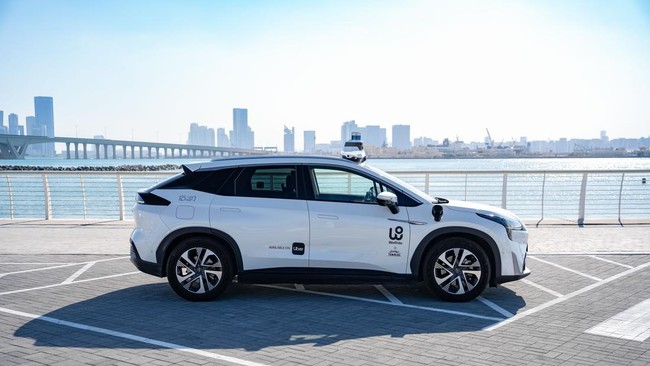
The transportation and automotive industry in Southeast Asia is preparing for a new chapter of technological competition. Chinese autonomous vehicle company WeRide has announced plans for aggressive expansion into a number of Asian countries, including the Southeast Asia region.
This strategic move could become a gateway for the commercial penetration of driverless taxi (robotaxi) technology in the regional market, while also raising concerns about its potential impact on the sustainability of the online taxi driver profession.
This international expansion is being undertaken amid fierce competition among Chinese robotaxi players vying for the global market. This geographic diversification is aimed at securing new sources of growth as the full commercialisation stage of driverless vehicles globally draws closer.
WeRide CEO Tony Han revealed that the company is actively exploring several new high-potential markets, such as Australia, South Korea, Japan, and Southeast Asia.
“In Australia, we are in discussions with regulators about the various possibilities,” said Han, as quoted by Reuters on Tuesday (18/8/2026).
Han added that Southeast Asia, South Korea, and Japan are the main targets for the next expansion, in addition to intensive discussions currently underway with regulators in several European countries.
The Guangzhou-based company has just entered the Danish market in early August 2026, expanding its operational footprint on the European continent to six countries. Globally, WeRide’s autonomous fleet now operates in more than 60 cities across 13 countries.
Interestingly, right-hand drive robotaxi services are ready to launch commercially in Singapore and Hong Kong. Both markets are considered to have traffic characteristics similar to most countries in the Asia Pacific.
Han affirmed the company’s commitment not merely to be present, but also to build a local ecosystem in each new operational area.
“We want to recruit local workers, work closely with the government and local authorities, and maximise partnerships with local industry players,” he stressed.
Expansion abroad has proven to be the most impressive growth engine for WeRide. Based on the company’s latest financial report, revenue from international markets in the second quarter soared by 164% year-on-year (YoY). This pace far exceeded the total quarterly revenue growth, which recorded an 82% YoY increase.
WeRide’s financial performance also showed improvement, with EBITDA losses in the second quarter successfully reduced by 8.1% YoY. Management has set a target to achieve positive cash flow on a quarterly basis by 2028, with an annual break-even point projected to be realised in 2029.
Regarding its capital position, Han stated that the company has no urgent need to raise new funds in the near term, although it remains open to capital injection options if the terms are favourable.
As of the end of July 2026, WeRide’s total robotaxi fleet has surpassed 1,800 units. This figure is part of the 3,400 Level 4 autonomous vehicles operated by the company, including robobuses and robosweepers.
Management is optimistic about completing the target of providing 5,000 Level 4 autonomous vehicles by the end of this year, of which 2,600 units will be robotaxis.
To reduce hardware production costs, WeRide is partnering with GAC to design a new robotaxi model, complementing the previous variant developed together with Geely Farizon. In the long term, WeRide has set an ambitious target to operate tens of thousands of robotaxis by 2030, before ultimately soaring to 1 million vehicles by 2035.