
One Year On, Sekolah Rakyat Alumni Can Access Top Universities
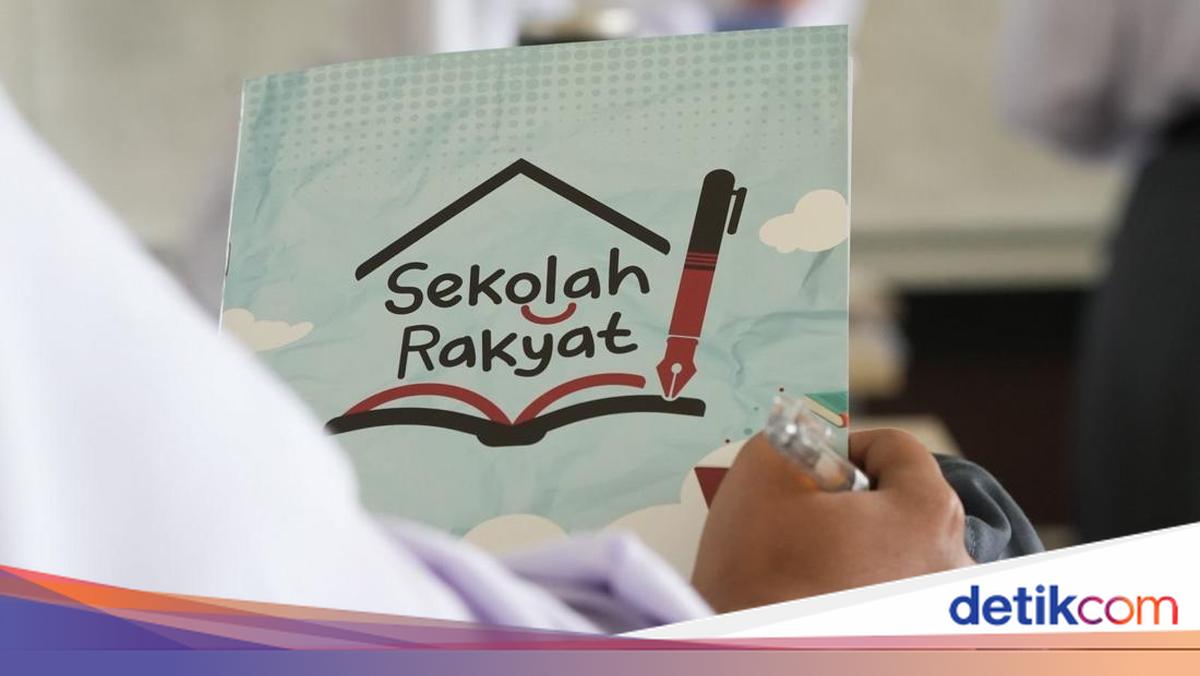
The Sekolah Rakyat (SR) programme has been synergising with various parties to help its alumni achieve their ambitions. One such synergy involves providing access for alumni to continue their studies at top universities in Indonesia.
The Minister of Social Affairs, Saifullah Yusuf (known as Gus Ipul), and the Minister of Higher Education, Science, and Technology, Brian Yuliarto, signed an Addendum of Understanding regarding the synergy of tasks and functions in the fields of social affairs, higher education, science, and technology.
This MoU is part of the downstreaming process for Sekolah Rakyat students to ensure they can continue their learning at higher education institutions. “I am truly happy today that our plan for this MoU has finally been realised,” said Gus Ipul at the Ministry of Social Affairs office in Jakarta on Tuesday (2/12/2025).
Minister Gus Ipul stated that there are currently over 6,000 senior high school students in Sekolah Rakyat, who are expected to graduate in 2028. Students from primary and junior high school levels who meet certain standards will transition to Garuda schools, while others will proceed to Sekolah Rakyat senior high schools.
“There are two paths for graduates, in line with the President’s direction. For those who wish to pursue university, we need the cooperation we established today. For those who wish to work, we will collaborate with various ministries, agencies, and the private sector,” he said.
For students not pursuing higher education, Gus Ipul noted they will be directed towards becoming skilled workers both domestically and abroad. The Ministry of Social Affairs has already established partnerships with the Ministry of Manpower and other relevant ministries.
“For the high school graduates in 2028 who wish to pursue higher education, we are using ‘DNA Talent’ technology by Mr Ary Ginanjar to identify their interests and talents at this early stage,” he added.
He explained that the DNA Talent results provide recommendations for various professions and fields, such as healthcare and engineering. “This will be followed up in the subsequent learning process. Out of the 16,000 students, 37 per cent are in STEM fields,” he said. Simulations show that of the 6,000 students, 4,000 wish to continue to university, with specific fields to be further investigated.
“Ultimately, we want these graduates to be able to continue to higher education or find employment that matches their interests and talents. We must ensure they do not graduate from high school only to end up unemployed. This is the President’s directive,” said Gus Ipul.
Minister Gus Ipul added that this understanding is part of an effort to implement President Prabowo’s vision for Sekolah Rakyat, which is intended for families in the lowest economic deciles (decile 1 and 2). Sekolah Rakyat is currently operating at 166 locations across Indonesia, from Sabang to Merauke.
“Some have been operating since July at 67 locations. In August, we added 37 more, and most recently, in September and early October, 66 more locations became operational,” he said.
He noted that while Sekolah Rakyat is generally functioning well, there are challenges and dynamics to manage, all of which are being addressed through adaptation.
“There are over 15,000 students at the primary, junior high, and senior high levels. Nearly 3,000 are directly involved, alongside over 4,000 teaching staff,” he said.
At the same event, Minister of Higher Education, Science, and Technology Brian Yuliarto stated that President Prabowo and the Indonesian people hope children from underprivileged families can receive a proper education, pursue higher education, and receive career guidance.
“The support requested by the Minister of Social Affairs is an honour for us, as we have over 4,000 universities, nearly 10 million students, and 300,000 lecturers,” he said.
He noted that the vast number of campuses, students, and lecturers serves as an asset to participate in the President’s flagship programme to prepare superior Indonesian human resources from disadvantaged communities. He also prepared several initiatives for this collaboration.
“As a report, some of our universities have been asked to provide land and dormitories to serve as Sekolah Rakyat sites, for which we are grateful. Furthermore, coaching programmes will be implemented by universities, specifically for Sekolah Rakyat senior high school students,” he said.
He plans to map and pair one university to mentor one or two Sekolah Rakyat sites. Students and lecturers will periodically visit Sekolah Rakyat to provide coaching, motivation, or organise study groups for those seeking academic or vocational higher education.
“This is because information regarding study programmes in universities is often not adequately accessible,” he added.
He hopes that through this guidance from students and lecturers, prospective Sekolah Rakyat graduates will understand higher education study programmes and be motivated to pursue education aligned with their interests. Additionally, universities will train Sekolah Rakyat teachers to enhance their knowledge and technological trends.
“The hope is that Sekolah Rakyat will be on par with other good schools, or even become excellent schools, due to the assistance provided by nearby universities,” he said.
Brian also explained that Student Executive Bodies (BEM) in universities have community service programmes. Consequently, BEM will not only manage ‘adopted villages’ but also ‘adopted Sekolah Rakyat’ sites.
“We hope that the efforts of the Ministry of Higher Education, Science, and Technology, alongside universities, students, and BEM, can achieve this,” he concluded.