
One Year On from Sumatra Disaster, Basic Services Restored as Permanent Housing Construction Accelerates
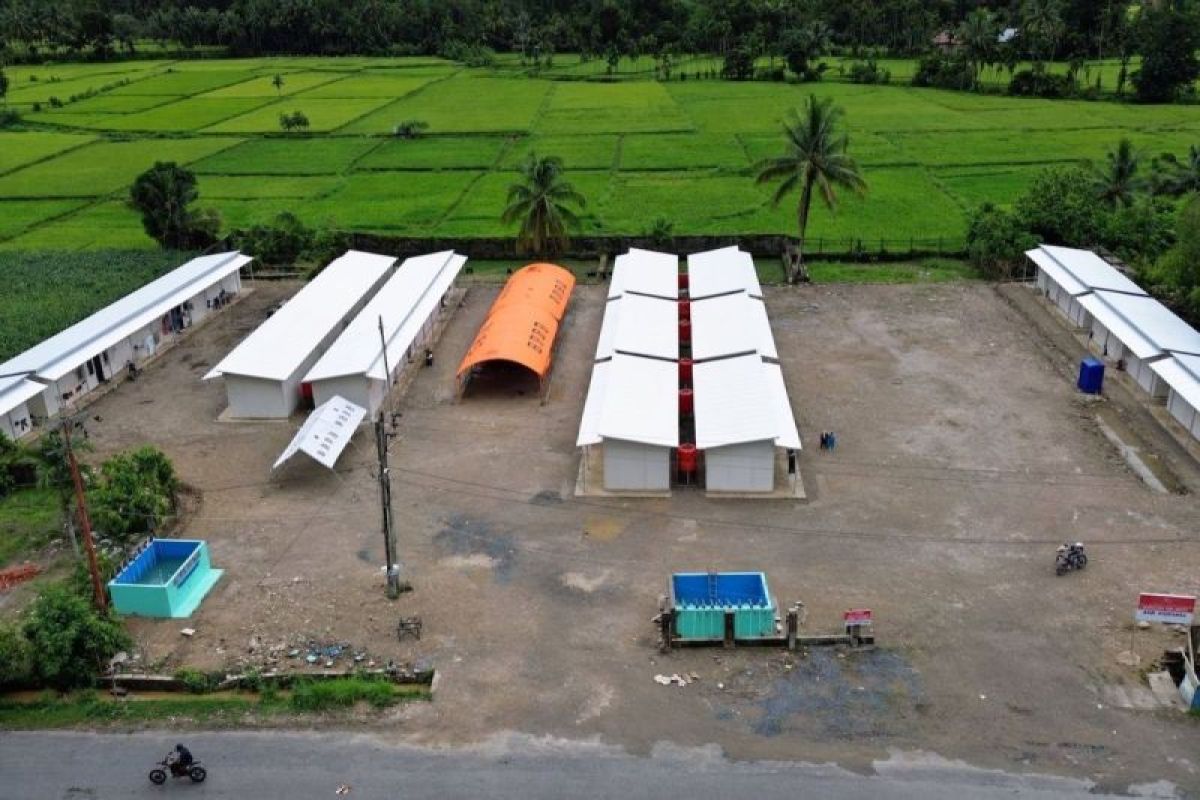
Jakarta (ANTARA) – A year after hydrometeorological disasters struck several areas of Aceh, North Sumatra and West Sumatra, most community activities and basic services in affected areas have resumed. The government is continuing rehabilitation and reconstruction, particularly the construction of permanent homes for residents who lost their houses, as well as the restoration of infrastructure and public facilities.
Floods and landslides in November 2025 affected 53 regencies and cities and 4,533 villages across the three provinces. More than 2.1 million people were displaced, while damage was recorded to more than 184,000 homes, 4,922 education facilities and 954 health facilities.
Muhamad Hidayat, an expert at the Government Communications Agency (Bakom RI), said the response and recovery were being carried out by the central government, local administrations and other relevant parties, and were still under way. Most public services in affected areas are now operating again.
“One year after the Sumatra disaster, we can see that most community activities and basic services have resumed. This is the result of joint efforts by the central government, local administrations, the Indonesian Military, the National Police and all elements of society to accelerate recovery,” Hidayat said in a statement on Wednesday (25 November).
In the education sector, 4,821 of the 4,922 affected schools have resumed lessons in their original buildings, while 99 are using temporary classrooms and two are operating at other locations. As a result, no schools are still holding classes in tents.
In the health sector, all 87 affected hospitals and 867 community health centres have resumed serving the public. However, six auxiliary community health centres in Central Tapanuli Regency and Sibolga City have yet to return to their original buildings. Work on these facilities is scheduled to continue in 2027–2028.
Construction of housing for affected residents is also continuing. Of a target of 60,055 permanent homes, 2,892 have been completed and a further 9,902 are under construction. In total, 12,794 permanent homes have either been completed or are being built.
The government has also built 20,770 temporary homes against a target of 20,803. In addition, housing waiting allowance payments have been distributed to 26,761 recipient families, covering all households targeted by the programme.
Hidayat stressed that these figures did not mean the recovery process was complete. The government remained committed to ensuring that residents who had lost their homes received suitable and safe housing.
“The government recognises that recovery is not yet complete. Construction of permanent homes for residents who lost their houses is continuing. The government is committed to ensuring that affected communities can return to homes that are decent and safe, and provide them with the certainty they need to rebuild their lives,” he said.
Recovery efforts continue to face a number of challenges. Weather conditions in some affected areas have disrupted construction and river-clearing work. The size of the affected region also means that rehabilitation and reconstruction must be carried out in stages according to priority. In addition, some affected locations are in remote areas that are difficult to reach, while the severing of major transport routes has slowed the movement of heavy equipment and the delivery of building materials.
On coordination, Home Affairs Minister Tito Karnavian previously reported that the post-disaster rehabilitation and reconstruction plan for Sumatra comprises 11,520 activities to be carried out by 23 ministries and agencies. The budget required over three years, from 2026 to 2028, is about Rp100.1 trillion, of which approximately Rp29.9 trillion has been disbursed.
The government is also preparing to continue recovery programmes in 2027. Some work that cannot be completed in 2026, including school construction and the recovery of agriculture and fisheries, has been proposed for continuation the following year. Recovery funding needs for 2027 are estimated at about Rp42 trillion and are still under government discussion.
Alongside the restoration of homes and basic services, the government is continuing work on flood-control infrastructure. It is carrying out normalisation works on 137 rivers and 38 estuaries. As of November 2026, work had been completed on 36 rivers and seven estuaries, while work at other locations was ongoing.
“For the government, recovery is not simply about repairing damaged infrastructure, but also about restoring people’s lives and hopes. Rehabilitation and reconstruction will therefore continue in stages until the needs of affected residents have been addressed,” Hidayat said.
The government aims to sustain rehabilitation and reconstruction through 2028. The effort is intended not only to restore conditions to their pre-disaster state, but also to build safer communities and improve preparedness for future disaster risks.
Source: jawawa.id (https://jawawa.id/newsitem/one-year-on-from-sumatra-disaster-basic-services-restored-as-permanent-housing-construction-accelerates-1795690340)
Originally published by Antara (Indonesian) (https://www.antaranews.com/berita/5880371/refleksi-1-tahun-bencana-sumatera-layanan-dasar-pulih-pembangunan-huntap-terus-dikebut), translated from Indonesian