
One-Third of Water Used to Wash Each LRT Jabodebek Train Comes from Recycling
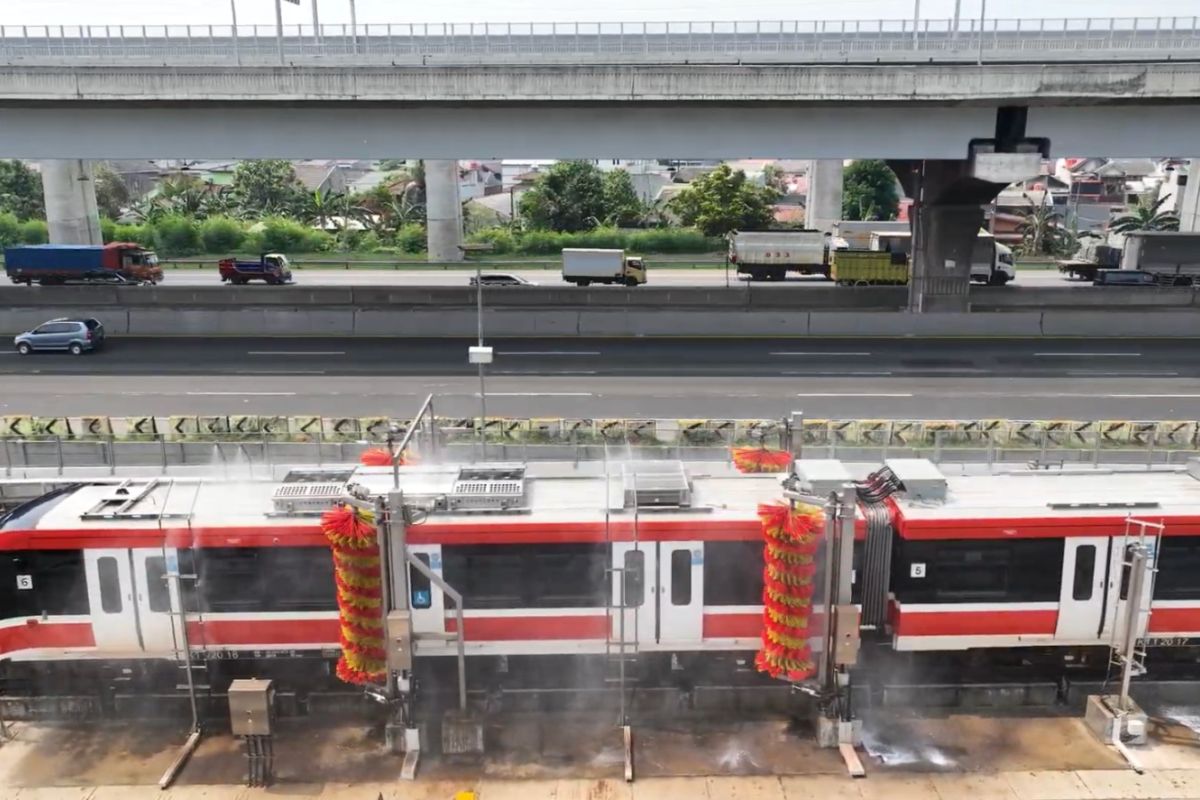
Behind the consistently clean and routinely washed LRT Jabodebek trains, one-third of the washing water requirement is met using recycled water that has undergone a series of treatment processes to be safely reused for maintenance support. The reuse of water is part of LRT Jabodebek’s efforts to apply the principles of resource efficiency and sustainability in its operational processes. Used washing water is not directly discarded but is instead treated through a Water Treatment Plant (WTP) integrated with the Automatic Train Wash Plant (ATWP). After undergoing sludge and oil separation, filtration, and pH adjustment, the treated water is reused for the next train washing process. Through this system, each wash of one LRT Jabodebek trainset requires approximately 973 litres of water. Of that amount, around 309 litres, or nearly one-third, comes from recycled water, whilst 664 litres is fresh water. Thus, the need for clean water in the washing process can be reduced without compromising the cleanliness quality of the trains. Throughout the first half of 2026, the use of recycled water has replaced the need for approximately 293,859 litres of clean water in the train washing process. This measure is one of LRT Jabodebek’s efforts to implement water resource efficiency as part of more sustainable operations. Manager of Public Relations for LRT Jabodebek, Radhitya Mardika, stated that sustainability is not only realised through providing public transport services that help reduce congestion and private vehicle emissions, but is also applied in day-to-day operational processes. ‘Sustainable public transport is not only measured by how people shift from private vehicles to mass transit, but also by how operators manage resources responsibly. Through the automatic washing system equipped with water treatment, we can reuse some of the used washing water, thereby reducing the need for clean water,’ he said. The ATWP system works automatically when a train enters the washing area; the trainset passes through seven stages, including water spraying, detergent application, automatic brushing, rinsing, and a final stage using demineralised water. The entire process takes about two minutes for one trainset approximately 100 metres long. ‘When the public chooses public transport, the benefits are not only felt in the form of faster, congestion-free journeys. Behind its operations, there are also various efforts to use resources more efficiently, and sustainability is realised not only through the shift to mass transit, but also through how operators manage every operational process responsibly,’ he concluded.