
One Nation Outpaces the World: China Becomes the Solar Energy Engine
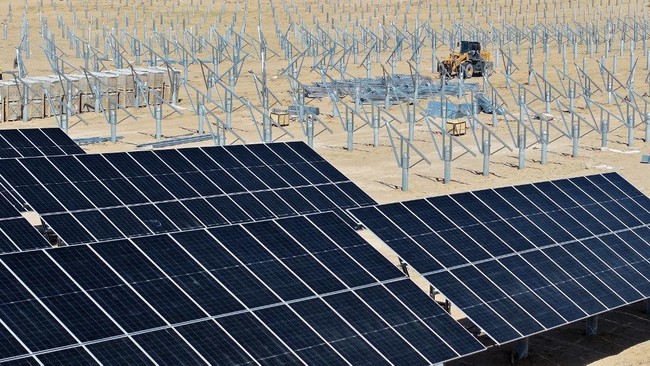
China is further cementing its position as the ruler of solar power. In 2025, China added 336 terawatt-hours (TWh) of new solar electricity. This amount is greater than the combined additions of the entire world outside China, which reached 300 TWh. In other words, one country installed more solar power than all other countries combined.
According to the Ember Global Electricity Review 2026, China accounted for 53% of all new solar power generation globally in 2025. For comparison, Asia outside China added 90 TWh, North America 86 TWh, and Europe 80 TWh. Meanwhile, Latin America and the Caribbean added only 24 TWh, the Middle East 10 TWh, Oceania 6 TWh, and Africa 4 TWh. Even if the three largest regions after China were combined, their total still could not match China’s solar additions in a single year.
The figure of 336 TWh sounds large. However, its magnitude is easier to grasp when compared to a country’s electricity consumption. China’s solar additions in 2025 were greater than the entire electricity consumption of the United Kingdom in the same year, which was 322 TWh. This means that just from the new solar capacity added in one year, China generated an amount of electricity that surpassed the needs of one of Europe’s largest economies.
This growth also marks a larger shift. In 2025, solar power became the largest new source of electricity in the world and met around 75% of the growth in global electricity demand. This is the fourth consecutive year that solar power has recorded the largest absolute growth compared to other electricity sources. A few years ago, solar energy was still viewed as a complement. Now, it is increasingly becoming the main engine of growth in the world’s electricity supply.
China’s dominance does not stop at the installation of solar panels. The country also dominates the supply chain and manufacturing capacity of the global solar industry. The large scale of production helps to reduce costs and accelerate the adoption of renewable energy in various countries. However, this dominance also creates dependency. The greater China’s role in the global energy transition, the greater the influence of its industrial policies, trade, and production capacity on the pace of the world’s energy transition. What is at stake is not just solar panels, but the entire clean energy ecosystem.
There is another reason why 2025 became an important year for the energy sector. According to Ember, fossil fuel-based power generation declined globally even as world electricity demand continued to rise. Usually, such a condition occurs when the economy is sluggish or experiencing a recession. This time it did not. The largest decline actually came from China, which cut fossil generation by 56 TWh, and India by 52 TWh, in line with the rapid expansion of clean energy in both countries. For supporters of the energy transition, this is one of the most important developments in recent years.
For years, the growth of solar energy was seen as one of the main requirements to reduce the world’s dependence on fossil fuels. Now the challenge is beginning to shift. Solar power is indeed growing faster than many parties anticipated. However, that growth is increasingly concentrated in one country. In 2025, China did not just become the leader of the global energy transition. In many respects, China has become its main engine.