
One Million Graduates in Indonesia Still Seeking Work: What Are the Causes?
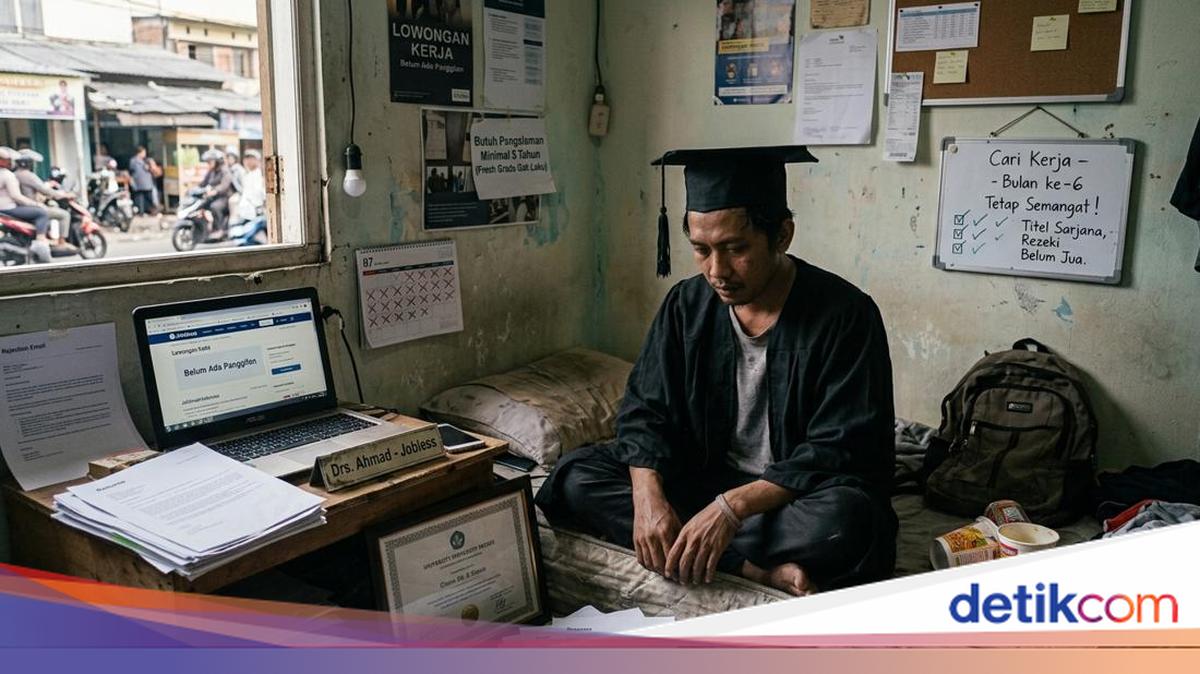
A university degree is often seen as a foundation for securing better employment. The higher the level of education, the greater the perceived opportunity to improve one’s standard of living. However, conditions in Indonesia show a reality that does not always align with this assumption. The number of university graduates continues to rise, but not all of them can immediately obtain work that matches their educational background and competencies.
According to data from the Central Statistics Agency (BPS), around one million university graduates in Indonesia are still seeking work. This situation raises the question: why has the growing number of people pursuing higher education not automatically led to greater job opportunities?
Professor Dr Bagong Suyanto, a Professor at the Faculty of Social and Political Sciences at Airlangga University and an education sociologist, sees this issue as linked to the relationship between educational attainment, competence, job quality, and income. Ideally, he argues, higher education should be followed by improved competence, better job quality, and greater welfare. Yet this pattern has not fully materialised in Indonesia.
“University graduates can still find work that is not aligned with the education or competencies they possess,” he said.
One of the problems highlighted by Professor Bagong is the mismatch between graduate competencies and the needs of the labour market. Industrial development is accelerating. Technology is changing both the types of jobs available and the skills that companies require. At the same time, not all university graduates possess competencies suited to these changes.
As a result, a graduate may hold a higher education certificate but still struggle to find work relevant to their field of study. Even when they do secure employment, many graduates end up working in areas not directly related to their education.
“A degree can no longer guarantee that someone will obtain a job and improve their standard of living,” said Professor Bagong.
He argues that the problem is not solely about graduate capability. The direction of economic development also determines how widely employment opportunities are available. He therefore urges a shift in development orientation towards expanding labour-intensive industries, so that economic growth can also create more jobs.
Another equally important issue is the quality of higher education. According to Professor Bagong, Indonesia cannot simply focus on increasing the number of people who obtain degrees. Universities must also ensure that graduates possess competencies genuinely needed by the labour market. Increasing the number of graduates will mean little if they lack relevant skills.
“It is pointless to have many graduates if the quality of the universities cannot be accounted for,” he stressed.
Universities therefore need to continually adapt their learning processes to developments in the world of work. Student competencies cannot be built solely through theoretical mastery; they must also be able to respond to industry needs and changes in the labour market.
“Do not just chase the number of graduates; ensure they have the quality and competencies truly needed by the world of work,” said Professor Bagong.