
One in Four Data Centres Faces Water Shortages, Competing with Farmers and Residents
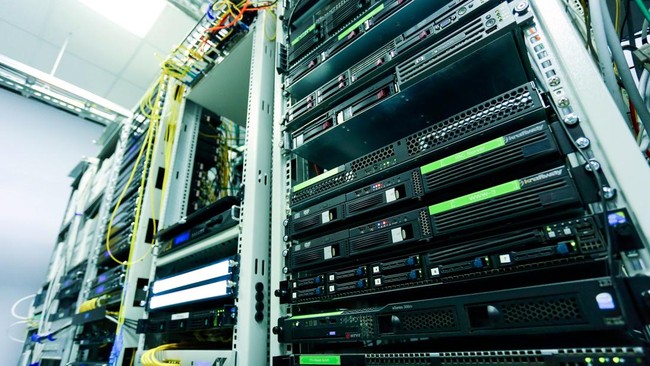
Jakarta, CNBC Indonesia – Around a quarter of data centres worldwide are in areas that experience water shortages for at least one month a year. The situation could worsen as global temperatures rise and more water is needed to cool these facilities.
The findings come from a new study published in the journal Environmental Science & Technology. A research team led by the Carnegie Institution for Science in the United States mapped the locations of 9,347 identified data centres worldwide.
The researchers found that about 25% of data centres are in areas experiencing a water-supply gap, where demand exceeds locally available supply.
Under a climate model that assumes average global temperatures rise by 3°C compared with 1900 levels, the number of data-centre locations experiencing water stress is projected to increase to 33% within 10 years.
“These facilities are not built in empty areas. They are situated on water supplies serving cities and agricultural land,” environmental scientist Lorenzo Rosa of the Carnegie Institution for Science said, as quoted by Science Alert on Thursday (22 October 2026).
Equivalent to the needs of 50,000 people
Data centres require large volumes of water to keep equipment at a stable temperature and ensure smooth operations. A large facility can use as much water in a day as a city of 50,000 people.
Cooling systems that rely on evaporation also mean freshwater is often the preferred option. This raises concerns about the environmental impact of the cloud-computing infrastructure that supports a range of digital activities, from handling AI requests and storing photos and videos to music-streaming services.
Unlike electricity, which can be transmitted through networks to different areas, water generally has to be obtained locally. Data centres typically draw water from lakes, rivers and aquifers, or underground water-bearing rock layers. Supplies from these sources can fluctuate with the seasons.
“The energy footprint of data centres has been measured in detail because electricity use is recorded and reported. Water scarcity is measured locally, using inconsistent methods, and often not measured at all,” Rosa said.
“That is why we created this map: one did not previously exist.”
The mapping also revealed competition for water between data centres and other sectors. Worldwide, 41% of data centres compete directly with cities and local governments for water supplies. At another 28% of sites, agriculture is the main water user.
The situation is more concerning at 523 facilities, slightly more than 5% of the data centres studied. These sites already experience a water-supply gap for at least nine months of the year.
Need for specific rules
Climate change’s impact on water availability also varies from country to country. The modelling showed that most US data-centre locations potentially crossing the water-stress threshold as temperatures rise are within the United States. By contrast, the United Kingdom and Germany are not expected to experience major changes.
“Data centres generally have the financial capacity and institutional priority to secure water supplies for as long as water remains available,” the researchers wrote in their paper.
As a result, the main risk may not lie with data-centre operations themselves, but with other water users in the same river basin.
The researchers also highlighted the lack of information about data-centre water consumption. The major technology companies operating these facilities remain reluctant to disclose detailed figures on their water needs and the impact on natural resources.
More transparent reporting could help address the problem. This may require intervention by regulators and governments to improve monitoring of water use by the data-centre industry.
The researchers nevertheless see ways to reduce pressure on freshwater sources. These include using wastewater and treated seawater as alternatives to freshwater, as well as improving the efficiency of heat management in data centres.
They stressed that the actual effects of water stress on data-centre operations and other water users still require further study.
“Ensuring the long-term viability of data-centre operations will require decisions on where facilities are built and how they are governed, taking account of local water limits,” the researchers wrote.
Source: jawawa.id (https://jawawa.id/newsitem/one-in-four-data-centres-faces-water-shortages-competing-with-farmers-and-residents-1792767046)
Originally published by CNBC Indonesia (https://www.cnbcindonesia.com/tech/20261023140151-37-778929/1-dari-4-data-center-kekurangan-air-berebut-dengan-petani-dan-warga), translated from Indonesian