
One-Day-Weekly WFH Policy Under Discussion, State Secretary: Not for All Sectors
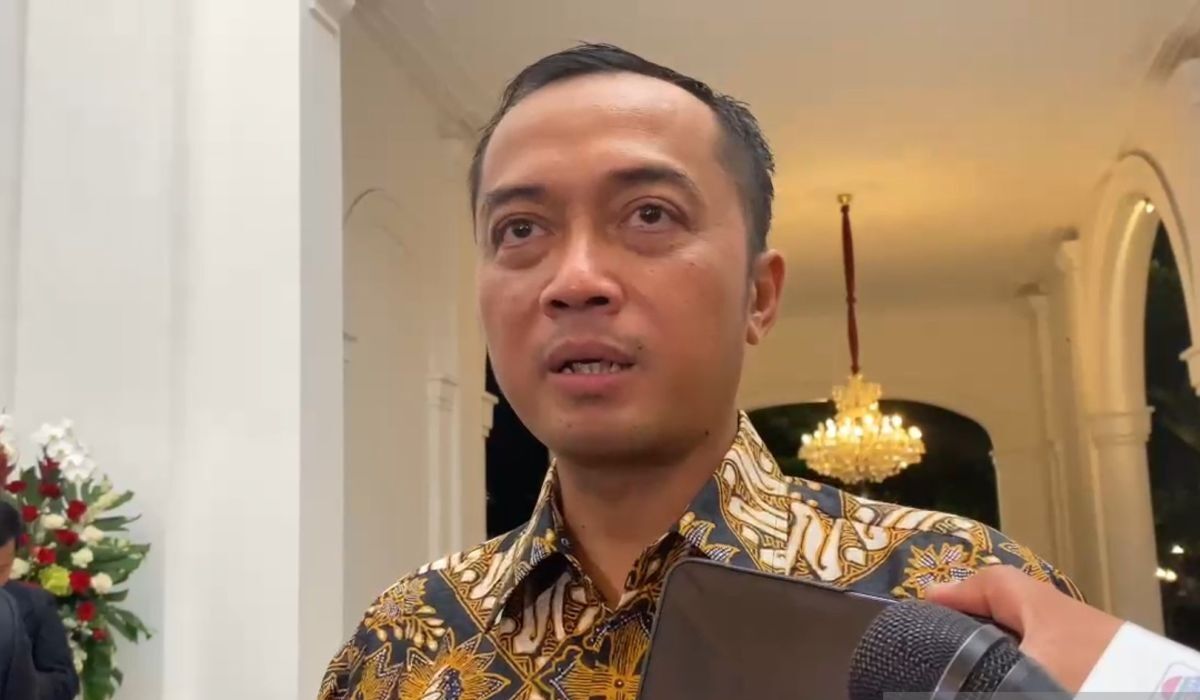
State Secretary Prasetyo Hadi stated that the government is developing efficiency steps to strengthen national fiscal resilience amid geopolitical dynamics, especially the impact of the Middle East conflict. One emerging idea is a work-from-home (WFH) policy of at least one day per week.
“As conveyed by the President in the full cabinet meeting, we are formulating several policies to realise that we all must collectively become more efficient in our work,” Prasetyo explained at the Presidential Palace Complex on Saturday (21/3).
He emphasised that the policy plan does not indicate any issues with petroleum fuel (BBM) supplies. The government assures that BBM supplies are secure and problem-free.
“However, we want to use this momentum to correct ourselves, improve ourselves, make ourselves more efficient, and possibly in the near future, we will finalise the policy formulation and convey it to the public,” Prasetyo stated.
“Regarding what was mentioned earlier, one form that may be implemented is work-from-home (WFH) for at least one day in a week,” he clarified.
However, he corrected that the WFH policy would apply only to specific sectors. “So as not to be misunderstood, for example, service, industrial, and trade sectors, they may not be included in this policy.”
Previously, the government’s consideration of a flexible work policy through a one-day WFH scheme in five working days was mentioned by Coordinating Minister for the Economy Airlangga Hartarto after a meeting with President Prabowo Subianto at the Presidential Palace Complex in Jakarta on Thursday (19/3).
“There is savings in terms of mobility usage, with quite significant petrol savings, one-fifth of what we usually spend,” Minister Airlangga revealed.
The government is currently refining the technical aspects of implementing the policy. The WFH application is hoped not only to apply to civil servants (ASN) but also to be adopted by the private sector and local governments.
The planned implementation of this policy is scheduled to begin after Eid al-Fitr 2026. However, the exact timing will still be determined further. “We will see the situation later. The oil price situation, the war situation. We follow the developing situation,” Airlangga concluded.