
One Day of WFH: Energy Saving or Mere Symbolism?
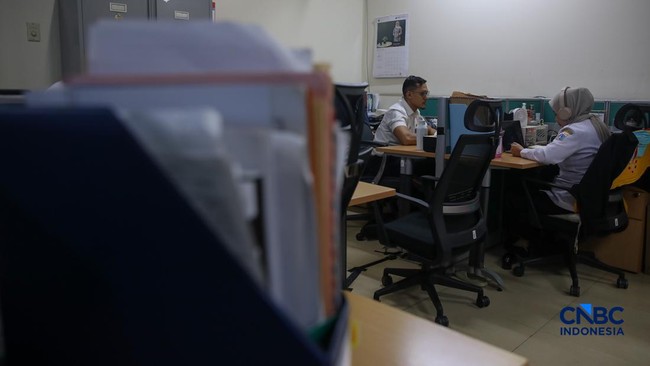
Amid rising global uncertainties triggered by geopolitical conflicts, surging world oil prices, and energy supply chain disruptions, the Indonesian government has taken an unusual step by promoting a work-from-home (WFH) policy one day per week for civil servants (ASN), while encouraging the private sector to adopt a similar pattern.
This policy, effective from April 2026, is positioned as part of the national energy efficiency strategy. Its clear objective is to curb fuel oil (BBM) consumption without resorting to more drastic measures such as raising subsidised energy prices, which risk triggering inflation and social unrest.
However, a crucial question arises: is this one-day WFH policy truly effective as a “buffer” in facing the global energy crisis? Or is it merely a short-term, symbolic solution?
The global energy crisis is no longer mere rhetoric but a palpable reality. Conflicts in the Middle East and other geopolitical tensions have driven world oil prices significantly higher, currently surpassing USD 100 per barrel.
As a net oil importer, Indonesia faces double consequences. On one hand, the government must maintain domestic energy price stability to prevent inflation spikes. On the other, this situation is critical because global price hikes directly impact the energy subsidy burden in the state budget (APBN), pressure on the rupiah exchange rate, and domestic inflation risks.
In such circumstances, the government faces a classic dilemma between maintaining price stability and fiscal health. Instead of raising BBM prices, the government opts for a “softer” approach by controlling energy demand through changes in work behaviour and societal mobility.
In this context, the one-day WFH policy can be seen as an effort to “hold one’s breath” to reduce pressure without taking high-risk drastic steps. The policy logic is simple: the fewer people who travel, the lower the BBM consumption. But, like many public policies, the issue does not end with logic but with implementation realities.
The one-day WFH policy is essentially a form of demand-side management, an attempt to curb energy consumption without disrupting the supply side. According to several observers, this approach is relatively safe economically and politically. The government avoids adding to subsidy burdens while steering clear of social unrest from BBM price hikes.
On paper, WFH promises savings. The government even estimates that this policy could save Rp6.2 trillion from the APBN side and up to Rp59 trillion from household expenditures. Additionally, savings come from office operations, such as electricity, water, and logistics costs, which could drop by around 32% in a single day.
The International Energy Agency (IEA) even recommends WFH up to three days a week as part of global emergency energy-saving strategies. If widely implemented, this step could reduce global oil demand by 2.7 million barrels per day.
Reducing daily mobility, especially in major cities, is believed to curb fuel consumption, alleviate congestion, and lower emissions. However, when viewed from the national energy consumption structure, the impact becomes relatively small.
The transportation sector does contribute a large share to energy consumption. But BBM use is not dominated by civil servants or office workers; rather, it is driven by logistics, goods distribution, and industrial activities. Even if all civil servants work from home for a full day, the impact on total national BBM consumption remains limited.
This is where the problem lies: a policy that appears grand in symbolism but small in structural impact. Data shows that the transportation sector is indeed a major contributor to energy consumption, accounting for about 46% of total final energy consumption. A study by CELIOS even suggests that the policy’s impact is likely insignificant, possibly less than 1% of total national energy subsidies.
Furthermore, there is a potential substitution effect. When BBM consumption for transportation decreases, household energy use may increase, such as electricity, air conditioning, and digital devices. In other words, WFH does not always reduce total energy consumption but merely shifts consumption patterns.
In several international studies, WFH has proven to lower transportation emissions, but its impact on total energy consumption heavily depends on household behaviour and domestic energy efficiency. This means that without supporting policies, WFH could create only an “illusion of efficiency”.
Another criticism worth raising is the potential for behavioural bias. Setting WFH on Fridays opens the door to forming long weekends. Mobility does not decrease but shifts from work commutes to recreational travel. If this occurs, the expected savings could be eroded or even reversed into increased energy consumption.
At this point, WFH risks becoming an illusion of efficiency—a policy that looks productive on paper but yields no significant change in practice. This does not mean WFH is useless, as it still holds value as a quick and low-cost step. However, positioning it as the main energy-saving instrument is an oversimplification.
In the framework of public policy, one-day WFH is more appropriately positioned as a temporary buffer to ease short-term pressures. The WFH policy has its strengths