
Ondel-ondel on the Diplomatic Stage
Jakarta (ANTARA) - Cultural diplomacy is often understood as introducing art, food, clothing and traditions to people in other countries. Through dance performances, batik exhibitions, wayang shows or food festivals, Indonesia can build closer ties with international audiences.
Indonesia’s relations with other countries are shaped not only by treaties, trade and defence cooperation, but also by how people in those countries perceive the culture Indonesia presents.
In reality, cultural diplomacy is not simply the neutral transfer of culture from one place to an international stage. When a country chooses a dance, garment or art form to showcase, it is making a selection.
That selection does not necessarily stem from an intention to exclude particular groups. Budget and time constraints, as well as the needs of an event, also play a part. Nevertheless, the consequences are political: some cultures gain a national platform, while others are more often left in their places of origin.
Indonesia needs shared symbols. As an archipelagic country with hundreds of ethnic groups and regional languages, it cannot present all its cultural wealth at once at a single event.
Showcasing batik, wayang or ondel-ondel, for example, can therefore be a practical way to open a conversation about Indonesia’s diversity.
Indonesian batik was recognised by UNESCO as Intangible Cultural Heritage in 2009, while wayang was listed in 2003 as a Masterpiece of the Oral and Intangible Heritage of Humanity before being included on the Representative List of the Intangible Cultural Heritage of Humanity in 2008.
At national level, ondel-ondel was designated Indonesian Intangible Cultural Heritage in 2013. These recognitions affirm the cultural value of all three, but do not mean that batik, wayang or ondel-ondel can represent the full diversity of Indonesia’s traditions.
Problems can arise when the chosen symbols are presented repeatedly and come to be seen as a complete picture of a nation. Batik, for instance, is so strongly associated with Indonesia’s image that people can easily forget how much more diverse the archipelago’s textile traditions are.
Batik is also far more than a decorative pattern. UNESCO explains that its techniques, symbolism and practices accompany people through different stages of life, from birth to death. Its motifs also reflect cross-cultural influences, including Arab, European, Chinese, Japanese, Indian and Persian influences.
Wayang, too, encompasses many forms, traditions and social settings. In other words, the culture presented as a national identity carries a history of encounters far more complex than an image in a tourism brochure.
National identity
National identity is not a list of characteristics that was complete from the outset and merely needs to be announced to a global audience. It is formed, sustained and negotiated through education, the media, state policy and public ceremonies.
In cultural diplomacy, the selection of particular dances, clothing or art forms can help shape the image of Indonesia known to international audiences.
Consequently, when diplomatic events repeatedly feature certain symbols, those symbols gain a privileged place in the public imagination.
By contrast, traditions that are rarely seen risk being considered less important, even by Indonesians themselves. What is at stake, then, is not only the opportunity to appear, but also the right to help define what it means to be Indonesian.
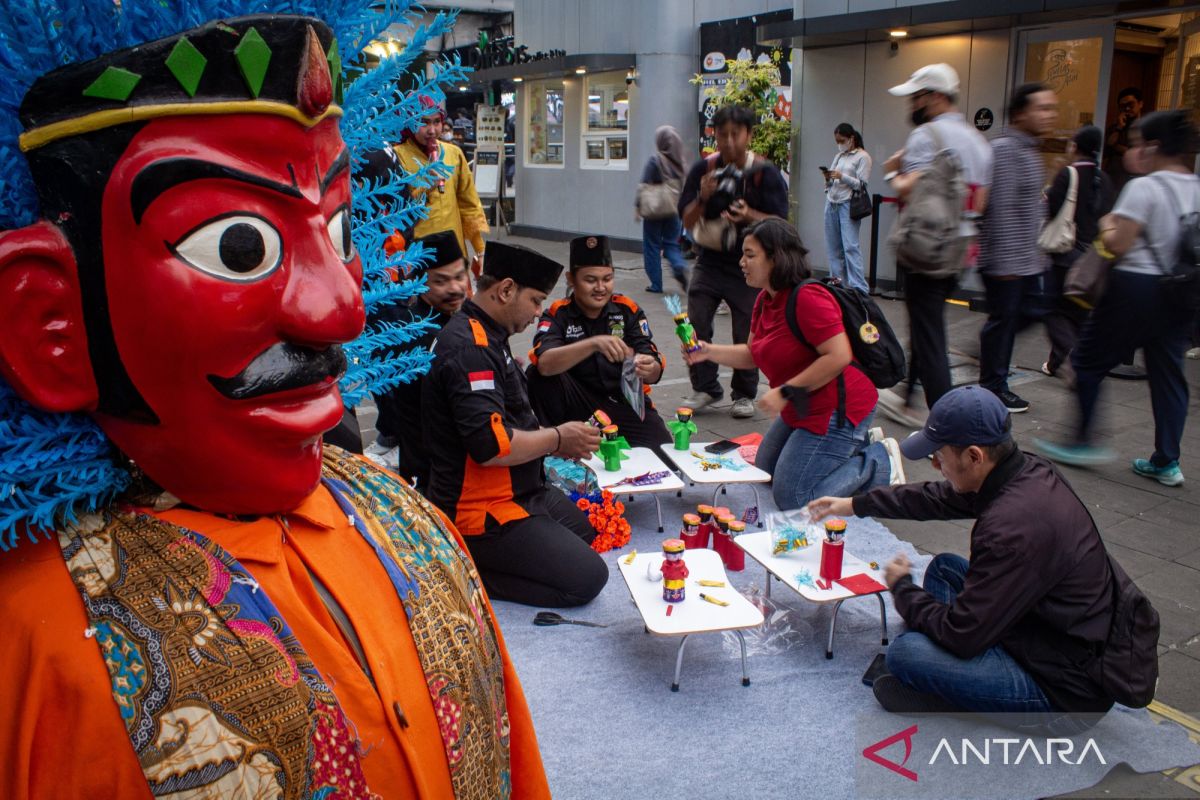
Take ondel-ondel, for example. For the Betawi people, these giant puppets are not merely amusing or unusual photo props. Today, ondel-ondel are also used at ceremonial events, exhibitions, tourism activities, performances and even diplomatic events.
Moving from a local cultural setting to the diplomatic stage undoubtedly creates new opportunities to introduce Betawi culture.
However, introducing a culture is different from simply borrowing its visual form. If foreign visitors know ondel-ondel only as giant puppets to pose with, the instantly recognisable element may survive while the history, meaning and people who sustain it disappear. The same applies to batik makers, wayang puppeteers, traditional musicians and other customary communities.
Inviting cultural practitioners is important, but physical presence does not necessarily mean involvement in decision-making. Someone can stand on an international stage without ever being given a voice in deciding how their culture and traditions are presented.
In the name of the nation
In cultural diplomacy, the state speaks in the name of the nation, but the nation is not entirely uniform. The interests of the government, the needs of the tourism industry, artists’ perspectives and the aspirations of communities who own cultural traditions may differ.
The government may want a performance that is concise and easy to promote. Artists may want to preserve the integrity of a performance. Local communities may prioritise training a new generation of practitioners and ensuring cultural continuity.
These interests do not necessarily have to conflict, but bringing them together requires a process. Without room for dialogue, the claim to represent Indonesia can become a unilateral authority to decide which cultures deserve to be shown.
A 2019 study of Indonesian arts and cultural diplomacy, published in the journal Bijdragen tot de Taal-, Land- en Volkenkunde, shows that using art and culture in diplomacy has a long history.
Since Sukarno’s era, art and culture have been used to present Indonesia as an independent nation with a culture of value. During the New Order, arts scholarship programmes, artist residencies at embassies and large-scale festivals also developed.
The journal study also notes the challenge Indonesia faces in confronting international stereotypes that portray non-Western cultures as exotic, unchanging or backward.
This means cultural diplomacy is not simply about showing culture; it is also an effort to change how others view Indonesia.
Making culture recognisable
To attract global attention, cultural products are often packaged to be easily recognised: striking clothing, energetic dances, distinctive music and visually appealing food.
This approach can effectively open the door to cultural introductions. But if these demands become the main measure, cultural products that are difficult to stage or do not produce appealing images may be sidelined.
Culture then ends up being judged by its ability to entertain and attract attention, rather than by its significance to the communities that practise it.
Yet attracting attention does not always build understanding. Watching a dance, for example, may spark interest in a nation’s culture, but it does not necessarily help audiences understand the history, values and lives of the people behind it.
Deeper understanding requires explanation, interaction with cultural practitioners, and opportunities to ask questions and engage in dialogue.
Ultimately, the success of cultural diplomacy should not be measured only by how many people watch a cultural performance, but also by the extent to which it fosters understanding.
Reforming cultural diplomacy should therefore begin with how practitioners are selected and involved. The government can develop programmes that take turns showcasing cultures from different regions, without turning every event into an exhibition of all the cultures of the archipelago.
Artists and communities should be selected according to transparent criteria and involved from the planning stage, rather than only when the performance is about to take place.
Budgets, fees, rights to documentation and the distribution of economic benefits also need attention. After an event, evaluation should not stop at counting visitors or media coverage. It should also consider whether new partnerships with Indonesian artists have emerged, whether communities have benefited and whether audiences have learnt something they did not previously know.
Cultural diplomacy will be more meaningful when the communities who own the culture are its principal participants, rather than merely material for state promotion.