
Once Welcomed, Rohingya Refugees Now Face Rejection in Malaysia
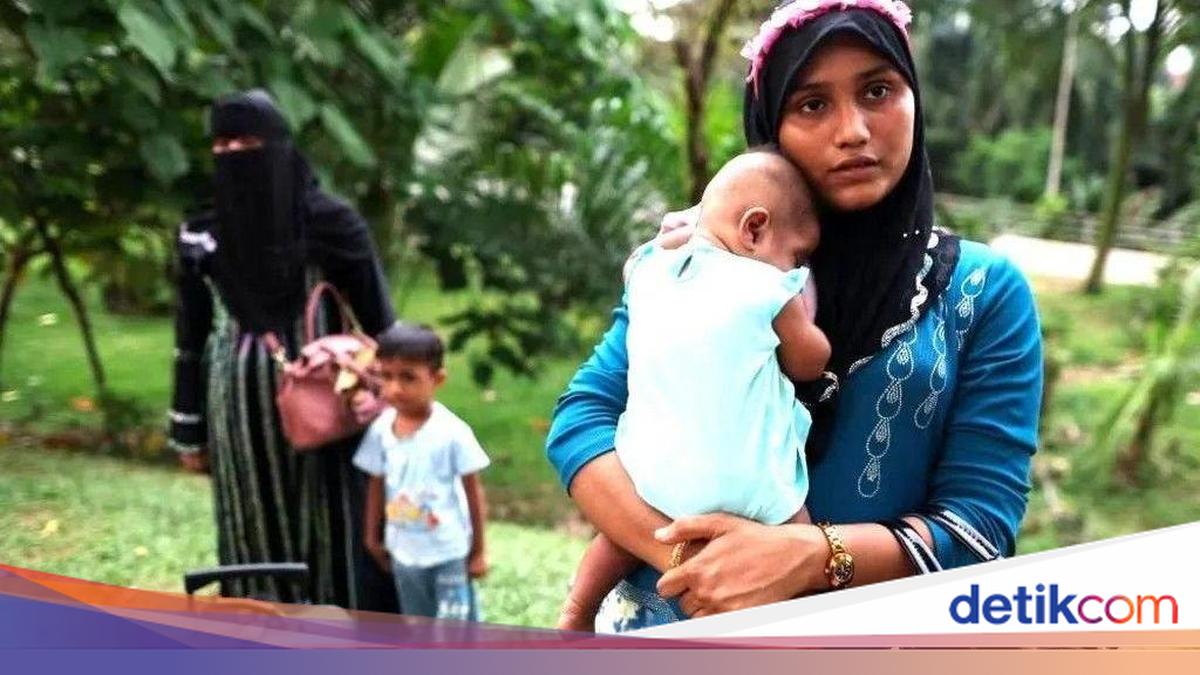
Not long ago, a former Malaysian prime minister urged his country to protect Rohingya Muslims, a stateless minority group that has been leaving Myanmar for decades to escape violence and discrimination. “We must defend them, not only because they share our faith, but because they are human beings and their lives are valuable,” Najib Razak said in 2017. Yet nine years later, a wave of rejection against Rohingya is growing stronger and spreading across Malaysia.
“Going to school has now become something dangerous,” said Irhan, a Rohingya refugee who founded a school in northern Malaysia for children from his community aged 6 to 15. Irhan’s name has been changed to protect his identity. Rohingya children are not allowed to attend Malaysian state schools. Instead, they study at informal education centres run by the community without official permits. But these learning spaces are increasingly vulnerable to being targeted.
Last month, the school Irhan founded was raided. Eight uniformed police officers entered the school, photographed the students and ordered some of them to go home. “These children only come to learn. Now their families are terrified,” he said. A school in Selangor, western Malaysia, even suspended learning activities for a month. It reopened in late July with a series of new rules. Students were banned from wearing school uniforms when attending classes. After lessons ended, they had to go straight home and were not allowed to linger or gather in groups around the school. “We try not to be too conspicuous to protect the students from becoming targets of attacks,” said Farooq, a Rohingya teacher.
Crackdowns on Rohingya have been carried out haphazardly and are often triggered by public sentiment. Uncertainty and fear have also forced several schools to close in recent months. In some parts of Malaysia, Rohingya have even been expelled from villages where they had lived for years. Some local residents told Malaysian media that allowing Rohingya to remain could cause “social problems”. After being evicted from a fishing village near Penang, around 120 Rohingya refugees sought shelter outside the UN refugee agency’s office in Kuala Lumpur. They were later temporarily detained by the authorities. More than half of them were children.
The series of events has left the Rohingya community, already feeling cornered and threatened, living once again in fear and constant vigilance. “In the early years, Malaysians were our friends. They cared about our children. But now everything has changed,” Irhan said. “I would leave if I could. But where would I go? We are not wanted anywhere.”
The UN refugee agency estimates that more than 126,000 Rohingya have settled in Malaysia, making the country the second-largest host of Rohingya refugees after Bangladesh. But several human rights groups believe the real number is far higher. Rohingya Muslims are not recognised as citizens in their home country, Myanmar, whose population is majority Buddhist. Although Rohingya trace their historical roots back centuries in what is now Rakhine state, Myanmar’s government has at various times labelled them illegal immigrants.
The largest wave of displacement occurred in August 2017, after Myanmar’s military launched a brutal crackdown. Soldiers massacred thousands of Rohingya, raped Rohingya women, and burned villages. The UN called it “a textbook example of ethnic cleansing”. The administration of former US President Joe Biden also concluded that the actions constituted genocide. Myanmar is now facing a major genocide case at the International Court of Justice. During the proceedings, Myanmar’s ousted leader and Nobel Peace Prize laureate Aung San Suu Kyi gave testimony. As Myanmar’s leader at the time, Suu Kyi faced heavy criticism over her government’s response to the killings, including downplaying the scale of the violence.
In 2017, more than one million Rohingya fled to Bangladesh. However, overcrowded camps, violence, and dwindling humanitarian aid have pushed many to attempt the dangerous journey across the Andaman Sea to Malaysia. The journeys are made on cramped and fragile fishing boats. Thousands have reportedly died en route. As more Rohingya have arrived in Malaysia, the country’s warm welcome has slowly faded.
Malaysia has never formally recognised asylum seekers. This means refugees have no right to housing, employment, or education. Even so, many Rohingya still viewed Malaysia, a Muslim-majority country, as a safe place that offered opportunities to improve their economic lives. At least that was the situation for years, when Malaysian leaders repeatedly called on the public and other Muslim countries to protect the Rohingya.
During the pandemic, Rohingya were accused of spreading the virus and were seen as competing with locals for jobs. Petitions calling for their deportation flooded social media. At the same time, authorities turned away hundreds of Rohingya asylum seekers who had been adrift at sea for weeks. This year, a wave of hatred against Rohingya has resurfaced with greater intensity, with social media again serving as one of the triggers. In May, posts appeared on social media accusing Rohingya refugees of failing to properly dispose of or manage sacrificial animals after Eid al-Adha. The posts quickly went viral. From there, various unfounded and exaggerated accusations emerged. Rohingya were accused of demanding automatic citizenship, seeking political power, and trying to “take over” Malaysia. An online petition urging the government to “expel Rohingya from Malaysia” gathered more than 420,000 signatures before it was eventually removed after condemnation from human rights groups.
Karim, a Rohingya activist, said the friendliness of Malaysians made him “feel safe” when he first arrived in the country in 2003. “Life as a refugee is hard. I was disappointed that for years I could only work in the construction sector. But I found that Malaysians were very friendly and kind to us. That is what made me feel safe,” said the 45-year-old who now lives in Penang. “But now, life is getting harder. I often feel afraid to leave the house. Several times, while travelling, people have shouted at me, ‘Why are you making our city a mess? Why don’t you just go home?’”
Irhan, who arrived in Malaysia in 2001 as a teenager as part of an earlier wave of asylum seekers, feels the same way. Both said most Rohingya ultimately want to return to Myanmar. But for now, they would be returning to a country still gripped by a bloody civil war. Rakhine state, their place of origin, has suffered massive destruction from fierce fighting between Myanmar’s military regime and the Arakan Army. For Rohingya who have fled, going home also means facing the risk of being forcibly conscripted to fight for the embattled junta, or being targeted by the Arakan Army.
This week, the UN released a report from an independent fact-finding mission revealing that conditions for minority groups in Myanmar have “fallen to a new worst point”. UN High Commissioner for Human Rights Volker Türk said on Tuesday that Rohingya are “experiencing suffering and cruelty at multiple levels and across the country, which is truly heartbreaking.” Meanwhile, Malaysia is no longer the refuge they had hoped for.
Some observers say Rohingya have become easy scapegoats for the rising cost of living. Negative sentiment towards them has grown stronger because Rohingya are the largest group of asylum seekers in Malaysia. “I am not saying all Rohingya are good people. In every community there are good people and there are those who do bad things. So why should the actions of a few be used as a reason to label the entire community?” Farooq asked. “I fled genocide in Myanmar hoping to find a safe place. But now, many Rohingya still live in fear just for being ourselves,” he added.
In a campaign speech in July, Malaysian Prime Minister Anwar Ibrahim said Myanmar had agreed to take back 5,000 Rohingya refugees from Malaysia, thanks to “good relations” between the two countries. Anwar also said he had warned Rohingya not to disrupt the lives of Malaysians. “This is our country. Malaysia is our country. Do not let others interfere,” he said. The statement may be one sign that anti-Rohingya rhetoric has increasingly entered the mainstream in Malaysia.
Nurulhidayah Zahid, daughter of Malaysian Deputy Prime Minister Ahmad Zahid Hamidi, for example, compared Rohingya to “monkeys in the forest”. “Enough with using religious and humanitarian sentiment. Do good in moderation. Do not let monkeys in the forest be fed while children in our own homes die of hunger,” she wrote in a Threads post accompanied by a photo of Rohingya. Former Malaysian Deputy Police Chief Ayob Khan Mydin Pitchay likened the arrival of Rohingya in Malaysia to a “cancer” requiring immediate treatment. BBC has contacted the Malaysian Prime Minister’s Office and the Ministry of Foreign Affairs for comment.
Some believe negative sentiment towards Rohingya will strengthen ahead of Malaysia’s general election. The next election must be held by February 2028 at the latest. “[Refugees and migrants] are once again being made easy political scapegoats to divert attention from deeper domestic problems,” said Yap Lay Sheng, a researcher at the human rights organisation Fortify Rights. According to Yap, the Malaysian government has for years tried to present the country to the world as a Muslim nation that upholds humanitarian values and compassion. “But Malaysia’s treatment of Rohingya shows just how empty that claim is,” said Yap, who is based in Malaysia.
Meanwhile, in an industrial building that has been used as a classroom for the past few months, Irhan is more worried about the future of his students than about political changes. “I do not know where to seek help or who can help us register this place as a school,” he said. “I hope Malaysians can understand that these children just want a chance to learn.”