
Once Thought Extinct, the Tonkin Snub-nosed Monkey Population Has Tripled
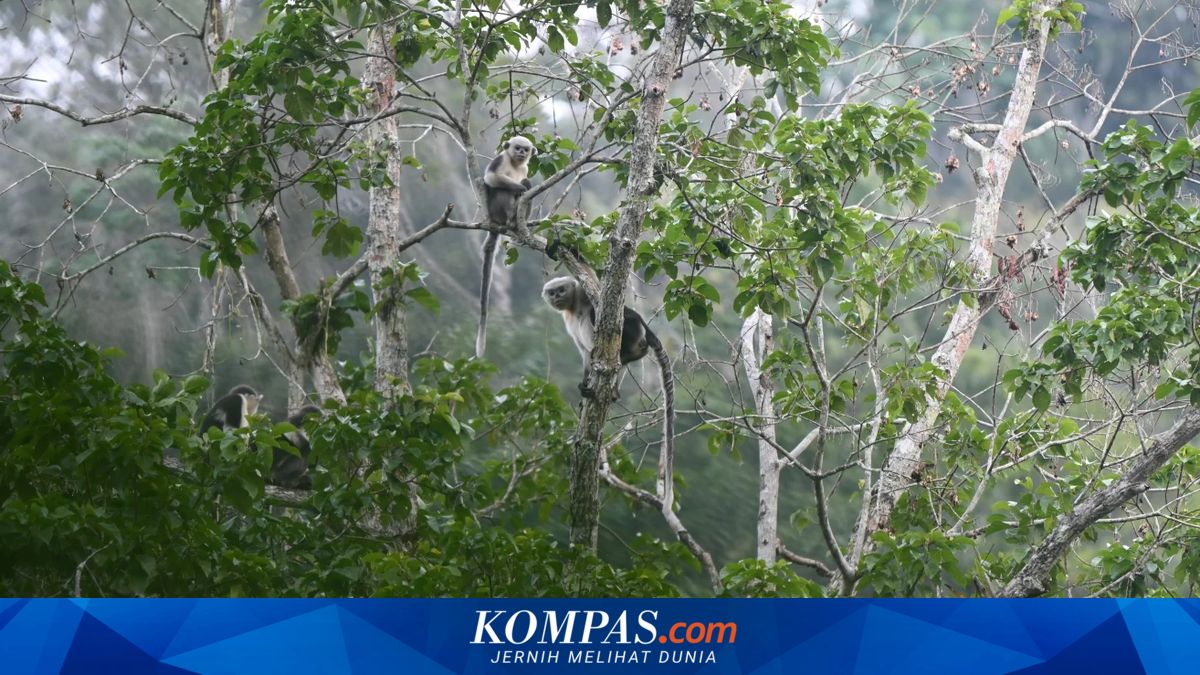
Among the leaves of evergreen trees, a pair of eyes with bright blue rings gaze around the canopy of the Khau Ca limestone forest. This sight is a rare glimpse of one of the world’s most endangered monkeys, a moment greatly welcomed by field conservationist Canh Xuan Chu. The Tonkin snub-nosed monkey is endemic to Vietnam. This primate can only be found in fragments of forest isolated in the two northernmost Vietnamese provinces that border China. In 2002, a population of just 50 individuals was discovered at Khau Ca. The discovery added to the list of a handful of places where the species had been found again at the end of the 1980s and 1990s, after previously being thought extinct. However, based on a comprehensive census conducted by the non-profit conservation organisation Fauna & Flora International, the Khau Ca population has reportedly more than tripled since 2002. Currently, 160 individuals of the monkey, classified as Critically Endangered, live safely within the nature reserve — accounting for about 80 percent of the estimated total of the remaining species on the planet. “This is one of our most successful surveys,” said Chu, who serves as project manager for the Tonkin snub-nosed monkey conservation programme at Fauna & Flora International. The survey results provide a glimmer of renewed hope for the survival of this fragile species, while also serving as a model for other forests in Vietnam to restore their endemic primates. Although these monkeys have striking and unique facial patterns, they are very shy. According to Chu, they always avoid contact with humans and will vanish immediately upon hearing any foreign noise, no matter how small. It is this trait that has made population counting a very difficult task for several decades. As a result of being hunted aggressively for traditional medicine ingredients and occasionally consumed as bushmeat, the Tonkin snub-nosed monkey’s presence has become very rarely seen. This is what led scientists in the 1980s to assume that the species had become extinct. Shorty after the Khau Ca population was found, Fauna & Flora International immediately established a field conservation station. They formed a community-based conservation team to patrol the forest, help clear animal snares, and report signs of illegal logging or hunting.