
Once Strangled by War, Saudi Arabia Is Now Awash with Oil and Posting Record Exports
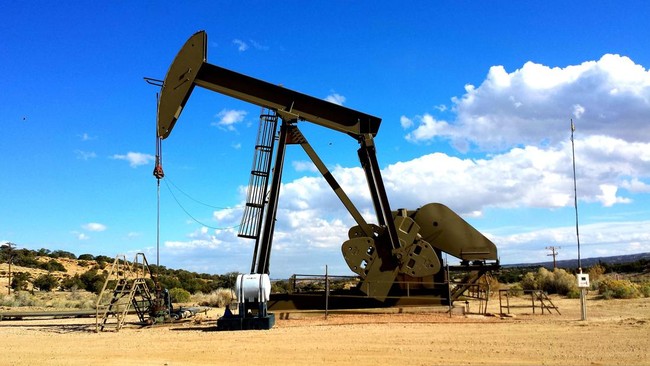
Jakarta, CNBC Indonesia — Saudi Arabia’s crude oil production surged in October 2026, nearing levels last seen before the Iran war disrupted energy supplies in the Middle East from late February.
According to the monthly report released by the Organization of the Petroleum Exporting Countries (OPEC) on Wednesday, 11 November 2026, Saudi Arabia reported crude production of 10.563 million barrels per day in October, up 26.2% from 8.372 million barrels per day in September.
That was the highest level since February 2026, when Saudi oil production reached 10.882 million barrels per day, before the conflict involving the United States and Israel against Iran disrupted production and oil shipments in the Gulf region.
The recovery demonstrates Saudi Arabia’s ability to maintain its oil industry’s operations amid disruptions to global energy trade routes, including the Strait of Hormuz, one of the world’s main oil shipping lanes.
Despite the sharp increase in production, not all the oil produced went directly to market. Data reported by Riyadh showed that oil supplied to the market, after accounting for stock changes, stood at about 9.203 million barrels per day in October.
This means that higher production was also accompanied by an increase in oil inventories, so the surge in output did not translate fully into additional supplies immediately available to consumers.
Saudi Arabia steps up exports amid Middle East conflict
Saudi Arabia’s production recovery came even as oil shipments in the Middle East continued to face significant risks because of the Iran conflict.
Since the war broke out in late February 2026, oil shipments through the Strait of Hormuz have been severely disrupted. Under normal conditions, the narrow waterway linking the Persian Gulf with international markets carries about one-fifth of global oil trade.
Limited storage capacity and a lack of alternative export routes had previously forced several Gulf producers to cut production.
Saudi Arabia, however, has used two main routes to maintain oil shipments: export terminals in the Persian Gulf and the port of Yanbu on the Red Sea, supplied through the East-West pipeline network.
The Financial Times reported that Saudi Arabia’s exports of crude oil and refined products reached about 7.9 million barrels per day in October, the highest level since the war began.
This occurred as attacks on merchant shipping around the Arabian Peninsula intensified.
The UK Maritime Trade Operations recorded at least 36 attacks on shipping activity in October, the highest frequency since the conflict began.
Attacks have also targeted Saudi Arabia’s aviation and energy infrastructure, including facilities belonging to state oil company Saudi Aramco.
Nevertheless, the ability to maintain alternative export routes has helped Saudi Arabia restore production and oil shipments amid geopolitical disruption.
OPEC+ production also rises, but what about global demand?
Saudi Arabia’s increase in output also helped drive a broader recovery in supplies from the OPEC+ group.
According to the November 2026 Monthly Oil Market Report, OPEC+ crude production reached 41.23 million barrels per day in October 2026, an increase of about 2.04 million barrels per day from September.
On the demand side, OPEC left its forecasts for growth in global oil consumption in 2026 and 2027 unchanged from the previous month’s report.
Global oil demand is expected to grow by only about 0.2 million barrels per day in 2026, to 105.72 million barrels per day, up from 105.54 million barrels per day in 2025.
Growth is expected to be driven primarily by non-OECD countries, which are forecast to add about 0.4 million barrels per day of demand. By contrast, demand in OECD countries is expected to fall by about 0.2 million barrels per day.
In 2027, global oil demand growth is projected to strengthen to about 2.6 million barrels per day, bringing total demand to 108.28 million barrels per day.
Of that increase, about 2 million barrels per day is expected to come from non-OECD countries, while OECD countries are forecast to contribute about 0.5 million barrels per day.
By quarter, OPEC expects global oil demand to reach 107.98 million barrels per day in the fourth quarter of 2026. It is projected to rise to 110.08 million barrels per day in the fourth quarter of 2027, despite fluctuations over the period.
China and India are two important markets in the global oil-demand outlook. In 2027, China’s oil consumption is expected to reach 17.28 million barrels per day, up from 16.81 million barrels per day in 2026.
Meanwhile, India’s oil demand is projected to rise from 5.70 million to 6.11 million barrels per day over the same period.
The projections indicate that non-OECD countries are expected to account for most of the growth in global oil demand in 2027, amid a recovery in production among several major oil producers.
Global oil prices under pressure as US election and Saudi supply draw attention
As Saudi production recovered, global oil prices came under sharp pressure in early November 2026. The decline reflected several factors, including the results of the US midterm elections, developments in the Iran conflict and the recovery in OPEC+ supply.
The Democratic Party’s victory in taking control of Congress raised market expectations that President Donald Trump would face greater political pressure to end the war with Iran. This sentiment also contributed to the fall in oil prices on 4 November.
Refinitiv data showed that Brent crude, which had reached US$117.64 per barrel on 30 October, fell to US$92.76 per barrel on 11 November, a decline of about 21.2%. West Texas Intermediate (WTI) dropped 16.9% over the same period, from US$104.12 to US$86.53 per barrel.
The pressure continued in trading on Thursday, 12 November 2026. As of 12.45pm Western Indonesian Time, Brent stood at US$91.92 per barrel, while WTI was at US$85.73.
Alongside US political sentiment, increased production by Saudi Arabia and OPEC+ strengthened expectations of a recovery in global supply. However, the risk of oil-shipment disruptions following attacks around the Strait of Hormuz and the Red Sea continues to weigh on the market.
Market participants will be watching developments in the US-Iran conflict and the OPEC+ meeting on 29 November 2026, where production targets for 2027 will be discussed.
Source: jawawa.id (https://jawawa.id/newsitem/once-strangled-by-war-saudi-arabia-is-now-awash-with-oil-and-posting-record-exports-1794477098)
Originally published by CNBC Indonesia (https://www.cnbcindonesia.com/research/20261112110808-128-784572/dulu-tercekik-perang-arab-saudi-kini-banjir-minyak-ekspor-rekor), translated from Indonesian