
Once Selling Oranges by Motorbike, He Now Ships Three Lorry Loads a Day Thanks to BRI Support
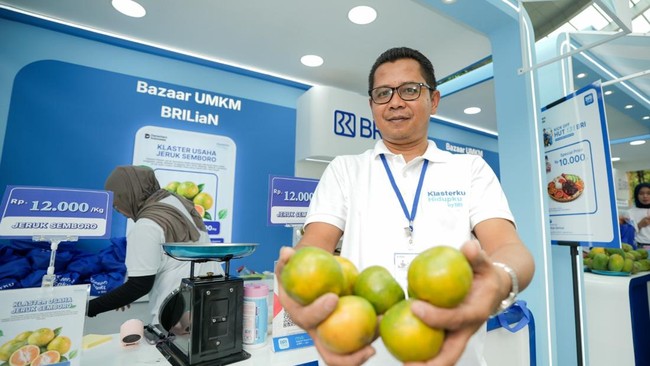
Jakarta, CNBC Indonesia — Antoni, who once carried oranges by motorbike, can now send up to three lorry loads a day to destinations across Indonesia. His long journey shows how access to capital and business mentoring can help a rural enterprise grow and reach wider markets.
Antoni’s efforts to develop the Semboro orange business in Jember, East Java, began with the family business established by his mother, a farmer and orange trader. He began cultivating oranges in 1997 and gradually expanded into trading and inter-regional deliveries in 2001. Drawing on the experience passed down by his family, Antoni now manages an integrated operation from cultivation to distribution, including leasing orchards and sending oranges to destinations across Indonesia.
As trading activity increased, Antoni recognised that limited capital remained a major obstacle, despite the market potential and opportunities to increase sales volumes. In response, he initiated the formation of a business cluster comprising 22 members, most of them small traders. Through the cluster, members gained access to financing from BRI, including the People’s Business Credit (KUR) programme, to strengthen their businesses and increase purchases of crops from farmers.
“Small traders have markets and the desire to grow, but they are often held back by a lack of capital. They want to buy more oranges from farmers, but their financial capacity is limited. So we tried to form a cluster so we could grow together and make use of access to financing from BRI. Thankfully, after receiving capital support, their ability to buy and sell has begun to improve,” Antoni said, as quoted on Friday (30 October 2026).
The financing gradually helped the cluster members’ businesses grow. Over a period of around four to five years, some traders who had previously relied on motorbikes to transport crops switched to three-wheeled vehicles. The greater carrying capacity enabled them to buy larger quantities of oranges, extend their distribution networks and expand their businesses.
Antoni has experienced similar growth. His business, which initially traded only a few quintals of oranges, now has a marketing network spanning Yogyakarta, Cirebon, Pangkalpinang, Jakarta, Lombok and Papua. During peak harvest periods, agents working with him can send two to three lorry loads of oranges a day, each with a capacity of around 6.5 to 7 tonnes. This reflects both the growth in trading volumes and the wider market access for Semboro oranges.
In addition to financing, the cluster coordinated by Antoni has received business equipment, including scales, fruit crates and bamboo baskets. Members have also received guidance through the Desa BRILiaN programme and opportunities to take part in various bazaars to introduce Semboro oranges to wider markets. This support is intended to strengthen business capacity not only through capital, but also through improved management and marketing.
The growth of the Semboro orange trade has also generated economic benefits for the surrounding community. Increased trading activity has created demand for workers at various stages, from picking and handling and packing the fruit to transport and distribution. Collector-traders typically employ one or two workers, while distributors need more staff as trading volumes increase.
“We really were small traders, carrying only a few quintals. After working together with BRI, we were able to grow and ship to many regions, from Yogyakarta, Cirebon and Pangkalpinang to Jakarta, Lombok and Papua. What we have gained is not just additional capital; our business capacity has improved too. Our markets have widened and we can ship larger quantities. As the business grows, farmers can sell their harvests, traders can buy more, and people in the community gain opportunities to work,” Antoni said.
Antoni’s journey with the cluster members shows how financing combined with business development can drive grassroots economic growth. With BRI’s support, small traders have been able to expand their operations, widen their marketing networks and generate economic benefits for farmers and communities around the Semboro orange-producing area.
According to Antoni, growth in trade also creates a multiplier effect for the community. The business requires workers for picking, fruit handling and deliveries.
“Collector-traders usually have one or two workers helping them. Distributors need more people because they handle larger volumes. So when businesses grow, we are not the only ones who benefit. Farmers can sell their harvests, traders can buy more, and people in the community get jobs. That is how the economy really gets moving,” he said.
BRI Corporate Secretary Dhanny said the bank continues to support the strengthening of micro, small and medium-sized enterprises (MSMEs) through financing and empowerment initiatives that can increase business capacity.
“BRI believes MSMEs play an important role in driving regional economies. That is why support for businesses does not stop at access to financing; it is also intended to strengthen capacity, widen market access and build business ecosystems. Antoni’s story shows that when financing and mentoring go hand in hand, businesses in regional areas can grow, create jobs and deliver economic benefits to their surrounding communities,” Dhanny said.
Source: jawawa.id (https://jawawa.id/newsitem/once-selling-oranges-by-motorbike-he-now-ships-three-lorry-loads-a-day-thanks-to-bri-support-1793339488)
Originally published by CNBC Indonesia (https://www.cnbcindonesia.com/entrepreneur/20261030120343-25-780884/dulu-jualan-pakai-motor-kini-3-truk-sehari-berkat-pemberdayaan-bri), translated from Indonesian