
Once Booming, a Strange Phenomenon Now Haunts Jakarta's Gemstone Paradise
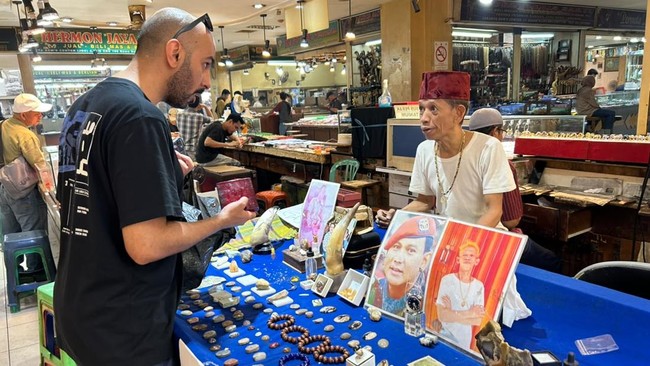
Nearly a decade ago, Indonesia experienced a gemstone fever. However, as time has passed, the popularity of these stones has continued to fade. One of the main trading centres, the Jakarta Gems Center (JGC) or Rawa Bening Gemstone Market in Jatinegara, appears far quieter than in previous years. The market’s emptiness is due to waning interest from buyers. Although visitors still pass through the market corridors, only a handful actually complete transactions, a condition that continues to erode traders’ turnover.
Gemstone trader Arif stated that the downward trend in purchasing power became more pronounced after the Covid-19 pandemic. The situation has become so difficult that traders now need one or two months to sell a single gemstone. “Now, you might not sell one in a month. Sometimes, there are no buyers for two months,” he told CNBC Indonesia on Wednesday (8/9/2026). He said the decline in buyers is caused by the economic downturn in recent times. Consequently, gemstones, which are classified as hobby items, are among the first expenditures to be cut amid the current economic uncertainty.
It is not only the number of buyers that has shrunk; transaction patterns have also changed. Arif revealed that more people are now coming to offer their gemstone collections for sale rather than buying similar products at the market. In a month, he might receive 10 to 15 people wanting to sell their stones, while genuine buyers number only one or two. He also believes that the government’s budget efficiency policies have influenced sales. Previously, some buyers came from government employees and regional guests visiting Jakarta who purchased gemstones as collectibles or souvenirs. Now, the number of buyers from this segment is said to have drastically reduced.
A gemstone trader named Jeje echoed Arif’s sentiments. He said sales at the Rawa Bening Market have plummeted since the Covid-19 pandemic. The situation is so severe that a single gemstone ring might not sell within one or two months. “If you can still talk about daily turnover, I think that’s already very good,” he said.
Meanwhile, senior trader Sandi Shadewo admitted that in its heyday, gemstone traders could collect a turnover of Rp10 million in a single day. Currently, however, traders are only able to pocket a turnover of around Rp1 million per day. To survive, some traders have started to offer gemstones through social media and e-commerce platforms. One example is Adi, a gemstone trader who relies on TikTok to reach potential buyers from overseas, such as Malaysia and Brazil. However, competition in the online market is much fiercer because traders must offer cheaper prices for their products to be noticed. Ultimately, amid the sluggish market, traders still hope that gemstones will regain public attention. They remain optimistic that the wealth of precious stones from regions like Garut, Bacan, Aceh, Sukabumi, and Kalimantan still holds high value. Unfortunately, if purchasing power and public interest in gemstones do not recover, the glory days of these products will be difficult to repeat.