
Once a Global LNG Giant, Qatar Now Short of Gas and Forced to Buy from the US
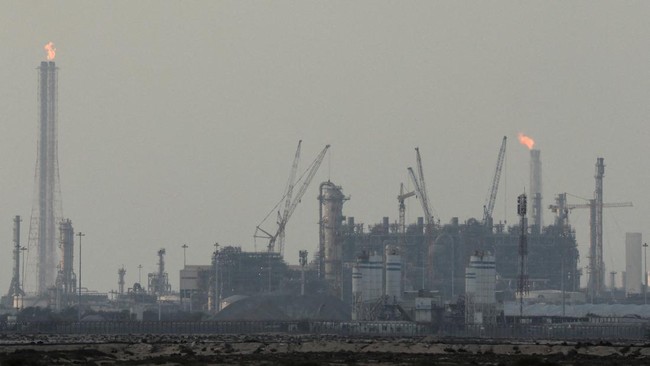
Jakarta — The Iran war is reshaping global natural gas trade. Qatar, previously one of the world’s largest liquefied natural gas (LNG) exporters, is reportedly set to buy supplies from its competitor, the United States.
QatarEnergy, the state-owned oil and gas company, has agreed to import 4 million tonnes of LNG a year from US company Cheniere Energy until 2054, according to CNBC International.
The deal, announced on Thursday, marks a major shift for Qatar, which before the war ranked second only to the US in global LNG exports. Cheniere Energy chief executive Jack Fusco said the company was ready to supply QatarEnergy from its Sabine Pass and Corpus Christi facilities.
“We look forward to reliably supplying QatarEnergy from Sabine Pass and Corpus Christi through the second half of this century,” he said, as quoted on Saturday (24 October 2026).
Qatar’s gas industry has suffered a setback after Iranian attacks in March damaged two major production trains at the Ras Laffan complex. The damage crippled about 17% of the country’s LNG export capacity.
Qatar’s Energy Minister, Saad Sherida Al-Kaabi, estimates that repairs will take around three years. He described the attacks as a “major blow” to Qatar’s production capacity for the coming years.
The situation has become more difficult because Qatar’s export routes depend on the Strait of Hormuz, which has been disrupted by the war and attacks on tankers. Al-Kaabi said Qatar could export only “very small” volumes of LNG because it was unable to ship supplies through the strait.
“Only a handful of ships are passing through the strait, and even then in very small numbers,” he said.
Alex Munton, director of global gas and LNG at Rapidan Energy, said the long-term contract with Cheniere reflected Qatar’s efforts to prepare for the risk of prolonged shipping disruption. LNG depends heavily on maritime transport because gas must be liquefied before it can be loaded onto ships.
“They have to go through the Strait of Hormuz. There is no other way to send LNG to market. They are really stuck,” Munton said.
The deal also strengthens US gas companies’ position in the global market. Since the war began, Cheniere shares have reportedly risen 26%, while Venture Global shares have gained 40%. Munton said buyers were increasingly relying on the US to diversify energy supplies, as several new LNG export projects continue to be developed there.
QatarEnergy is also reportedly seeking additional supplies from the US. Reuters reported that Venture Global was in advanced talks to supply 3 million tonnes of LNG a year to QatarEnergy, according to sources familiar with the discussions. UBS analyst Manav Gupta said the Cheniere deal could help Qatar meet its international delivery commitments amid limited domestic production.
Before the war, Qatar was one of the world’s largest LNG producers and exporters, competing with the US and Australia in global markets. The Gulf state relies on the Ras Laffan complex as its main gas production and export hub, supplying important markets in Asia and Europe. Qatar is also expanding production capacity through its North Field project, but damage to facilities and shipping disruption in the Strait of Hormuz are now hampering those ambitions.
Although Qatar’s planned purchases from Cheniere amount to less than 1% of the more than 400 million tonnes traded globally each year, Munton described the contract as one of the largest individual deals in the US LNG market. The agreement shows how the war is not only disrupting energy supplies from the Middle East but also creating opportunities for the US to expand its dominance as a global LNG exporter.
Source: jawawa.id (https://jawawa.id/newsitem/once-a-global-lng-giant-qatar-now-short-of-gas-and-forced-to-buy-from-the-us-1792821050)
Originally published by CNBC Indonesia (https://www.cnbcindonesia.com/news/20261024110852-4-779111/dulu-raksasa-lng-dunia-kini-gas-di-qatar-langka-terpaksa-beli-dari-as), translated from Indonesian