
On World Seafarer Day, Pelindo Backs Economic Potential in the Malacca Strait
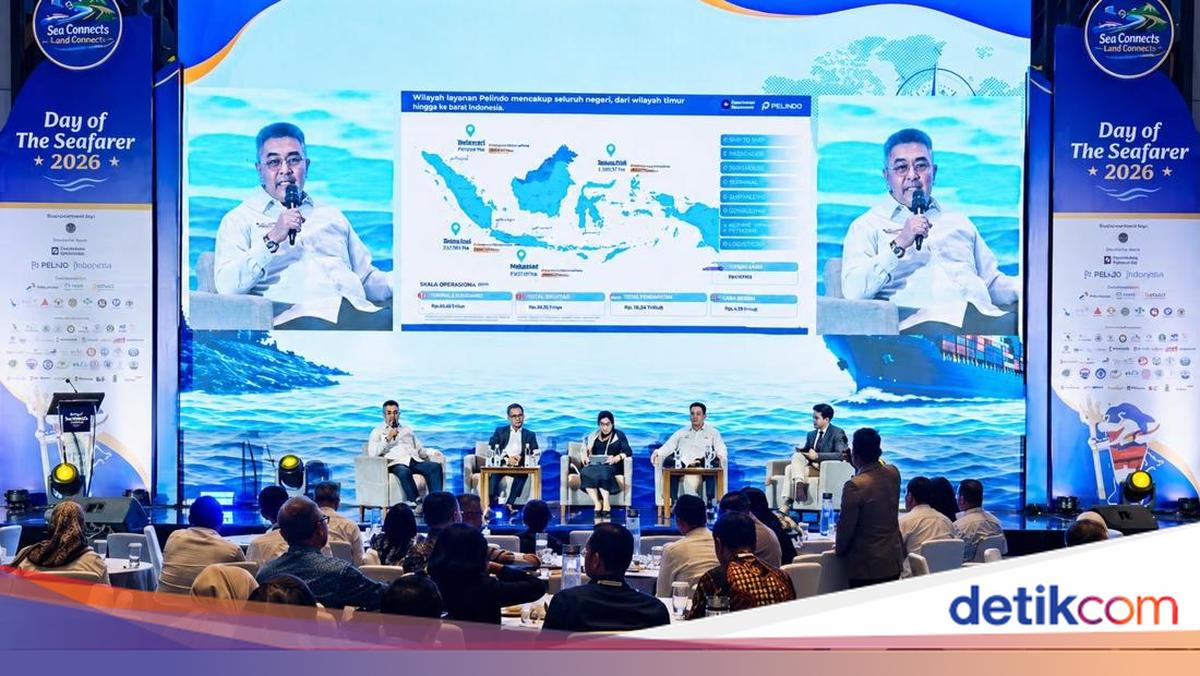
PT Pelabuhan Indonesia (Persero), or Pelindo, believes Indonesia needs to play a greater role in international shipping activities in the Malacca Strait. This step is important so that Indonesia does not merely become a transit country, but is also able to capture added economic value from the maritime services sector.
Pelindo President Director Achmad Muchtasyar explained that the Malacca Strait is one of the world’s busiest shipping lanes and holds strategic significance for Indonesia. Besides being a main corridor for international trade, the area also presents a major opportunity for Indonesia to increase economic value through the provision of integrated maritime services.
“The Malacca Strait is not just an international shipping lane. For Indonesia, this area is a strategic space to strengthen maritime sovereignty while capturing greater economic value from world trade activities,” Achmad said in a statement on Friday (26/6/2026). The remarks were delivered at the Strategic Maritime Forum held during the 2026 Day of the Seafarer commemoration in Jakarta on Thursday (25/6).
Achmad further explained that Indonesia needs to strengthen its presence by providing safe, reliable, and competitive maritime services, ranging from pilotage, towage, ship-to-ship transfer, transshipment, and floating storage, to various other ship support services. In this way, Indonesia would not only be a shipping transit area but also become an important part of the international logistics and trade chain.
“When the world’s shipping activities pass near our territory, Indonesia must not be a mere spectator. We must be able to provide strong, reliable, and value-added services for the national interest,” Achmad stated.
Beyond providing added economic value, Achmad emphasised that strengthening maritime services also plays an important role in improving shipping safety and protecting the marine environment. The high volume of ship traffic in the Malacca Strait requires good service governance to minimise the risk of accidents, pollution, and potential oil spills that could impact Indonesian waters.
“Strengthening pilotage, towage, and other maritime services is not solely about business. It also concerns shipping safety, environmental protection, and the state’s presence in safeguarding its maritime space,” Achmad added.
As part of this effort, Pelindo continues to develop maritime services in strategic areas, one of which is through the operation of the Nipa Transfer Anchorage Area (NTAA) in the Nipa Waters, Riau Islands, which began operating in May 2026. The services include ship-to-ship transfer, ship services, and floating storage to support maritime activities around the Malacca Strait.
“The development of services in the Nipa Waters is an important step to strengthen Indonesia’s position in international trade and logistics. This is not merely port business development, but part of an effort to deliver greater economic benefits for Indonesia,” Achmad continued.
Achmad added that the strengthening of maritime services must go hand in hand with increasing the capacity and role of Indonesian seafarers. According to him, the growth of pilotage, towage, ship-to-ship transfer, and various other maritime services will open greater opportunities for national seafarers to contribute to the maritime sector, both nationally and internationally.
“Indonesian seafarers have recognised competence and resilience. Therefore, strengthening the national maritime ecosystem must simultaneously become a space for Indonesian seafarers to take on a greater role, both domestically and in strategic international areas,” Achmad said.
Achmad further explained that Pelindo is currently continuing to strengthen its corporate transformation from a port operator into an integrated end-to-end port and marine ecosystem integrator. This transformation is realised through strengthening port connectivity, developing maritime services, digitalising services, and integrating ports with industrial zones and hinterlands to support national supply chain efficiency.
Achmad explained that optimising the potential of the Malacca Strait cannot be done by one party alone, but requires close synergy between the government, regulators, state-owned enterprises, business players, and the maritime community. This collaboration is key for Indonesia to improve the competitiveness of its maritime services while gaining greater economic benefits from international shipping activities.
“The Malacca Strait must become a strategic space that provides the greatest possible benefits for Indonesia. Through strong collaboration, we can strengthen maritime sovereignty, improve shipping safety, increase the maritime sector’s contribution to the national economy, and simultaneously open more opportunities for Indonesian seafarers to develop,” Achmad concluded.
Through the Strategic Maritime Forum in the context of the 2026 Day of the Seafarer, Pelindo affirmed its commitment to continue supporting the strengthening of the national maritime ecosystem, improving the competitiveness of port services, and increasing the maritime sector’s contribution to Indonesia.