
On the Fourth Day, US–Israel Joint Strikes Cripple Iran's Command and Military
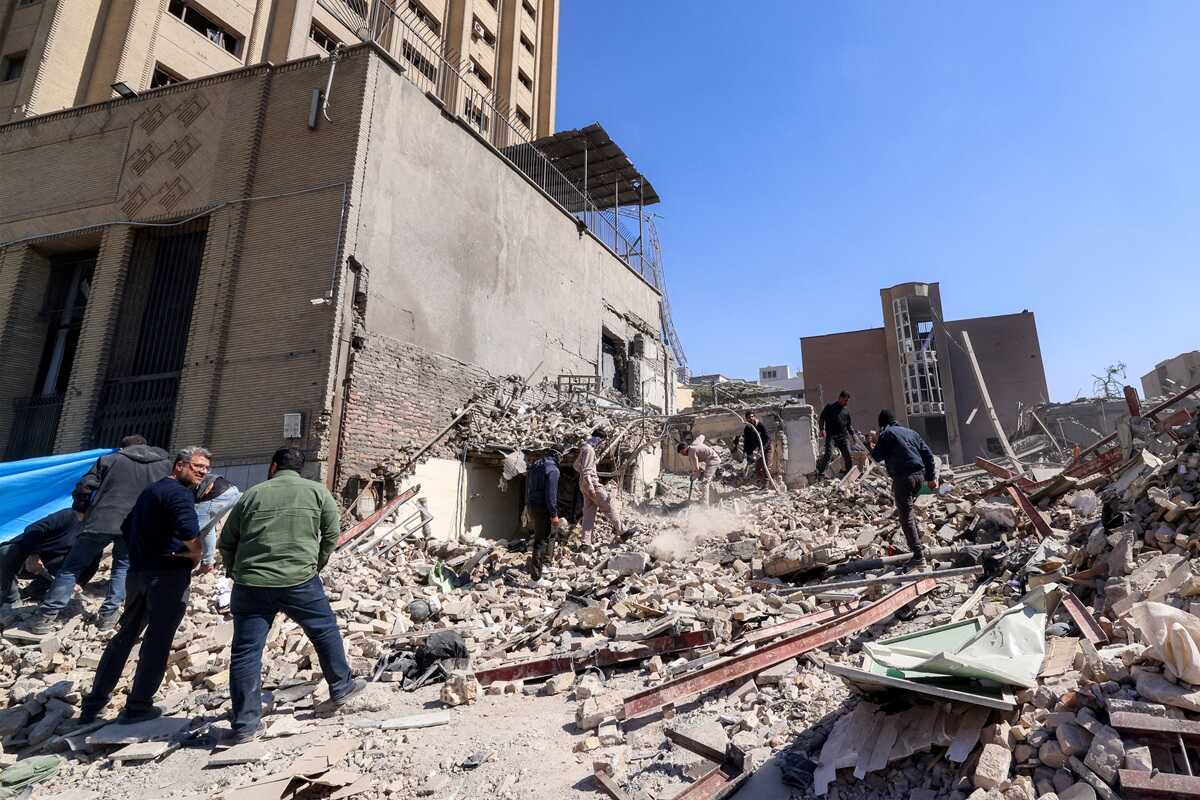
Escalation of the war in the Middle East has reached a critical point as it enters the fourth day of air strikes jointly conducted by the United States and Israel against Iranian territory. U.S. President Donald Trump said Tehran’s air defences, its navy, and even the leadership structure had been ‘crippled’. Israel Defence Forces (IDF) confirmed it had struck strategic targets in Tehran, including the presidential offices and the complex of the Supreme National Security Council. The IDF said the strikes sought to disrupt the functional continuity of the regime’s command-and-control system. In addition, a secret nuclear facility on the outskirts of the capital, believed to be used for weapon development, was also targeted.
“The impact we have inflicted is very strong. Almost everything they possess has now been crippled,” President Trump said at the White House on Tuesday. He added that Iran’s new leadership had again become a target after claiming that 49 of their leaders had already died on the first day of the attack.
Satellite imagery from Vantor shows extensive damage to key political and military hubs in Iran, ranging from the judiciary complex to the headquarters of the Islamic Revolutionary Guard Corps (IRGC). In the holy city of Qom, the offices of the Assembly of Experts, the body responsible for selecting the supreme leader, were reportedly destroyed.
International Atomic Energy Agency (IAEA) also confirmed damage to access buildings at the Natanz Fuel Enrichment Plant. However, Iran’s Atomic Energy Organization (AEOI) insisted there had been no radioactive material leaks as a result of the attacks.
The conflict has claimed a large number of lives. The Iranian Red Crescent reported at least 787 people killed in the four days. Meanwhile, HRNA human rights body recorded civilian deaths at 742, including 176 children. One incident that drew condemnation was the attack on Shajare Tayyebeh School, which killed 165 female students and staff, although the IDF denied involvement in that area.
Iran responded by launching hundreds of missiles and drones at Israel and Gulf states hosting U.S. military bases. The retaliatory strikes caused casualties in Kuwait, the United Arab Emirates and Bahrain.
The situation grew tenser after Iran announced the closure of the Hormuz Strait, a vital route for about 20% of global oil and gas supplies. “We will burn any ship that tries to pass,” IRGC Brigadier-General Ebrahim Jabbari said.
In response to this threat, British Prime Minister Sir Keir Starmer and French President Emmanuel Macron have deployed naval fleets to the Eastern Mediterranean to bolster regional defence and shield allied territories from further drone attacks. (BBC/Z-2)
Asian-Pacific stock indices fell amid the US–Israel escalation with Iran. The closure of the Hormuz Strait sparked fears of a global energy crisis.
Diplomatic ties between Madrid and Washington reached their lowest point in March 2026.
The Pentagon identified four of the six U.S. soldiers killed in the Iranian drone attack in Kuwait. Donald Trump warned of potential additional casualties.
Amid the Middle East escalation, U.S. President Donald Trump made pointed remarks about Iran’s participation in the 2026 World Cup.
President Donald Trump ordered naval escorts and shipping insurance guarantees through the Hormuz Strait to keep global energy supplies stable.
Donald Trump explained the rationale behind the U.S. strike on Iran. He claimed the move was to pre-empt an attack by Tehran that he described as “crazy”.
French Foreign Minister Jean-Noël Barrot stressed readiness to defend Gulf allies from Iranian missile strikes. See the plan to evacuate 400,000 French nationals here.
Islamic Revolutionary Guard Corps (IRGC), Iran’s elite military unit, asserted it would intensify its resistance after the death of Supreme Leader Ayatollah Ali Khamenei.
U.S. President Donald Trump criticised British Prime Minister Keir Starmer for slow approval of using Diego Garcia as a base for operations against Iran.
Iran mourns the death of Supreme Leader Ayatollah Ali Khamenei and several senior military figures in the US–Israel attack. President Pezeshkian described this as an open declaration of war.