
On Kartini Day, Minister Arifah: Many Challenges to Achieving Gender Equality
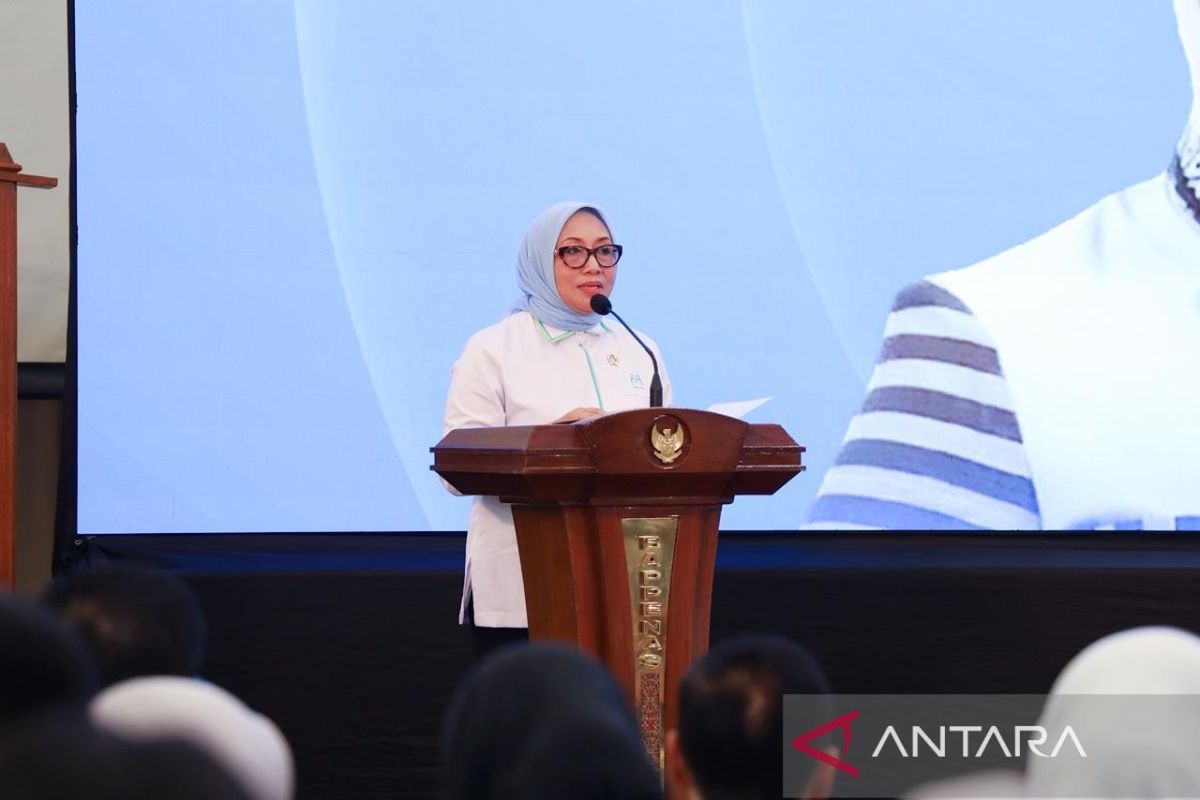
Jakarta (ANTARA) - Minister for Women’s Empowerment and Child Protection Arifah Fauzi stated that in the commemoration of Kartini Day in 2026, there are still many challenges to achieving gender equality.
“Various challenges towards gender equality continue to face us. In the context of today, these challenges appear in various forms of inequality in access, participation, control in the implementation of development processes, and the benefits obtained by women from development outcomes,” said Minister PPPA Arifah Fauzi in Jakarta on Tuesday.
According to her, achievements in the Gender Development Index (GDI) and Gender Inequality Index (GII) as two indicators of the success of gender mainstreaming in Indonesia confirm this.
“Indonesian women still have issues in access to the economy, education, and health,” said Arifah Fauzi.
Meanwhile, the Gender Inequality Index (GII) in 2024 stands at 0.421.
Although it has decreased compared to the previous year, this figure still indicates inequality in aspects of reproductive health, empowerment, and women’s economic participation.
Women giving birth outside health facilities reach 24.8 percent, as well as the proportion of women giving birth for the first time under the age of 20 that still occurs.
Meanwhile, in the employment sector, the female labour force participation rate is also lower than that of men, at around 56.42 percent, compared to 84.66 percent for men.
In the political field, women’s representation in parliament is around 15 percent at the district/city DPRD level, 15 percent at the provincial DPRD level, and 22 percent at positions in the DPR RI.
In addition, various other indicators show that the space for women’s empowerment needs to be continuously expanded. Especially when viewed from the regional distribution, there are inter-provincial disparities.
It is recorded that 13 provinces are in the low GDI category, indicating significant gender inequality that needs to be a joint concern.
“Therefore, the state must continue to be present and strive to strengthen women’s empowerment through the direction of national development policies,” said Minister Arifah Fauzi.
According to her, efforts to strengthen women’s empowerment align with Asta Cita-4, which includes commitments to strengthen human resource development, science, technology, education, health, sports achievements, gender equality, as well as strengthening the role of women, youth, and persons with disabilities.