
On Its 81st Anniversary, Central Java Provincial Government Highlights Infrastructure Development Achievements
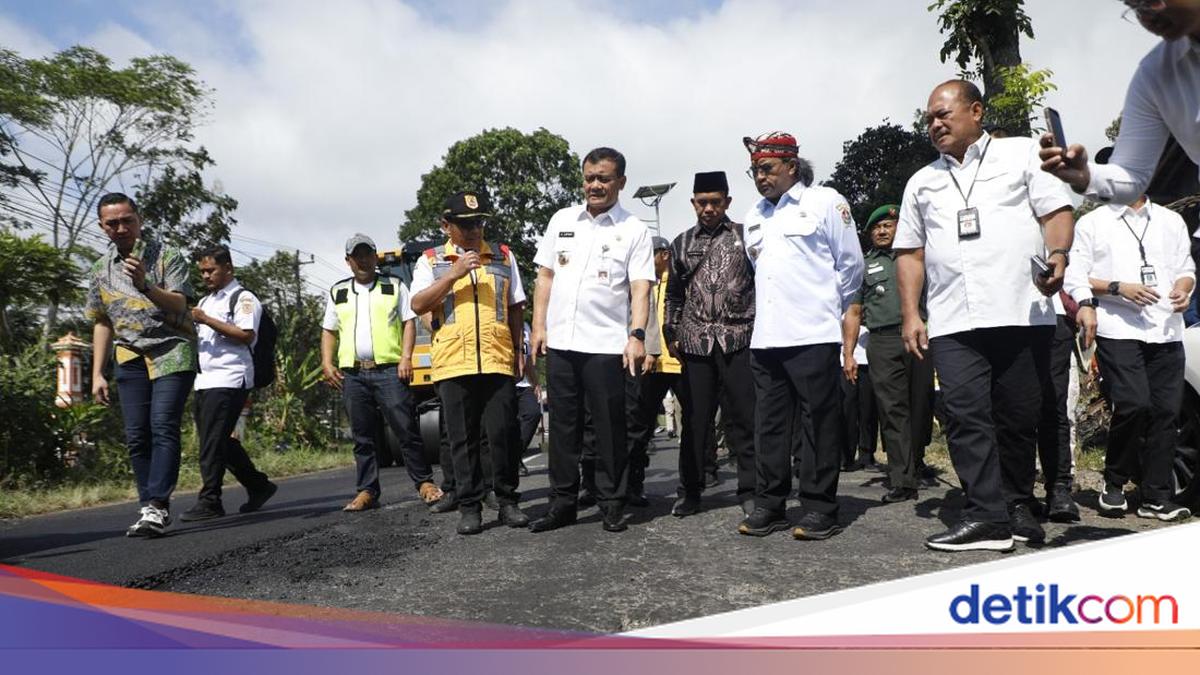
Hundreds of kilometres of roads have been repaired, a series of embung have been built, dozens of irrigation systems constructed and dozens of bridges improved. This is intended to reduce logistics costs, increase economic competitiveness and accelerate equitable development. Ahead of the 81st anniversary of Central Java Province, various infrastructure development achievements have been felt by the public, including improvements to roads, bridges, embung and irrigation channels.
Road and bridge infrastructure development remains a shared focus. By the end of 2025, 2,293.96 kilometres of provincial roads were in good condition, or 94.01 per cent of the total 2,440.12 kilometres of provincial roads. Meanwhile, 22,733.45 metres of bridges were in good condition, or 85.43 per cent.
Two examples of road preservation or maintenance packages in the second half of 2025 are the Parakan (Temanggung)-Patean (Kendal) road section and the Wonosobo-Dieng (Banjarnegara) road section. Both were carried out between July and December 2025 and inaugurated in 2026. They are also inter-regional connecting roads that support economic and tourism activities.
“Thank you for the road repairs that have been carried out. They are very useful in supporting the daily activities of the community. Hopefully roads at other points will also be built so that everyone can feel the development being carried out,” said Ngadirejo Village Head Muhammad Abdillah Al Kafi on Tuesday (18/8/2026).
In 2026, up to the second quarter, the condition of provincial roads reached 87.79 per cent. One factor in the decline was high rainfall throughout the first quarter of 2026, which eroded road asphalt layers. By the end of 2026, the target is to return to 94 per cent.
The Central Java Provincial Government, under the leadership of Governor Ahmad Luthfi, has prepared an acceleration of provincial road rehabilitation to restore road condition levels at least to those of the previous year. Additional budget has also been allocated to handle damaged and potholed roads in various areas. Priority is given to roads that serve as economic lifelines and support economic growth and tourism.
Road improvements and rehabilitation carried out in various areas in 2026 include the Singget-Doplang-Cepu road section (Blora Regency), Jepara-Keling (Jepara Regency), Wiradesa-Kajen (Pekalongan Regency), and the Kalijambe emergency route (Magelang-Purworejo).
In addition, the additional budget provided by Ahmad Luthfi has also covered several other road sections, such as in Brebes, Pemalang and Batang. It also includes roads in border areas such as Randublatung-Cepu (Blora) and several road sections in Wonogiri, namely Ngadirojo-Biting and Ngadirojo-Giriwoyo, both of which border East Java.
“Thank you to the Governor for allocating road development in Wonogiri. Once completed, it can be useful for improving the welfare of residents,” said Wonogiri Regency Public Works and Spatial Planning Office Head Prihadi Ariyanto.
In addition, handling of district roads is also a priority. This involves collaboration between the provincial government, regency/city governments and the central government. In 2025, the Presidential Instruction on Regional Roads (IJD) completed 30 road handling work packages totalling 132.62 kilometres. These packages were spread across 19 regencies/cities.
In 2026, Luthfi together with regents and mayors have proposed to the central government the handling of 36.30 kilometres of roads and 249.70 metres of bridges.
According to Luthfi, road infrastructure development is one strategy to encourage new economic growth and tourism in Central Java. Good infrastructure will facilitate public mobility and the distribution of goods and services between regions. Building road infrastructure is also for public safety.
“We are building this road not merely for its physical form, but so that the movement of people and goods can run smoothly and safely. If the infrastructure is good, regional connectivity increases and the community’s economy also moves,” he said.
Infrastructure is not only about roads and bridges. As a province that is one of the national food barns, agricultural supporting infrastructure is equally important, such as embung and irrigation systems for agricultural land.
Data shows that throughout 2025 there were eight new embung constructions and two embung revitalisations, while by early 2026 Governor Ahmad Luthfi had inaugurated up to 12 embung spread across various areas.
One example is Embung Kerangjati in Blora. The construction of this embung has benefited farmers and agricultural land covering around 40 hectares. Before the embung existed, rice planting was usually once a year because it relied on rain-fed water. After the embung was completed, planting can be done more than twice a year.
“The water source here is rain-fed. Rice planting was only once; if we tried twice, many failed due to lack of water. With the help of this embung, we can plant up to three times,” said Karyono, a representative of the Sidodadi farmer group in Karangjati Urban Village, during the embung inauguration on 2 March 2026.
Luthfi said embung construction is part of the government’s commitment to providing raw water and strengthening the agricultural sector as a pillar of food security. He hopes that the embung that have been built and inaugurated can be managed and maintained together by the community so that their benefits can be felt in the long term.
“In agriculture, the key is water. The key to planting is water. Therefore, we build embung to collect rainwater so that during the dry season it can still be used to irrigate rice fields,” he said when inaugurating Embung Plosorejo in Guworejo Village, Karangmalang District, Sragen Regency.