
On Its 64th Anniversary, FEB UMI Strengthens Eastern Indonesia’s Economic Competitiveness Through Industry Collaboration and Professional Certification
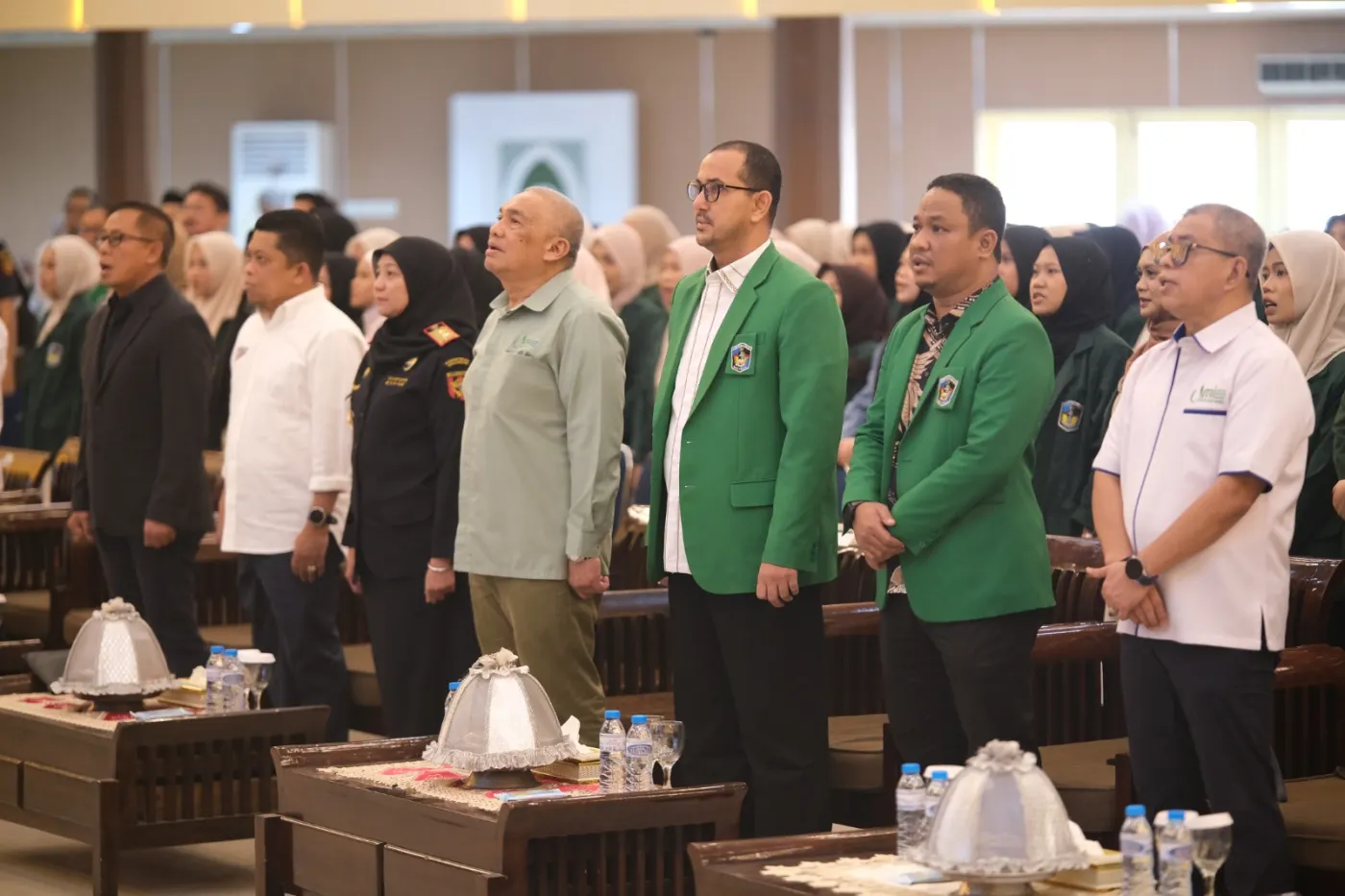
Makassar — The Faculty of Economics and Business (FEB) at Universitas Muslim Indonesia (UMI) is using its 64th anniversary to strengthen human resources, industry cooperation and graduates’ readiness to compete in the global economy.
The commitment was demonstrated through its 2026 public lecture, themed “Building Economic Competitiveness from the East: Investment Efficiency and Workforce Readiness for Global Markets”. The event was held at the Al Jibra Auditorium on UMI’s Campus II on Monday, 26 October 2026.
The programme included discussions with economic and industry practitioners, the signing of a cooperation agreement with PT Semen Tonasa, and the launch of the IAI Computer-Based Examination (CBE) Centre and the Certificate in Accounting, Finance and Business (CAFB).
The three initiatives form part of FEB UMI’s efforts to connect academic learning with business needs and the development of students’ professional skills.
FEB UMI says graduates’ competitiveness depends on relevant knowledge, learning experiences grounded in industry practice, and the ability to adapt to economic and technological change.
Three strategic perspectives: public finance, industry and global logistics
The public lecture featured three speakers representing key areas of national economic development: Martha Octavia, Head of the South Sulawesi Representative Office of the Ministry of Finance; H. Anis, President Director of PT Semen Tonasa; and H. Abdul Aziz, Director of New Priok Container Terminal One (NPCT1) in Jakarta.
Their participation gave students an opportunity to understand the links between public financial policy, investment needs, industrial development and logistics systems in improving economic competitiveness.
These issues are particularly relevant to Eastern Indonesia. The region’s economic potential needs efficient investment, adequate infrastructure and workers with skills suited to industry requirements.
Direct discussions with practitioners can help students understand how economic and business decisions are made, the challenges companies face and the capabilities increasingly required in the workplace.
Academic knowledge becomes more valuable when students can see how it is applied in business and to real-world economic issues.
FEB UMI expands partnership with Semen Tonasa
FEB UMI Dean Dr H. Muhammad Syafi’i A. Basalamah said the public lecture was an academic tradition that the faculty continued to develop to broaden students’ perspectives.
This year’s anniversary, however, included additional initiatives directly related to strengthening the faculty and developing professional skills.
“Every year we bring in outstanding speakers from various fields. But today is not only a public lecture; we are also signing an MoA with Semen Tonasa,” he said.
The agreement is an important step in strengthening FEB UMI’s relationship with industry. Collaboration between universities and companies is expected to create opportunities for learning development, knowledge exchange, academic activities and skills training relevant to workplace needs.
Closer ties with industry can help students gain a practical understanding of professional standards, workplace culture and business developments.
CBE Centre and CAFB launched to promote professional skills
Alongside strengthening industry collaboration, FEB UMI launched the IAI Computer-Based Examination (CBE) Centre and the Certificate in Accounting, Finance and Business (CAFB).
The facilities and programme are intended to support the development of professional skills in accounting, finance and business.
The initiative responds to changing workplace requirements, which increasingly demand technical abilities, technological proficiency, accuracy and an understanding of professional standards.
An undergraduate degree provides an essential academic foundation, while professional development and certification can complement it as students and graduates prepare for the labour market.
FEB UMI therefore aims not only to improve classroom learning but also to broaden access to professional skills development.
An academic degree is an educational achievement; continually updated skills are essential to remaining competitive after graduation.
UMI vice-rector: collaboration is essential amid global competition
UMI Rector Prof. Dr H. Hambali Thalib was represented at the event by Vice-Rector I Prof. Dr Ir Dirgahayu A. Lantara. He emphasised the importance of collaboration in responding to economic and technological change.
He said advances in technology and science had created wider opportunities for regions to participate in national and international economic activity.
“The theme of building the economy from the east is very interesting. Technological developments today make the world seem borderless. This is both an opportunity and a challenge, particularly in encouraging investment and opening wider access to global markets,” he said.
But taking advantage of those opportunities requires more than technology alone. Universities, government and businesses need to work together to develop regional economic potential more productively and sustainably.
“One important thing we must do to remain able to adapt is collaborate,” he said.
The message underlined the importance of links between economic policy, industrial development, higher education and workforce readiness.
Preparing Eastern Indonesian graduates for global opportunities
For FEB UMI, the theme of building economic competitiveness from the East is closely connected to the needs of students and local communities.
Eastern Indonesia has considerable economic potential that requires professional management, productive investment, business innovation and a skilled workforce.
Universities play an important role in preparing graduates who understand regional conditions while keeping pace with the global economy.
Economics and business students need expertise in their fields, technological understanding, analytical and communication skills, and integrity in their work.
These capabilities are increasingly important amid technological change, business digitalisation and more open competition for jobs.
As part of Universitas Muslim Indonesia, whose motto is “Campus of Knowledge and Worship”, FEB UMI also regards ethics, responsibility and character as essential to developing future professionals.
Through public lectures, stronger industry partnerships, and the development of professional facilities and skills, FEB UMI aims to provide education that is more relevant to students’ needs and economic developments.
The faculty’s 64th anniversary is not only an opportunity to reflect on its history, but also a moment to strengthen its next steps: improving educational quality, expanding collaboration and preparing graduates to contribute to Indonesia’s economic progress.
From Makassar, FEB UMI says it will continue its commitment to developing skilled and principled human resources, ready to contribute to regional, national and global economic development.
Source: jawawa.id (https://jawawa.id/newsitem/on-its-64th-anniversary-feb-umi-strengthens-eastern-indonesias-economic-competitiveness-through-industry-1793004646)
Originally published by umi.ac.id (https://umi.ac.id/milad-ke-64-feb-umi-perkuat-daya-saing-ekonomi-indonesia-timur-melalui-kolaborasi-industri-dan-sertifikasi-profesional), translated from Indonesian