
On 80th Anniversary, Polri's Law Enforcement and Oversight Remain Major Challenges, Says Analyst
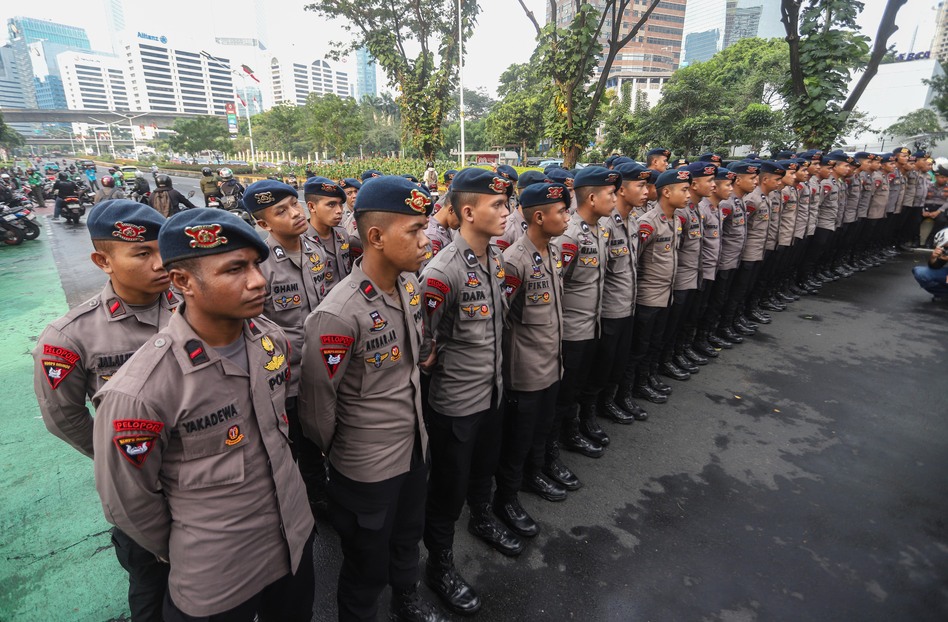
The 80th anniversary of the Indonesian National Police (Polri) is considered a crucial moment to evaluate the quality of public services, law enforcement, and to strengthen the oversight system under the new Law Number 5 of 2026 on Polri. Police observer Bambang Rukminto from the Institute for Security and Strategic Studies (ISESS) stated that Polri’s services have shown progress in recent years, notably through the optimisation of the public complaint service via the 110 hotline, which is increasingly accessible. “Regarding services, it cannot be denied that there have been improvements. The 110 hotline platform has been massively socialised as an effort to increase responsiveness to public complaints,” Bambang told Media Indonesia on Wednesday (1/7). However, he assessed that this service progress has not been matched by increased transparency and accountability in law enforcement. The low rate of crime reporting to the police, he argued, is an indicator that public trust in the law enforcement process remains weak. “Regarding transparency and accountability in law enforcement, it is still far from expectations. Looking at the Criminal Statistics released by BPS each year, only about 22 percent of crime victims report to the police. This can be interpreted as the public not yet fully trusting police services in law enforcement,” he said. According to Bambang, the biggest challenge for Polri in the information technology era is no longer just improving operational capabilities, but building transparency and accountability that can be accounted for to the public. “Transparency and accountability require strong control and oversight. This is a future challenge for Polri as well as an opportunity for National Police Chief General Listyo Sigit Prabowo to leave a legacy for the institution he leads,” he stated. Bambang also highlighted the oversight system regulated in the Polri Law Number 5 of 2026. He assessed that the internal oversight mechanism stipulated in Article 19A is unable to meet accountability demands because it is still run by the same institution. “Article 19A remains a self-regulation mechanism because it is run by the same institution. The public has long known the saying ‘an orange cannot eat an orange’, so the effectiveness of internal oversight remains questionable,” he said. Meanwhile, external oversight through the National Police Commission (Kompolnas) is also considered insufficiently strong. Bambang explained that under Articles 38 and 39, Kompolnas only has the authority to provide advice and considerations, conduct monitoring, and receive public complaints. “Kompolnas does not have investigative authority or the authority to impose binding sanctions on Polri. Thus, the available external oversight lacks coercive power comparable to the vast authority of the institution being supervised,” he said. On this basis, he assessed that the weak oversight mechanism makes substantive institutional reform of Polri difficult to achieve despite having a new legal foundation. “With the foundation of this new law, substantive cultural reform efforts are very difficult to carry out. Public complaints so far, such as impunity, conflicts of interest, officer arrogance through criminalisation, the absence of internal meritocracy, patronage, and selective law enforcement, remain unaddressed in the new law,” he concluded.