
Ombudsman West Java Scrutinises Quality of Collapsed Pongpet Bridge in Pangandaran
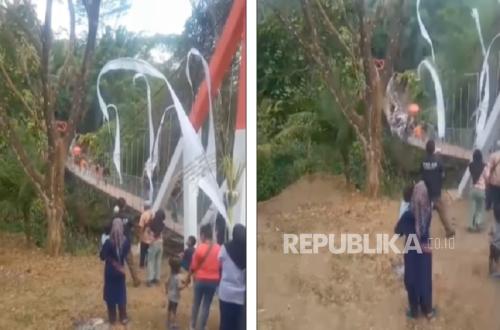
The West Java representative of the Ombudsman is scrutinising the quality of the Pongpet suspension bridge, which collapsed in Margacinta Village, Pangandaran Regency, West Java, on Sunday (30/08/2026). They are questioning the bridge’s construction planning process and whether it will be safe for residents to cross once repaired.
The Ombudsman maintains that the incident should not be dismissed simply as a result of exceeding capacity. They are questioning whether the bridge’s capacity was known from the outset, communicated to the public, and if its usage was regulated.
“Who ensures that the community can use the bridge safely?” said Fitry Agustine, Acting Head of the Ombudsman RI West Java Provincial Representative, in an official statement received on Thursday (03/09/2026).
She noted reports that the Pongpet bridge was part of the ‘Garuda Merah Putih’ pioneer bridge project, involving the Pangandaran 0625/Pangandaran Military District Command (Kodim) alongside elements of the Indonesian Army. Fitry stated that this requires further investigation, particularly to obtain clarity regarding the construction status, funding sources, and the division of roles among the involved parties.
“When a facility is built for public use, the chain of responsibility must be clear. Who planned it, who executed it, who supervised it, who conducted the technical inspections, and who declared the facility fit for use?” she said.
She emphasised that all parties should not merely be present during the inauguration while leaving the responsibility for ensuring safety unclear. Fitry noted that this issue is critical because the provision of public infrastructure does not end with the completion of the construction process.
“A bridge that has been physically constructed is not necessarily automatically ready for public use. There are still processes that must be ensured, ranging from construction supervision, technical condition inspections, capacity and load-bearing assessments, safety procedures, to the mechanisms for controlling bridge usage,” she added.