
Ombudsman urges concrete steps to improve railway crossing safety
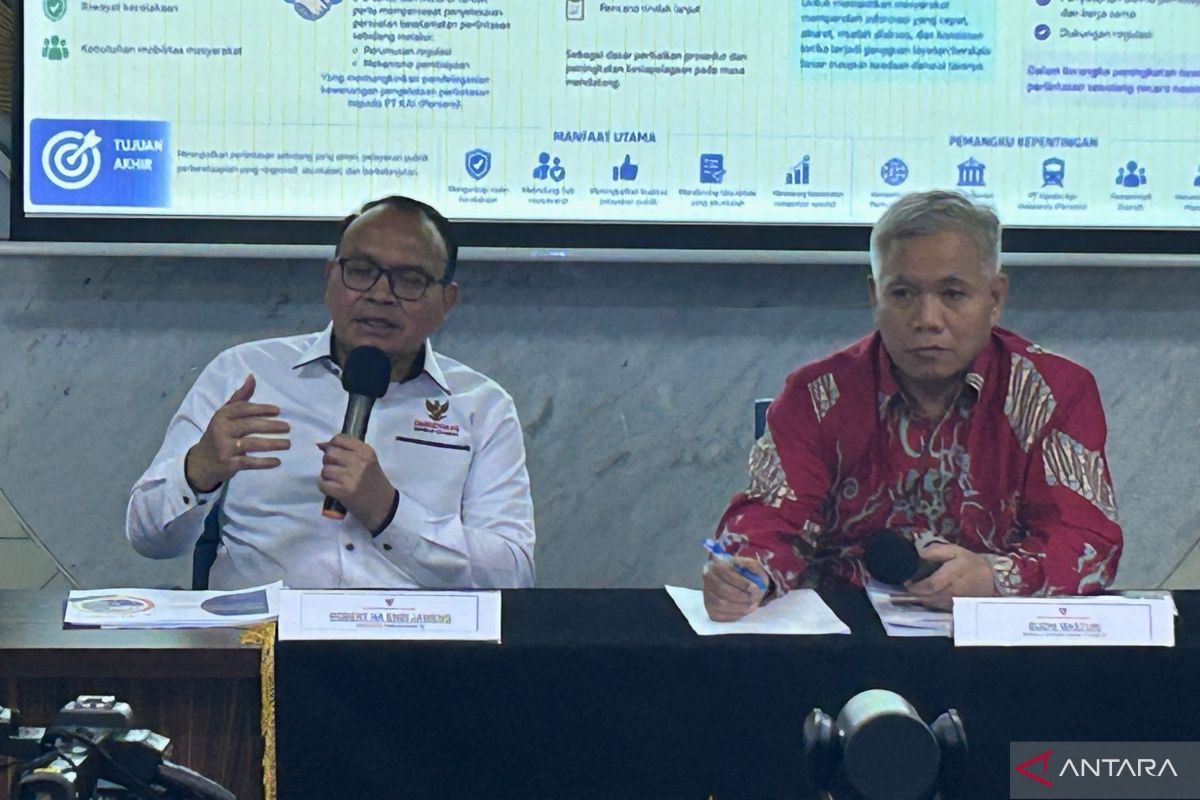
The Indonesian Ombudsman (ORI) has recommended accelerating safety improvements at high-risk level crossings by conducting joint evaluations and taking concrete steps. Ombudsman member Robert Na Endi Jaweng stated that these steps could include data reconciliation, strengthening human resources for guarding duties, and asset management, carried out in an integrated, measurable, and sustainable manner to enhance national level crossing safety. “The accident in Bekasi Timur shows that the safety risk had been recognised for a long time but was not followed by adequate mitigation measures,” Robert said during a press conference in Jakarta on Wednesday. He added that the incident must serve as a momentum to strengthen safety governance through more effective coordination, safety-oriented planning and budgeting, and consistent implementation of existing improvement recommendations. In addition to accelerating concrete actions, ORI expects strengthened governance and transparency in supervision through the development of an integrated national database, periodic risk mapping, and enhanced monitoring and reporting systems. Robert also highlighted the need for guidance and supervision of local governments to handle level crossings and accelerate the resolution of safety issues by formulating regulations and financing mechanisms that allow the delegation of crossing management authority to PT Kereta Api Indonesia (KAI). Another recommendation from the Ombudsman’s rapid assessment on public service accountability following the Bekasi Timur train accident is to build an integrated safety evaluation and learning system. “This way, every accident becomes a basis for learning and continuous policy improvement,” he said. Robert also noted the necessity of responsive public communication during critical periods by integrating digital information channels and providing regular updates to ensure the public receives fast, accurate, and accessible information. He therefore urged all stakeholders to implement the rapid assessment results in an integrated manner and incorporate the suggested improvements into a joint action plan. ORI emphasised that transportation safety is part of the public’s right to receive safe, high-quality, and accountable public services. “All stakeholders must place safety as the top priority in every process of planning, budgeting, and delivering public services in the transportation sector,” Robert concluded.