
Ombudsman: Unlicensed Islamic Boarding Schools Must Not Escape Oversight
Jakarta (ANTARA) – Indonesia’s Ombudsman has said oversight of Islamic boarding schools must be strengthened, including of institutions that have no operating permit but are already providing education and accommodation for students, in order to prevent sexual violence offences.
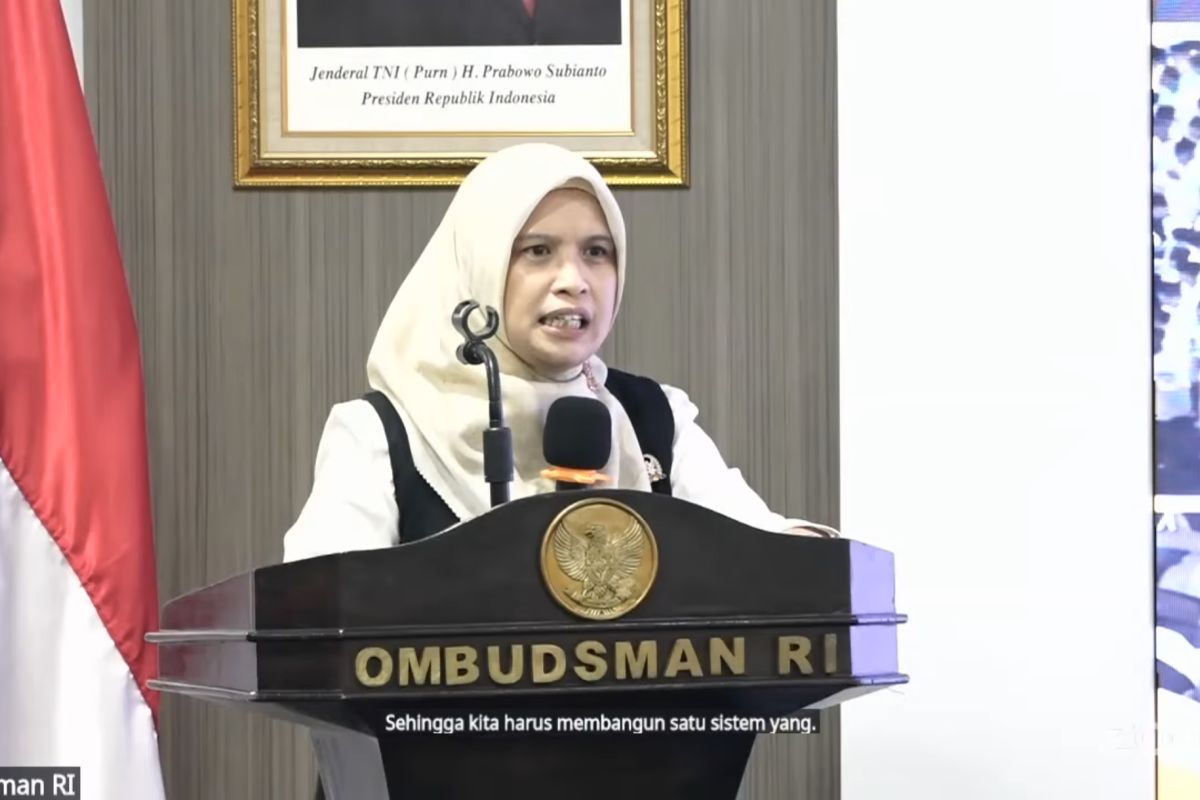
Ombudsman member Syafrida Rachmawati Rasahan, who also co-ordinates the institution’s oversight of law, immigration and corrections, said data collection and monitoring at neighbourhood level were important steps in detecting residential educational institutions at an early stage.
“Islamic boarding schools without operating permits must not escape state oversight,” Syafrida said on Wednesday during an online presentation of the findings of an Ombudsman-initiated investigation into the prevention and handling of sexual violence offences at Islamic boarding schools.
The Ombudsman found that some schools were operating without permits. This was partly due to inadequate data-collection mechanisms, local government oversight that tended to begin only after cases came to light, and unclear divisions of responsibility between agencies.
Syafrida said local governments needed to establish an early-warning system involving government officials down to the neighbourhood and community unit (RT/RW) levels.
Such a system would make it possible to identify Islamic boarding schools, tahfiz houses and other residential educational institutions from the outset, including information about their operating permits, managers, teachers and resident students.
“If we establish a good system, early detection of an Islamic boarding school, tahfiz house or other residential educational institution opening in a neighbourhood—not only an Islamic boarding school—should be possible, so that it can be identified from the beginning,” she said.
The Ombudsman also found that regulations on preventing, handling and monitoring sexual violence at Islamic boarding schools were not comprehensive.
These include Religious Affairs Ministerial Decree No. 83 of 2023 on Guidelines for Handling Sexual Violence in Educational Units under the Ministry of Religious Affairs, and Directorate General of Islamic Education Decree No. 1262 of 2024 on Technical Guidelines for Child-Friendly Care at Islamic Boarding Schools.
On prevention, the Ombudsman found that there were no specific standards addressing the particular characteristics of Islamic boarding schools, such as residential arrangements, round-the-clock care and power imbalances between caregivers and students.
Standards for safety infrastructure, the zoning of private spaces and instruments for assessing the risk of sexual violence were also insufficiently regulated.
On handling cases, the Ombudsman said initial responses still relied on internal school teams, potentially undermining their independence when the alleged perpetrator was the school’s leader or principal caregiver.
There were also no direct reporting channels outside the school structure, or automatic data-sharing and referral mechanisms between agencies. These shortcomings could lead to intimidation and the silencing of victims, and hinder case handling.
Limited staffing and budgets also meant that oversight tended to be reactive, beginning only after cases emerged.
The Ombudsman further found that responsibilities for oversight were not clearly divided between central and regional governments, particularly regarding the suitability of dormitories and the fulfilment of children’s rights.
Syafrida said the Ombudsman had broadened its investigation to involve several ministries and agencies, including the Ministry of Home Affairs, alongside the Ministry of Religious Affairs, the Ministry of Social Affairs, the Ministry of Women’s Empowerment and Child Protection, and law enforcement agencies.
The Ombudsman said stronger oversight would require improved regulations, comprehensive data on residential educational institutions, independent reporting mechanisms and field monitoring supported by a clear division of responsibilities.
These measures are needed to ensure state oversight reaches all Islamic boarding schools, including those without operating permits, and to protect students’ rights and safety.
Source: jawawa.id (https://jawawa.id/newsitem/ombudsman-unlicensed-islamic-boarding-schools-must-not-escape-oversight-1795593361)
Originally published by Antara (Indonesian) (https://www.antaranews.com/berita/5877131/ombudsman-pesantren-tanpa-izin-operasional-tak-boleh-luput-pengawasan), translated from Indonesian